A Collector’s Guide to Supercars as Rolling Masterpieces
Walk through any major art museum, and you’ll see centuries of artistic ambition expressed through brushstrokes, marble, bronze, or ink. But today, some of the most radical works of sculpture aren’t resting on pedestals, they’re revving at 8,000 RPM. In the 21st century, supercars have crossed the boundary separating engineering from artistry, becoming rolling masterpieces that belong as much to the Louvre or the Met as to the private garages of the wealthy.
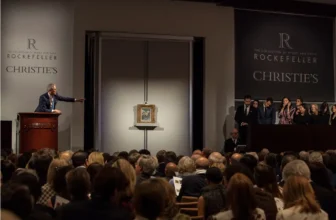
Collectors have noticed. Auction houses now treat rare supercars like Old Masters, exhibiting them as objects of beauty and cultural value. Museums curate temporary exhibitions devoted to automotive design. And luxury buyers increasingly speak about Ferraris and Bugattis not only in terms of horsepower, but in terms of line, form, emotion, and visual harmony.
This guide explores why modern supercars have earned a place in the world of art collecting, how their design inherits traditions from classical and modern art, and why they are quickly becoming one of the most compelling collectible categories of the 21st century.
The Rise of the Supercar as Art
There was a time when cars were judged almost exclusively on performance. A supercar was a tool for speed, loud, fast, outrageous. But in recent decades, something shifted: high-performance automotive design embraced the language of sculpture. The lines became more deliberate, the forms more expressive, the surfaces more beautiful. Cars were no longer shaped only by aerodynamics or mechanical necessity but by an artistic vision.
Pagani: The Turning Point
If there is a single brand responsible for this transformation, it is Pagani. Horacio Pagani’s philosophy, “Art and science, together”, rewrote the rules. A Pagani Huayra is not merely a car; it is an object of hyper-luxury craftsmanship rivaling the most intricate decorative arts. Titanium screws are polished like jewelry. Carbon-fiber weave is aligned like marquetry. Air vents resemble miniature sculptures. The interior looks like a kinetic steampunk installation.
Pagani elevated the supercar from engineering achievement to holistic artwork, influencing countless designers and manufacturers.
The Supercar as Sculpture
More than any other industrial product, the supercar is pure sculpture: an object of complex three-dimensional beauty meant to be seen from every angle. Collectors speak of the “stance” of a car the way art critics speak of “presence” in a sculpture. Consider:
The sweeping, anatomical curves of a Ferrari 812 Superfast echo Renaissance ideals of proportion.
The angular aggression of a Lamborghini Aventador mirrors Futurism and Cubism.
The clean purity of a McLaren 720S recalls Minimalism and organic modernist sculpture.
Every line is intentional. Every surface has a visual logic. These cars are as much aesthetic statements as they are feats of speed.
Why Supercars Belong in Museums
Major museums have already begun to shift their definitions of what qualifies as fine art. Exhibitions like “The Art of the Automobile” at the Louvre or “Cars: Accelerating the Modern World” at the V&A treat high-performance automobiles as cultural artifacts worthy of scholarly study.
They Represent the Pinnacle of Human Craftsmanship
Just as a Stradivarius violin represents the highest form of woodcraft, a Bugatti Chiron represents the zenith of composite fabrication, machining, and design. The materials are exotic: forged carbon, aerospace titanium, magnesium alloys. The craftsmanship is obsessive, bordering on monastic. Everything is handmade, polished, sculpted, and inspected with a level of care that echoes the workshops of Renaissance artisans.
They Capture the Mythology of Speed
Speed has always been a central theme in modern art. Futurism worshipped velocity. Modernist architects designed buildings that looked aerodynamic. Even photography was revolutionized by motion.
Supercars are the physical embodiment of humanity’s fascination with speed, an artistic theme that spans more than a century.
They Are Culturally Iconic
A Lamborghini Countach is as culturally significant as a Warhol print or a Basquiat. It shaped the visual imagination of generations. Even today, children who know nothing about engines can draw the silhouette of a Porsche 911, the way they might draw Mickey Mouse.
They Elicit Emotional Response
Art is measured not just by technique, but by emotional impact. And few objects produce as intense a reaction as an extraordinary car. The drama of the doors lifting, the low rumble of an idle, the way sunlight catches a carbon-fiber curve, these moments are as profound as standing in front of a great painting.
They Capture the Spirit of Their Era
Automobiles are markers of time, political, cultural, aesthetic. A Ferrari F40 reflects 1980s excess and mechanical purity. A Rimac Nevera reflects the digital-electric revolution. A Murciélago reflects the pre-crisis early 2000s era of maximalism.
The supercar is a cultural mirror.
How Supercar Design Mirrors Fine Art Traditions
Though crafted with CAD software and wind tunnels, modern supercar design is deeply rooted in traditional art. Many automotive designers train in sculpture or industrial design rather than engineering. Their influences are centuries old.
Renaissance and Baroque Sculpture
The human body, celebrated by Michelangelo and Bernini, remains a defining influence on automotive form. Cars are often described as muscular or sinewy. Surfaces tighten over internal structures like anatomical skin. Consider the Ferrari Roma: its subtle curves resemble the idealized forms of classical sculpture.
Designers often speak of “tension” in a surface, exactly the way sculptors do.
Futurism and the Worship of Motion
Supercars embody the central thesis of Futurism: speed as beauty. The aggressive diagonals, the elongated silhouettes, the sense of forward thrust, these are shared visual languages.
Lamborghini, especially in the era of the Aventador and Huracán, deliberately embraced Futurist geometry.
Modern Minimalism
McLaren, Porsche, and to some extent Ferrari have embraced purity of line and reduction of visual noise. The McLaren 720S is a masterclass in minimal aerodynamic sculpture, expressing complexity with elegant simplicity.
Art Nouveau and Organic Form
Some supercar designers cite Alphonse Mucha, Victor Horta, or Gaudí as influences. Pagani interior details, with their curling biomorphic metalwork and flowing lines, are clearly rooted in the organic, ornamental logic of Art Nouveau.
Postmodern Playfulness and Color Theory
The bold palettes, unexpected textures, and graphic details of modern supercars reflect contemporary art. Brands now offer paint programs rivaling the experimentation of fine-art colorists. Koenigsegg’s “Candy Apple Red” or McLaren’s “Papaya Spark” behave like hyper-saturated pigments.
The Collector’s Perspective: Why Supercars Are the New Fine Art
High-net-worth collectors increasingly buy supercars the way they buy paintings:
Rare models are treated as investments.
Limited editions are displayed rather than driven.
Provenance, documentation, and condition hold enormous weight.
Values are influenced by cultural significance, not just performance.
Rarity and Limited Editions
Just as scarcity drives the art market, it drives the supercar market. A limited run, say 20 units, creates immediate collector demand. Many modern manufacturers intentionally blur the line between art creation and product creation by releasing hyper-limited series, often with bespoke customization.
Bespoke Creations = Commissions
Ferrari’s Special Projects program, Rolls-Royce’s Coachbuild, and McLaren’s MSO divisions operate like Renaissance workshops. Clients commission one-of-one pieces, just as wealthy patrons once commissioned Titian or Caravaggio.
Provenance and Narrative
The story behind the car matters. A McLaren F1 owned by a royal family, a Bugatti that debuted on the concept lawn at Pebble Beach, or a Porsche painted in a one-off color all carry prestige much the way a painting’s provenance influences its value.
Technology as Artistic Medium
In the 21st century, technology is a legitimate artistic medium. Digital artists use algorithms; sculptors use CNC machining. Supercar designers employ exotic technologies, active aerodynamics, fused carbon monocoques, computational fluid dynamics, to achieve sculptural forms impossible in earlier eras.
These technologies deepen the conceptual artistry behind the car.
Why Today’s Supercars Belong in Private Art Collections
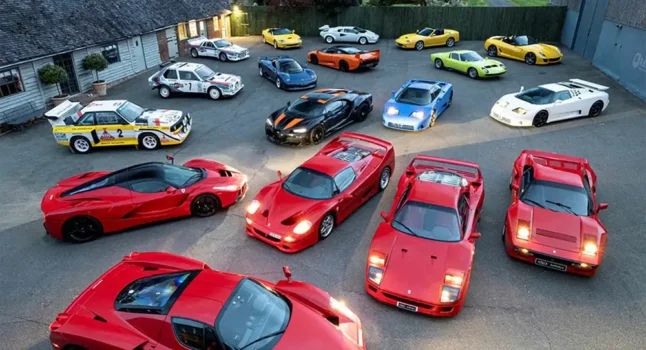
Ultra-wealthy collectors increasingly treat supercars like museum pieces. They are stored in climate-controlled galleries, photographed like artworks, and displayed under spotlights on rotating platforms.
Here’s why:
They Are Appreciating Assets
Like rare watches or contemporary art, certain supercars appreciate dramatically, LaFerrari, Carrera GT, Porsche 918 Spyder, McLaren P1, and rare Koenigseggs have all become blue-chip collectibles.
They Represent Total Artworks (Gesamtkunstwerk)
A modern supercar integrates:
sculpture
design
sound
motion
engineering
craftsmanship
digital technology
Few artworks combine so many disciplines in one object.
They Offer Multi-Sensory Aesthetic Experience
Paintings and sculptures engage sight. Music engages hearing. Perfume engages smell.
A supercar engages everything, sight, sound, motion, touch, even smell (leather, metal, heat). Collectors value this immersive artistic experience.
They Symbolize Achievement
Throughout history, art collecting has been a display of cultural capital. Today, the supercar extends that tradition. It is not merely luxury, it is a symbol of taste, expertise, and connoisseurship.
The Cultural Meaning of the Supercar in the 21st Century
To understand why supercars have become art, we must understand their cultural symbolism. They represent:
The Pursuit of Perfection
Supercars are engineered obsession, countless hours refining a curve or tuning an exhaust note.
The Marriage of Art and Science
Like Renaissance machines designed by Leonardo da Vinci, they fuse imagination and innovation.
The Human Desire to Transcend Limits
Speed has always symbolized freedom, power, and mastery. Supercars embody the perpetual human desire to push boundaries, an artistic theme as old as civilization.
Aesthetic Identity in a Digital Age
As life becomes more virtual, collectors crave physical objects with presence, weight, beauty, and craftsmanship.
Supercars fulfill that need.
Case Studies: The Most Artistic Supercars Ever Built
Ferrari LaFerrari
A fusion of F1 hybrid technology and sculptural form. The body flows like liquid metal, with aerodynamic channels carved like marble folds.
Pagani Huayra
Perhaps the closest thing to a modern-day sculpture on wheels. Its interior resembles a kinetic artwork; its exterior is pure sensual form.
Lamborghini Aventador SVJ
Aggressive, angular, almost architectural. A masterpiece of Futurist geometry.
Bugatti Chiron Super Sport
An act of engineering as art. Perfect symmetry, meticulous craftsmanship, and timeless elegance.
Koenigsegg Regera
Clean, minimal, and incredibly advanced. An example of technology elevating form.
How Collectors Display Supercars as Art
Collectors now design home galleries specifically for cars. These spaces resemble museums:
Neutral polished floors like fine-art galleries
Spotlights and LED strips to highlight form
Turntables for 360-degree viewing
Climate control to preserve materials
Large minimal spaces that let the car’s silhouette breathe
Photography studios, architects, and interior designers increasingly specialize in building automotive art galleries for private collectors.
The Future: Will Supercars Become the Next Major Collectible Category?
The answer is yes, many already consider them blue-chip assets. And as electrification reshapes the automotive world, internal-combustion supercars will soon be historical artifacts of a vanished era.
Reasons values will continue to rise:
ICE V12s and V10s will never be built again, scarcity drives value.
Design is becoming more artistic, more sculptural, more experimental.
Collectors are younger, more global, and eager to cross categories (cars + art + watches).
Museums are validating automotive artistry, giving it cultural legitimacy.
One-of-one commissions are exploding in value, similar to art.
The supercar is no longer just a vehicle; it is a cultural artwork.
Why Supercars Are the New Old Masters
In the same way that a Raphael or a Rembrandt captured the genius and spirit of their eras, today’s supercars capture ours. They are objects of beauty, craftsmanship, and technological wonder. They combine art and engineering in a way unmatched by any other luxury collectible.
To collect a supercar in 2025 is to collect a piece of human ambition, a sculpture of speed, a painting of motion, a masterpiece that roars.
Supercars are not the future of art collecting.
They are its present.
And they belong in museums, galleries, and the private collections of those who recognize that speed, too, can be a form of beauty. image / carscoops