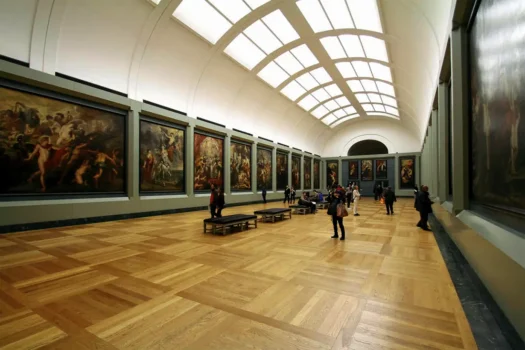
The Best Museums for Experiencing Old Master Luxury
When we think of “luxury,” most of us imagine couture fashion, five-star hotels, or fine dining. But there’s another kind of luxury, one steeped in culture, history, and artistry, that transcends time and trends: the luxury of Old Masters. These are the painters of the Renaissance, Baroque, and Neoclassical eras, artists like Rembrandt, Vermeer, Rubens, Caravaggio, Velázquez, Titian, and Leonardo da Vinci, whose works defined the visual culture of Europe and whose influence remains profound today.
To truly experience the magnificence of Old Master art, nothing compares to standing before the canvases themselves, the brushwork, the light, the aura of centuries past. Around the world, a handful of museums offer the most exquisite encounters with these masterpieces. In this guide, we’ll journey through the best museums for experiencing Old Master luxury, exploring their collections, atmosphere, and what makes them essential destinations for lovers of fine art and cultural refinement.
1. The Louvre Museum (Paris, France): The Crown Jewel of Old Master Grandeur
If one museum could define the essence of “Old Master luxury,” it’s the Louvre in Paris. Once a royal palace, the Louvre embodies opulence in both its architecture and its art. Its walls are filled with masterpieces that span the breadth of European civilization, from medieval icons to high Renaissance perfection.
Why It Defines Old Master Luxury
The Louvre’s collection is the largest and most diverse in the world, with over 35,000 works on display. Within its grand halls, visitors encounter iconic paintings such as:
Leonardo da Vinci’s Mona Lisa – the pinnacle of Renaissance mystique and subtlety.
Jacques-Louis David’s Coronation of Napoleon – a monumental display of imperial splendor.
Titian’s Pastoral Concert – a sensual embodiment of Venetian color and tone.
Vermeer’s The Lacemaker – an intimate glimpse into Dutch domestic life rendered with transcendent precision.
Beyond its art, the Louvre itself exudes luxury, the soaring marble staircases, gilded ceilings, and the harmonious blend of history and innovation symbolized by the glass pyramid entrance. For lovers of both culture and refinement, the Louvre is not just a museum; it is an experience of aesthetic sovereignty.
2. The Prado Museum (Madrid, Spain): The Essence of European Elegance
The Museo Nacional del Prado in Madrid is another temple of Old Master luxury. Founded in 1819 as a royal collection, the Prado is home to one of the finest assemblages of European painting, particularly rich in Spanish, Italian, and Flemish masters.
Highlights of Old Master Splendor
The Prado’s treasures include:
Velázquez’s Las Meninas – a masterpiece of perspective, mystery, and royal grace.
Goya’s The Third of May 1808 – a haunting masterpiece of emotion and humanity.
Titian’s Venus and Adonis and Emperor Charles V at Mühlberg** – icons of Venetian refinement and imperial power.
El Greco’s The Nobleman with His Hand on His Chest – spiritual intensity rendered in luminous color.
Luxury Beyond the Canvas
The Prado’s interiors reflect the dignity of its origins, a neoclassical palace with stately halls, marbled floors, and warm, filtered light that enhances the vibrancy of centuries-old pigments. For connoisseurs of art history, the Prado offers an unrivaled immersion into the luxurious aesthetics of Europe’s Golden Age.
3. The Uffizi Gallery (Florence, Italy): Renaissance Luxury Reborn
In Florence, the cradle of the Renaissance, the Uffizi Gallery stands as the ultimate tribute to artistic rebirth and humanistic grandeur. Commissioned by the Medici family, whose wealth and taste shaped the very concept of cultural luxury, the Uffizi embodies elegance and artistic mastery.
Masterpieces of Timeless Refinement
Among the Uffizi’s many treasures are:
Botticelli’s The Birth of Venus and Primavera – the very icons of Renaissance grace and mythological beauty.
Leonardo da Vinci’s Annunciation – early evidence of his genius in composition and naturalism.
Michelangelo’s Doni Tondo – a rare glimpse of his painterly vision.
Raphael’s Madonna of the Goldfinch – delicate serenity and divine proportion.
Experiencing Renaissance Luxury
The Uffizi’s long corridors overlook the Arno River and Ponte Vecchio, flooding the museum with natural light, a perfect complement to the radiance of the art. The Medici collection still defines the standard for artistic luxury: a union of wealth, intellect, and visual perfection. Visiting the Uffizi is like stepping into the pages of history, surrounded by the very works that transformed art into an eternal symbol of beauty and status.
4. The National Gallery (London, UK): Old Masters for the Modern World
Located in Trafalgar Square, The National Gallery in London offers one of the world’s most comprehensive collections of European paintings from the 13th to the 19th centuries. Its free admission and regal architecture make it both accessible and magnificent, a democratic version of Old Master luxury.
A Treasury of European Genius
The gallery’s highlights include:
Rembrandt’s Self-Portrait at the Age of 34 – an introspective testament to genius and maturity.
Turner’s The Fighting Temeraire – the transition between classicism and modern emotion.
Vermeer’s A Young Woman Standing at a Virginal – subtle, luminous, and intimate.
Hans Holbein’s The Ambassadors – a Renaissance portrait filled with symbolism and precision.
The Modern Majesty of London’s Cultural Jewel
While not as palatial as the Louvre, the National Gallery’s serene halls and refined lighting evoke a sense of quiet grandeur. It’s a space where luxury is defined by accessibility, a place where anyone can stand face-to-face with history’s greatest painters without the barriers of class or privilege. For those who equate luxury with culture and intellect, the National Gallery is a pilgrimage site.
5. The Rijksmuseum (Amsterdam, Netherlands): The Golden Age of Dutch Luxury
Few museums capture the richness and innovation of the Dutch Golden Age as magnificently as the Rijksmuseum in Amsterdam. Its majestic neo-Gothic building and meticulously curated galleries celebrate the craftsmanship, prosperity, and spirit of 17th-century Holland.
Masterworks of Light and Wealth
Key attractions include:
Rembrandt’s The Night Watch – a cinematic masterpiece of light, motion, and civic pride.
Vermeer’s The Milkmaid – simplicity transformed into spiritual poetry.
Frans Hals’s The Merry Drinker – exuberant portraiture full of life and character.
Jan Steen’s The Feast of Saint Nicholas – a glimpse into the humor and warmth of Dutch domestic life.
The Luxury of Detail and Discipline
The Rijksmuseum’s luxuriousness lies in its attention to craft, both in the paintings themselves and in the museum’s presentation. Every detail, from the carved oak frames to the natural lighting, is curated to enhance the viewer’s sense of awe. In many ways, the Dutch masters created a new kind of luxury: the luxury of realism, mastery, and subtlety.
6. The Hermitage Museum (St. Petersburg, Russia): Imperial Grandeur and Old Master Glory
The State Hermitage Museum is perhaps the most majestic of all Old Master destinations. Founded by Catherine the Great in 1764, it occupies the former Winter Palace, an opulent Baroque masterpiece overlooking the Neva River.
A Palace of European Art
With over three million items in its collection, the Hermitage rivals the Louvre in both scale and prestige. Its Old Master holdings are exceptional, including:
Rembrandt’s Return of the Prodigal Son – a deeply emotional meditation on forgiveness.
Leonardo da Vinci’s Benois Madonna – a tender portrayal of mother and child.
Raphael’s Madonna Conestabile – luminous beauty and grace.
Caravaggio’s The Lute Player – sensual realism and masterful use of light.
Imperial Luxury at Its Peak
Visiting the Hermitage is not just an art experience, it’s a journey into imperial extravagance. The golden staircases, ornate salons, and gilded ceilings make the setting as breathtaking as the art itself. This is Old Master luxury in its purest form, art collected by monarchs, displayed in palaces, and preserved as a monument to both genius and power.
7. The Kunsthistorisches Museum (Vienna, Austria): The Aristocratic Art Experience
Vienna’s Kunsthistorisches Museum (KHM) offers a rare blend of royal elegance and scholarly depth. Built to house the Habsburgs’ art collection, the museum radiates imperial sophistication.
Highlights of a Royal Collection
Its collection features masterpieces by:
Peter Paul Rubens – vast, dynamic canvases celebrating myth, form, and sensuality.
Titian’s Nymph and Shepherd – the sensual luxury of Venetian color.
Bruegel the Elder’s The Tower of Babel – intricate, symbolic, and monumental.
Caravaggio’s David with the Head of Goliath – raw drama and chiaroscuro perfection.
An Architectural Symphony
The building itself is an artwork: a domed palace adorned with marble columns, grand staircases, and frescoes by Gustav Klimt. The KHM offers an unmatched combination of royal luxury and intellectual refinement, making it a must-see for anyone seeking a deep encounter with Europe’s aristocratic art legacy.
8. The Metropolitan Museum of Art (New York, USA): Old World Luxury in the New World
Across the Atlantic, The Met in New York City stands as America’s great temple to Old Master luxury. With its encyclopedic collection, The Met offers a global view of Western art in a setting of neoclassical grandeur.
Old Master Highlights
Caravaggio’s The Musicians – youthful sensuality and virtuoso light.
Vermeer’s Young Woman with a Water Pitcher – one of the finest examples of Dutch serenity.
Rembrandt’s Aristotle with a Bust of Homer – philosophical depth rendered in gold and shadow.
Velázquez’s Juan de Pareja – a stunning portrait that merges dignity and emotion.
The Met’s Unique Kind of Luxury
While it lacks the aristocratic origins of the European collections, The Met channels a different kind of luxury, cultural democratization at an epic scale. The museum’s marble halls, sweeping staircases, and calm galleries offer a sanctuary where visitors can experience the majesty of the Old Masters within a distinctly modern metropolis. Here, art becomes a bridge between worlds, the Old World’s refinement meeting the New World’s ambition.
9. The Musée d’Orsay (Paris, France): Where Old Masters Meet Modern Elegance
While known primarily for its Impressionist and Post-Impressionist collections, the Musée d’Orsay also houses a stunning transition between Old Master tradition and modern experimentation. Housed in a Beaux-Arts railway station, the museum itself is a marvel of industrial luxury and artistic harmony.
Bridging Eras of Beauty
The Orsay’s collection includes pivotal 19th-century artists who were inspired by Old Master techniques, Ingres, Delacroix, Corot, and Courbet, whose works reveal how Old Master ideals of composition, light, and grandeur evolved into modern forms.
For art lovers seeking continuity, the Musée d’Orsay offers the luxury of lineage, the connection between Renaissance mastery and modern vision.
10. The Getty Center (Los Angeles, USA): Modern Architecture Meets Old Master Refinement
Perched high above Los Angeles, the Getty Center merges Old Master opulence with minimalist modern design. Its clean architecture, designed by Richard Meier, frames a world-class collection of European paintings, sculptures, and decorative arts.
Old World Art in a New World Setting
Highlights include:
Titian’s Venus and Adonis – sensual and sophisticated.
Rembrandt’s The Abduction of Europa – dynamic and grand.
Rubens’s The Entombment – a Baroque masterpiece of emotion and movement.
The Getty Experience
With its manicured gardens, panoramic views, and luminous galleries, the Getty redefines luxury for the 21st century. It demonstrates that Old Master beauty can coexist with modern serenity, creating an experience that is both timeless and contemporary.
The Essence of Old Master Luxury
What unites these museums isn’t just their collections, but the experience they offer, a journey through the evolution of human creativity, emotion, and refinement. Old Master luxury is not merely about wealth or status; it’s about the pursuit of beauty, intellect, and permanence.
Each brushstroke of a Rembrandt, each glint of light in a Vermeer, each curve in a Botticelli figure reminds us that true luxury is enduring art, not fleeting fashion. These museums are temples to that idea, spaces where time slows, where you can stand in the quiet presence of genius and feel centuries of human aspiration distilled into color and form.
Tips for Experiencing Old Master Luxury to the Fullest
Visit during off-peak hours – Early mornings or late afternoons allow for intimate encounters with artworks.
Take a private or guided tour – Expert insights reveal hidden details, symbolism, and history.
Dress with respect for the setting – Old Master luxury is as much about attitude as aesthetics.
Allow time to linger – Don’t rush. The luxury of art lies in contemplation.
Read about the artists before you go – Understanding context deepens appreciation.
Where Art and Luxury Become One
Experiencing Old Master art is a form of time travel, a dialogue with genius that transcends centuries. From the Louvre’s regal splendor to the Hermitage’s imperial halls, from the Uffizi’s Renaissance elegance to the Getty’s modern serenity, these museums preserve the essence of artistic luxury: mastery, meaning, and magnificence.
In an age of instant gratification, the Old Masters remind us that true luxury lies in patience, craftsmanship, and enduring beauty. To walk through these museums is to touch the soul of civilization, to feel what it means to be human in the most refined, luminous sense. image / pexels