The Most Unusual Antique Paintings Ever Found
Hidden Faces, Secret Codes, and the Strangest Lost Masterpieces in Art History
When Art Hides Secrets Beneath the Brushstrokes
Antique paintings are not only windows into the past , they are often silent keepers of secrets, mysteries, and hidden meanings. For centuries, artists have embedded concealed symbols, coded messages, and enigmatic figures in their work. Some of these details were uncovered only through modern technology such as X-ray imaging and infrared analysis, revealing stories lost for hundreds of years.
This article explores the most unusual antique paintings ever found, including hidden faces and secret codes, the strangest paintings history almost forgot, and finally, the most valuable missing paintings in the world , masterpieces that vanished but continue to fascinate collectors, historians, and art lovers alike.
Hidden Faces and Secret Codes: The Mysterious Language of Antique Paintings
Art historians have long known that many Renaissance and Baroque artists embedded hidden symbols and faces within their compositions. These were not mere artistic flourishes , they were often secret messages meant for the initiated few.
Leonardo da Vinci’s Coded Genius
No discussion of hidden codes in art is complete without mentioning Leonardo da Vinci. His masterpiece, The Last Supper, is surrounded by speculation. Some researchers claim that the spacing of the apostles and the placement of their hands form a musical composition when transcribed to sheet music. Others note that the arrangement of the figures and objects creates geometrical patterns symbolizing sacred balance.
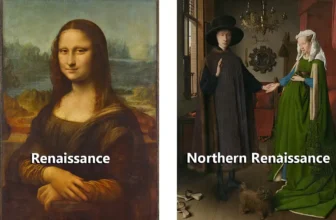
Infrared studies have also revealed subtle underdrawings in Leonardo’s works , especially in Mona Lisa , suggesting he continuously revised his paintings to conceal deeper meanings. The famous smile of the Mona Lisa may itself be a psychological code: an experiment in perception and the human response to ambiguity.
The Hidden Faces in Rembrandt’s Masterpieces
Rembrandt van Rijn, known for his dramatic use of light, often inserted faint, spectral faces into his shadows. Modern imaging has revealed obscured portraits under several of his canvases , possibly previous clients who couldn’t pay or early sketches he reused.
One of his paintings, An Old Man in Military Costume (1630–31), was X-rayed in 1968 and discovered to contain another, younger man’s face beneath the surface. This practice was economical, but it also added layers of mystery to Rembrandt’s art , quite literally.
Michelangelo’s Anatomical Code in the Sistine Chapel
The ceiling of the Sistine Chapel, painted by Michelangelo between 1508 and 1512, hides perhaps one of art’s most shocking codes. Neuroscientists have noted that the figure of God in “The Creation of Adam” is framed by the shape of a human brain. The folds, stem, and even the pituitary gland are clearly represented, suggesting Michelangelo , who studied anatomy extensively , concealed his reverence for human intelligence inside a sacred painting.
If this theory is correct, the Sistine Chapel is not only a spiritual statement but also a daring intellectual message encrypted in art.
The Strangest Antique Paintings History Almost Forgot
While some antique paintings are celebrated in museums, others have been nearly lost to time , neglected, misunderstood, or hidden in private collections. These forgotten works often contain bizarre imagery and hauntingly original ideas that defy their eras.
“The Garden of Earthly Delights” by Hieronymus Bosch
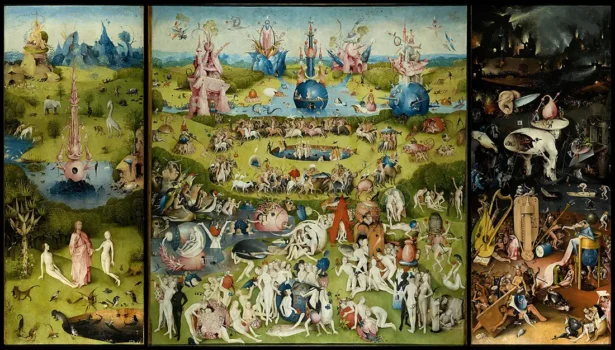
Painted around 1500, Bosch’s triptych The Garden of Earthly Delights remains one of the strangest antique paintings ever created. The central panel bursts with surreal images , naked figures, oversized fruit, and hybrid creatures , that seem more like modern fantasy than medieval art.
For centuries, scholars have debated its meaning: is it a warning against sin, a visual encyclopedia of human desire, or a coded spiritual map? Bosch’s work predates surrealism by 400 years and still challenges viewers to interpret its chaos.
Giuseppe Arcimboldo’s Portraits Made of Objects
In the 16th century, Giuseppe Arcimboldo created portraits entirely composed of objects , fruits, vegetables, flowers, books, or fish , depending on the subject’s profession or season. His Vertumnus (1590–91), portraying Emperor Rudolf II as a composite of plants, was both humorous and subversive, celebrating the Emperor’s love of nature while slyly mocking his vanity.
Arcimboldo’s work was forgotten for centuries before being rediscovered in the 20th century, where it influenced surrealists like Salvador Dalí. His paintings are prime examples of Renaissance eccentricity meeting modern imagination.
The “Ghost” Paintings Beneath Masterpieces
Modern technology has uncovered hidden paintings beneath famous works, revealing eerie images that artists covered up. For instance, researchers found that Pablo Picasso’s “The Blue Room” (1901) conceals the portrait of a man with a bow tie, while Vincent van Gogh’s “Patch of Grass” (1887) hides a woman’s face under thick green paint.
These discoveries suggest that artists often recycled canvases, but they also reveal a deeper creative process , one that records their emotional and artistic evolution. Every hidden image adds a ghostly chapter to the artwork’s biography.
“The Portrait of Dorian Gray” , Reality Meets Fiction
While not an antique in the historical sense, the idea of a painting reflecting moral decay in Oscar Wilde’s The Picture of Dorian Gray resonates with real-world stories of cursed or unsettling portraits. Some collectors claim certain antique paintings bring bad luck or misfortune, fueling superstitions about the spiritual power of art.
Among the most famous is The Hands Resist Him (1972) by Bill Stoneham, often dubbed the “haunted eBay painting.” Though modern, it echoes the same eerie fascination antique collectors feel when encountering strange, unexplainable energy in old art.
The Most Valuable Missing Paintings in the World
Art history is not just a gallery of masterpieces , it is also a graveyard of lost treasures. Wars, thefts, fires, and political upheavals have erased countless works from record. Yet some of these missing paintings remain tantalizingly close to rediscovery.
1. “The Concert” by Johannes Vermeer
Valued at over $250 million, The Concert by Vermeer is widely regarded as the most valuable missing painting in the world. It was stolen in 1990 from the Isabella Stewart Gardner Museum in Boston along with 12 other works in one of history’s most audacious art heists.
Despite decades of investigation and massive rewards, the painting , showing a man and two women making music , has never been found. Its absence left a void in Vermeer’s small body of work and a lasting mystery that haunts the art world.
2. “View of Auvers-sur-Oise” by Paul Cézanne
In 1999, Cézanne’s “View of Auvers-sur-Oise” was stolen from Oxford’s Ashmolean Museum during New Year’s Eve fireworks. Valued at over $5 million, it remains unrecovered. The thief’s method , cutting through a skylight , inspired numerous copycat crimes, but the original has never resurfaced.
3. “Portrait of a Young Man” by Raphael
Another priceless missing work is Raphael’s “Portrait of a Young Man” (1513–14), believed to have been looted by the Nazis during World War II. Often called “the most important missing painting of the 20th century,” it was part of Poland’s Czartoryski Collection. Rumors persist that it still exists in a private European collection, hidden for decades.
4. “Nativity with St. Francis and St. Lawrence” by Caravaggio
Caravaggio’s dramatic masterpiece, stolen from a Palermo church in 1969, is one of Italy’s greatest unsolved crimes. Experts believe it was taken by the Sicilian Mafia, possibly destroyed or sold on the black market. The painting’s emotional power and chiaroscuro brilliance make its loss especially tragic.
A high-resolution replica now hangs in the original church, created through digital reconstruction , but the original Nativity remains a ghostly absence in art history.
5. “Landscape with Cottages” by Vincent van Gogh
During World War II, Van Gogh’s Landscape with Cottages disappeared from the Kaiser-Friedrich Museum in Magdeburg, Germany. Though valued at tens of millions today, it remains untraced. Van Gogh’s works, often underappreciated in his lifetime, became symbols of lost genius , and each missing painting deepens that mythology.
Why Are So Many Antique Paintings Lost or Hidden?
The disappearance of antique art often stems from political turmoil, theft, war, or secrecy. In some cases, owners deliberately concealed their treasures to protect them from invading armies or government seizure. Others were destroyed by natural disasters or poor preservation.
Moreover, forgery and misattribution complicate the hunt for genuine lost art. A masterpiece may hang unnoticed in a small museum or private home, misidentified as a copy. Technological advances , such as AI-based pigment analysis, radiocarbon dating, and digital provenance tracking , are now helping experts re-evaluate forgotten works and reattribute them to their rightful creators.
How Technology Is Rewriting Art History
The digital revolution has transformed how we uncover the secrets of antique paintings. X-ray fluorescence, multispectral imaging, and artificial intelligence can reveal what lies beneath centuries of varnish and dust.
Infrared reflectography exposes underdrawings and sketches hidden under layers of paint.
3D scanning allows historians to reconstruct damaged surfaces or faded details.
AI pattern recognition can detect brushstroke signatures, identifying lost works of famous artists with uncanny precision.
These tools have already revealed previously unknown faces in Botticelli’s frescoes, hidden text in medieval icons, and entire lost compositions beneath Rembrandt’s portraits. Technology is becoming the modern archaeologist of art, digging through pigment instead of soil.
The Psychological Power of Hidden Art
Why do hidden faces, secret codes, and missing paintings captivate us so deeply? Because they speak to our love of mystery , the idea that beneath every beautiful surface lies a deeper truth.
In many ways, art mirrors the human psyche: what is seen is only part of what exists. Artists across centuries have used symbolism and secrecy not just to hide messages but to invite the viewer into a game of discovery. Whether it’s da Vinci’s cryptic geometries or Bosch’s surreal visions, the fascination lies in the unknown , a timeless dialogue between artist and observer.
How Collectors and Museums Protect Lost and Hidden Art
The high stakes of antique art have led to major international efforts to track and protect cultural heritage. Organizations like INTERPOL, UNESCO, and The Art Loss Register maintain vast databases of stolen works. Meanwhile, private collectors often use blockchain certification to ensure authenticity and provenance.
Museums also collaborate globally to digitally preserve collections, scanning paintings in ultra-high resolution so that even if a physical piece is lost, its image , and its secrets , survive. These efforts ensure that future generations can continue exploring the strange and beautiful stories embedded in the world’s oldest paintings.
The Eternal Allure of Hidden Masterpieces
From Leonardo’s cryptic designs to Caravaggio’s vanished Nativity, the world of antique paintings is full of enigma. These works remind us that art is more than pigment on canvas , it’s a living record of human imagination, ambition, and mystery.
As technology uncovers hidden faces and forgotten codes, and as investigators search for the most valuable missing paintings, one truth remains constant: the most unusual antique paintings are those that still make us question what lies beneath the surface.
Each discovery, each rediscovery, rekindles the thrill of the unknown , ensuring that art, like history itself, is never truly finished.