Estate Sales and Old Master Buying Opportunities
Estate sales have always been known as eclectic marketplaces, places where furniture, jewelry, antiques, and personal belongings trade hands as families settle estates or transition through major life events. But within this seemingly routine world lies one of the art market’s most intriguing and least understood opportunities: the chance to acquire Old Master paintings before they reach the attention of the international auction houses. While most collectors associate Old Masters with high-profile evening sales at Sotheby’s or Christie’s, many of the most remarkable rediscoveries begin far away from the glare of global art markets, tucked quietly in living rooms, attics, farmhouses, and inherited collections that the owners do not fully understand.
Estate sales continue to shape the narrative of art history because they remain one of the few environments where a painting’s original anonymity works in a buyer’s favor. Unlike auction houses, where works are vetted, cleaned, catalogued, estimated, and viewed by the world’s most powerful collectors, estate sales present works in their raw, unfiltered state. Dusty, darkened by varnish, mislabeled, or completely unrecognized, these paintings carry both risk and possibility. For the knowledgeable collector, this environment offers a rare combination of affordability and potential discovery that is nearly impossible to replicate elsewhere in today’s competitive art market.
How Estate Sales Become Gateways to Old Master Discoveries
To understand why estate sales remain fertile ground for Old Master finds, one must first understand how artworks circulate through families. Over centuries, paintings have been bought, gifted, inherited, stored, forgotten, or separated from their documentation. Many estates include items their owners inherited decades earlier from relatives who had even less context than they did. The result is that estate sale inventories frequently contain artworks that have never been appraised within the modern art-market ecosystem.
Estate sales become gateways to Old Master discoveries for several reasons. Families often lack awareness of an artwork’s significance, especially if it has been hanging quietly on a wall for generations. Condition issues, yellowed varnish, small tears, darkened surfaces, can mask the quality of brushwork and lead families or estate organizers to misjudge a painting’s importance. Many estates rely on generalist appraisers whose expertise lies in furniture, household goods, or decorative arts rather than in Renaissance or Baroque painting. As a result, Old Masters are sometimes priced as mere “antique framed art” or “decorative oil paintings,” creating opportunities for knowledgeable buyers to acquire genuine historical works.
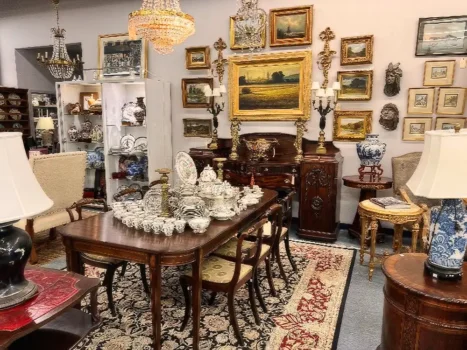
Estate sales also provide a slower, more intimate buying environment than auctions. Buyers can inspect works up close, take their time evaluating brushwork, frame construction, materials, and signatures without the pressure of an auctioneer’s hammer. And unlike auction previews, which often occur under flattering lighting and controlled conditions, estate sales display artworks as they were lived with, sometimes poorly lit, improperly hung, or stored away. This lack of presentation can significantly lower the perceived value of a work, opening the door for collectors who understand how to see past surface flaws.
Finding Old Masters Before They Hit Auction Houses
Old Masters rarely appear spontaneously at major auction houses. They arrive through layers of filtering: appraisal, consignment negotiation, conservation review, scholarly research, and cataloging. Before any of this happens, most Old Masters emerge from private hands, from families, estates, or long-held collections that contained artworks bought decades or centuries earlier. Identifying Old Masters at the estate-sale stage allows collectors to access paintings before they undergo this vetting process, often at a fraction of what they might later command at auction.
Knowledge is the collector’s greatest advantage. While museums and high-end galleries rely on specialists, estate sales present an open field where individual expertise can triumph. Those with training in art history, connoisseurship, or restoration often spot details invisible to untrained eyes, subtle chiaroscuro, period-correct craquelure, a particular type of ground layer, or the distinctive brushwork of specific schools.
Part of finding Old Masters before auction houses involves understanding regional patterns. Certain areas, especially older cities with long histories of collecting, Boston, Philadelphia, London, Rome, Madrid, Paris, have a higher likelihood of estates containing quality historical artworks. Estate sales in these regions are often linked to families whose ancestors collected in the nineteenth or early twentieth century, a period in which Old Masters were widely available and considered essential components of cultured homes.
Another strategy involves cultivating relationships with estate sale companies, who sometimes notify known buyers when unusual or higher-value art pieces appear in upcoming sales. Regular attendance, politeness, and professionalism often result in preferential access, early previews, or detailed information that casual attendees never receive. Estate sale companies appreciate buyers who recognize value and act decisively, and these relationships can significantly improve one’s chances of discovering Old Masters before they reach the broader market.
Real Stories of Old Masters Discovered in Estate Sales
Many of the art market’s greatest rediscoveries began in humble surroundings, far from museum galleries or auction salerooms. These stories illustrate the transformative power of estate sales and the extraordinary potential hidden in unexamined private collections.
One of the most famous modern examples is the discovery of a long-lost work by Caravaggio, found in an attic in Toulouse during a home clearance. Though technically an attic find rather than a public estate sale, it demonstrates the same principle: families often do not realize the significance of what they own. The painting eventually sold privately for a sum estimated between €100 million and €150 million after scholars confirmed its authenticity.
Another remarkable case involves a Rembrandt School portrait discovered at a New Jersey estate sale. The painting, initially priced as a “decorative portrait,” caught the eye of a sharp collector who noticed the subtle modeling of light and the quality of the sitter’s expression. After conservation and scholarly review, the work was attributed to a follower of Rembrandt and sold at auction for several hundred thousand dollars, an astronomical increase from its estate-sale price.
A similarly impressive story occurred in the United Kingdom when a small, unassuming oil sketch priced at under £100 in an estate sale was later authenticated as a study by John Constable. Once cleaned and properly identified, it achieved a significant sum at auction and entered a notable private collection. Stories like these continue to emerge every few years and serve as powerful reminders that great art often hides in ordinary surroundings.
A particularly thrilling case for connoisseurs involved an estate in France where a darkened, damaged painting assumed to be worthless was later identified as a lost work by Nicolas Poussin. Though heavily obscured by centuries of varnish, the composition and brushwork aligned with known Poussin works once restored. Its rediscovery added important information to the artist’s catalogue raisonné and emphasized how vulnerable masterpieces are to misattribution when their surface condition deteriorates.
These stories are not mere legends; they reflect a reality of the art world. The value of Old Masters fluctuates, attributions evolve, and artworks move through periods of obscurity and recognition. Estate sales remain a crucial part of this ecosystem because they serve as the first public point of contact between families and the broader collecting world.
What to Look for When Hunting Old Masters at Estate Sales
While estate sales can offer extraordinary opportunities, they also require a discerning eye and a clear understanding of what separates genuine Old Masters from later copies, reproductions, or decorative pieces. Because estate sales typically do not provide scholarly attribution or thorough condition reports, collectors must rely on their own observation and knowledge.
One of the most essential things to examine is the painting’s surface and underlayers. Old Masters often reveal their age not only through craquelure but through the quality and complexity of the paint layers. Look for gradual transitions in light and shadow, fine glazing techniques, and handling of textures that distinguish historical works from modern imitations. Varnish discoloration is common and should not be mistaken for poor quality; many masterpieces appear muddy or yellowed until properly cleaned.
Another vital clue lies in the support and frame. Old Masters were typically painted on wood panels or hand-prepared canvases with distinct weave patterns. Early nails, stretcher bars, or inscriptions can provide valuable clues about date and origin. Frames can also reveal history, as eighteenth- and nineteenth-century frames were often extremely elaborate and expensive, reflecting the artwork’s importance to earlier owners. A valuable frame does not guarantee a valuable painting, but it often indicates a work that was once cherished.
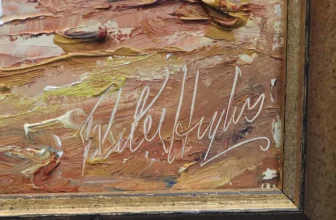
Collectors should also observe the signature, or absence of one. Many Old Masters did not consistently sign their works, and an unsigned piece is not necessarily lacking in importance. Conversely, obvious signatures in bright paint may indicate later additions meant to increase perceived value. When examining signatures, look for signs of age consistent with the rest of the surface.
Estate sale hunters also benefit from knowledge of iconography and subject matter. Old Masters frequently depicted religious scenes, classical mythology, saints, portraits of nobles, and pastoral landscapes rendered in styles unique to particular schools. Recognizing regional characteristics, such as the luminous skin tones of the Venetian school, the dramatic shadows of the Caravaggesque painters, or the intricate detail of the Flemish tradition, can help identify a work’s origin.
Another major consideration is condition and potential restorability. Cracks, dirt, surface abrasion, or minor structural issues often deter casual buyers but should be evaluated in terms of long-term value. Many Old Masters rely on restoration to reveal their brilliance, and trained conservators can reverse centuries of surface damage. A painting that appears dull or damaged might transform remarkably once cleaned, but buyers must balance the potential with realistic restoration costs.
Finally, collectors should always consider provenance clues, even when documentation seems absent. Labels on the back, inscriptions, gallery stamps, or old framing materials can reveal previous ownership or connections to reputable collections. Estate sale employees often overlook these details, but to a knowledgeable buyer, they can be the key to unlocking historical significance.
Why Estate Sales Remain Vital in the Old Master Market
In today’s world, where auction houses dominate the high-end market and digital platforms increasingly shape contemporary art buying, estate sales remain one of the last domains where individual expertise can outperform institutions. The Old Master market is undergoing a renaissance of interest among collectors seeking historical depth and rarity, and this renewed enthusiasm has pushed prices upward. Yet estate sales operate on a different rhythm, one dictated by local markets, family circumstances, and the unpredictable flow of personal belongings. This environment produces opportunities that the global market cannot replicate.
Estate sales also play an important cultural role by circulating historical artworks back into the public eye. Many Old Masters discovered in estates had been invisible to scholars for decades, hidden in private homes far from academic study. Their reappearance enriches art history, adds to catalogues raisonnés, and sometimes transforms scholarly understanding of an artist’s development. For collectors, participating in this process offers not only financial potential but also a profound connection to the ongoing discovery of human creativity.
The Continuing Promise of Old Master Opportunities in Estate Sales
Estate sales remain one of the most intriguing frontiers for collectors passionate about Old Master paintings. They offer a rare blend of adventure, potential profit, and intellectual engagement. Every estate sale is a window into a family’s history, and within these histories lie artworks that have been cherished, forgotten, misattributed, or simply overlooked.
For collectors willing to study, observe, and explore, estate sales provide access to remarkable works before they reach the controlled, competitive world of major auctions. Real discoveries still happen, and art history continues to be rewritten because curious eyes were willing to see beauty and significance where others saw nothing more than old frames and darkened surfaces.
The world of estate sales rewards curiosity, patience, and knowledge. Whether a collector dreams of finding a lost masterpiece or simply appreciates the thrill of searching through the remnants of private lives, estate sales challenge us to look more closely, think more deeply, and recognize that great art often hides in the most unexpected places. image/ estatesales