The Rise of Virtual Art Galleries for Wealthy Buyers
How Digital Platforms, VR, and New Collecting Behaviors Are Transforming the High-End Art Market
For centuries, the world of fine art operated behind closed doors, quiet back rooms, discreet private viewings, and tightly controlled relationships between gallerists and elite collectors. High-value works, especially blue-chip Old Masters or contemporary trophy pieces, were typically accessed only through established networks. The traditional market relied on exclusivity, personal introductions, and physical presence. Yet today, a seismic shift is underway. Wealthy buyers across the globe, especially a younger generation fluent in technology, are gravitating toward virtual art galleries, immersive digital viewing rooms, and expansive online platforms that are redefining how luxury art is found, evaluated, and purchased.
The rise of virtual art galleries is not a trend tied solely to pandemic necessity. Instead, it marks a long-term structural transformation driven by convenience, global accessibility, demographic change, transparency, and the integration of new technologies such as augmented reality (AR), virtual reality (VR), and blockchain authentication. Platforms such as Artsy, 1stdibs, Invaluable, and gallery-driven digital spaces by Gagosian and David Zwirner are no longer supplementary channels, they are primary marketplaces where multimillion-dollar transactions take place daily. Wealthy buyers now expect to be able to browse, compare, evaluate, and purchase art with the same ease they enjoy in other luxury sectors, from haute couture to collectible cars.
This extensive guide explores why virtual art galleries have become dominant spaces for high-end collectors, what drives affluent new buyers toward digital platforms, and how the world’s major galleries, auction houses, and marketplaces are reinventing themselves for this rapidly evolving ecosystem.
Why Virtual Art Galleries Appeal to Wealthy Buyers
Convenience and Global Accessibility Redefine Luxury Collecting
One of the most significant shifts in collector psychology concerns access. Traditionally, purchasing fine art required travel, flying to New York for a viewing, attending an opening in London, or scheduling a private appointment in Paris. Those barriers preserved exclusivity but also created inefficiencies. Virtual art galleries have removed these constraints entirely. Today’s wealthy buyers can browse tens of thousands of works from anywhere in the world, whether they are in a penthouse in Singapore, a yacht near Mallorca, or a business suite in Dubai.
This convenience is paired with a level of breadth that no physical gallery could ever match. A single online platform may host millions of artworks and thousands of galleries simultaneously, enabling a collector to compare styles, price points, periods, and provenance with extraordinary ease. For wealthy buyers accustomed to digital efficiency in other areas of their lives, from investment platforms to luxury e-commerce, this frictionless access has become indispensable.
Moreover, virtual galleries remove the social barriers that have historically intimidated or discouraged collectors who lacked longstanding relationships with top-tier dealers. High-end digital spaces democratize the browsing experience without compromising exclusivity: buyers can look, inquire, or purchase without navigating the unspoken codes of gallery culture.
A Demographic Shift in Wealth: Millennials and Women Lead the Surge
The collector demographic is undergoing a generational evolution. Today’s new wealth is increasingly concentrated in younger tech entrepreneurs, digital-first investors, and globally mobile professionals. Many belong to generations raised online, millennials and even early Gen Z high-net-worth individuals, who view digital platforms not as secondary but as essential.
Women, too, represent one of the fastest-growing groups of serious art buyers. These collectors often prioritize transparency, digital fluency, and direct engagement with artists, all of which online platforms are built to support. Wealth managers note that many younger buyers and female collectors approach art with a hybrid mindset: they appreciate cultural value, but they also seek clear investment logic. They gravitate toward platforms that provide data-driven insights, verified pricing, artist histories, and tools that allow strategic decision-making.
Because these groups are not bound by the traditions of the 20th-century art market, they are more comfortable discovering and purchasing art online, even at high price points. Virtual galleries meet their expectations with seamless digital experiences, immediate communication, and access that transcends geography and traditional gatekeeping.
A Value Shift in a Historically Opaque Market
For decades, the art market was often criticized for its opacity. Prices were hidden, provenance was selectively revealed, and much of the negotiation occurred in private. Online platforms disrupted this paradigm by offering visible pricing, detailed condition reports, extensive artist data, and market trends that empower buyers.
This transparency resonates strongly with wealthy collectors who view art as both cultural enrichment and financial asset. Online galleries provide:
Clear price visibility, reducing guesswork and negotiation anxiety
Comparable listings that allow collectors to analyze value
Artist biographies, exhibition histories, and auction results
Certificates of authenticity or blockchain-backed verification
Direct communication channels with galleries or artists
Rather than diminishing the mystique of the art world, this transparency has created more confident and better-informed buyers, which in turn accelerates high-value digital transactions.
Immersive Experiences Through VR and AR: Beyond the Static Screen
The greatest innovation in virtual galleries may be the rise of immersive technology. VR and AR experiences transform digital browsing from a simple scroll interface into something far more atmospheric and intuitive.
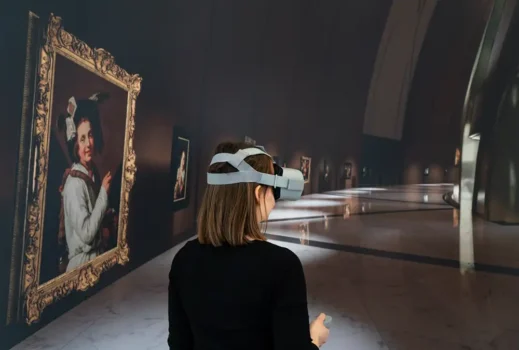
Virtual reality viewing rooms allow collectors to explore entire exhibitions rendered in digital 3D environments. These spaces mimic the architecture, lighting, and scale of real galleries, enabling a collector to perceive art more spatially and emotionally. They can “walk” through a show, zoom in on details, compare works side by side, or request a guided walkthrough from a remote curator.
Augmented reality takes personalization further. Collectors can project an artwork onto their own wall using a smartphone or tablet, adjusting scale and lighting to see exactly how a piece fits in their living room, library, or office. This eliminates one of the biggest uncertainties of buying art sight-unseen: how it will coexist with existing décor, architecture, and spatial proportions.
These tools generate a level of confidence and emotional connection that rivals physical viewing, and in many cases surpasses it through personalization. For affluent buyers who may be traveling frequently or managing multiple residences, this immediacy makes virtual acquisition not only possible but highly appealing.
Art as an Investment Diversifier: The Digital Advantage
Art has long been considered an alternative asset, but in recent years it has become more formally integrated into wealth-management strategies. Financial advisors from global firms now routinely recommend blue-chip art as a hedge against inflation, market volatility, and currency fluctuations. Contemporary art, in particular, has shown strong performance in global indexes and record-breaking auction results.
Online platforms amplify this investment logic by providing data tools typically unavailable in physical galleries. Wealthy buyers can review pricing histories, explore secondary-market performance, compare artists within categories, and track investment-grade trends, all from the same digital environment where the transaction occurs.
The emergence of NFTs and blockchain-verified digital art has expanded this investment ecosystem further. While not all wealthy collectors engage with NFTs, many appreciate the technological innovation and see them as speculative assets that complement their physical collections.
For buyers with diverse portfolios, virtual galleries represent the ideal blend of cultural passion and strategic investing.
How Major Galleries and Art Platforms Are Transforming Their Strategies
Hybrid Models Combine Digital Innovation with Traditional Prestige
World-leading galleries and auction houses have adapted quickly to the digital revolution. Institutions like Gagosian, Pace, and David Zwirner now operate sophisticated “online viewing rooms” that rival the visual impact of their physical galleries. These spaces reproduce exhibition design with high-resolution images, video commentary, artist interviews, and 3D walk-throughs.
Auction houses such as Christie’s and Sotheby’s combine livestreamed bidding with online catalogs enriched by high-definition media, condition videos, and AR tools. The hybrid model ensures that collectors receive the prestige and trust associated with established institutions while enjoying the speed and convenience of digital access.
These dual environments also allow galleries to reach new clients. Someone who discovers a work online may later become a long-term patron, visiting physical spaces and participating in exclusive events. Digital access becomes a bridge, not a replacement.
Specialized Digital Platforms Reshape the Collector Journey
While traditional galleries evolve, dedicated online platforms have become powerhouses of the modern market. Artsy provides access to thousands of galleries, offering collectors the ability to follow artists, receive notifications, save works, and compare prices. Its browsing experience resembles a cross between a museum archive and luxury e-commerce, making it especially appealing to younger buyers.
1stdibs, originally focused on high-end antiques and luxury interiors, has grown into a major venue for fine art acquisitions. Its curated format and reputation for quality create trust among affluent buyers seeking vetted inventory.
Invaluable specializes in online auctions, often hosting high-value estate sales, rare antiques, Old Masters, and fine collectibles. For collectors accustomed to auction dynamics, platforms like this provide an accessible entry into a world that once depended on attendance at physical salesrooms.
Each platform offers something unique, curation, scale, price transparency, or auction excitement, allowing collectors to shape their digital journey based on preference and expertise.
Digital-First Art and NFTs Expand the Market for New Buyers
The rise of NFTs introduced a new category of art that exists exclusively in digital form. Wealthy buyers were among the first to engage with this market, drawn to the concept of verifiable ownership through blockchain technology. Platforms specializing in digital-first art enabled record-breaking sales and attracted collectors who value innovation and technological artistry.
Even traditional galleries now incorporate NFTs into their catalogs, offering hybrid exhibitions where digital art is presented alongside physical works. For some collectors, NFTs are speculative assets; for others, they represent an entirely new frontier of creativity shaped by code, animation, and interactive design.
While digital art is still evolving, its presence within virtual galleries demonstrates how adaptable and expansive the online art ecosystem has become. Wealthy buyers now navigate a market where physical masterpieces, digital creations, and experimental assets coexist within the same platform.
A New Era of Confidence, Discovery, and Global Reach
Virtual Galleries Are Reshaping Collector Behavior
The most profound impact of virtual art galleries is their ability to transform the behavior, expectations, and engagement patterns of wealthy buyers. Collectors today are no longer constrained by geography, traditional gatekeepers, or strict schedules. They can browse at their own pace, explore new artists without pressure, consult experts digitally, and receive instantaneous information that would have taken days or weeks to obtain through traditional channels.
This autonomy encourages broader discovery. Wealthy buyers who once might have focused on a narrow range of artists or periods now venture into new genres, contemporary digital works, emerging creators, or global artistic movements previously inaccessible. Digital platforms promote exploration through recommendation algorithms, trend analytics, editorial features, and curated collections.
The Strength of Remote Connections: Curators, Advisors, and Artists
Another hallmark of the virtual art ecosystem is the rise of remote expertise. Collectors can consult independent advisors via video calls, participate in online studio visits, and engage directly with artists through live streams or digital Q&A sessions. This builds a level of personal connection and trust that enriches the collecting journey.
Galleries increasingly host virtual talks, walkthroughs, and behind-the-scenes content that invite collectors into the creative process. These experiences deepen emotional engagement, which is essential for high-value art acquisition. Wealthy buyers seek meaning, narrative, and context, virtual galleries provide these elements in immersive, dynamic formats no static print catalog could match.
The Future: A Market No Longer Confined by Walls
As the market evolves, virtual art galleries will not replace physical ones; instead, they will coexist in a complementary ecosystem. Pocket galleries, VR museum experiences, AI-driven art recommendations, and metaverse exhibitions point to a future where digital innovation expands the reach and potential of the global art industry.
For wealthy buyers, this future offers unprecedented freedom. Whether traveling across continents or relaxing at home, collectors can encounter extraordinary art, access global inventories, and connect with experts instantly. In this environment, taste, curiosity, and strategic thinking, not physical presence, define the collector’s journey.
Virtual galleries have opened the doors wider than ever before. Yet they have done so while preserving the fundamental qualities that make collecting a deeply personal, cultural, and often life-changing experience. Through a fusion of technology, transparency, and global access, the digital art world has become not just a tool, but a destination, one where the next generation of wealthy collectors is already shaping the future. image/ thekremercollection