Japanese Masterpieces: A Collector’s Guide to the Enduring Legacy of Japanese Painting
Shopping Ads: Antique Oil Paintings On Canvas For Sale. Limited Originals Available 💰😊
Authentic hidden masterpieces, Explore old master antique oil paintings from the Renaissance and Baroque eras. From 15th-century to 18th-century Antique Paintings. Bring the Renaissance and Baroque in your home. Shop Now!
🎨 Antique Oil Paintings On Canvas Renaissance, Baroque Art Antique Oil Paintings, Make Offer 16th to 18th Century Portrait Paintings
Japanese Masterpieces in painting occupy a singular position in global art history. They are not merely celebrated for aesthetic beauty, but for the philosophical depth, technical refinement, and cultural continuity they embody. From ancient courtly scrolls to monumental ukiyo-e prints and meditative ink landscapes, Japanese painting masterpieces reflect a civilization’s evolving relationship with nature, spirituality, power, and everyday life. For collectors, scholars, and enthusiasts alike, understanding these works requires more than surface admiration; it requires immersion in the ideas, techniques, and symbolic languages that define them.
What distinguishes Japanese Masterpieces is their ability to communicate across centuries without losing relevance. Even in contemporary galleries and studios, the compositional strategies, restrained elegance, and conceptual clarity of Japanese painting masterpieces continue to shape modern artistic practice. This article serves as a comprehensive collector’s guide, offering detailed explanations of the most famous Japanese painting masterpieces, their evolution over time, the hidden meanings embedded within them, and the enduring influence they exert on modern art.
The Cultural Foundations of Japanese Painting Masterpieces
Japanese painting did not develop in isolation. Its foundations were shaped by indigenous Shinto beliefs, imported Buddhist philosophy, and later Confucian ethics. These influences collectively informed how artists perceived the world and their role within it. Unlike Western traditions that often prioritized realism and individual expression, Japanese painting masterpieces frequently sought harmony, impermanence, and spiritual resonance.
Early Japanese Masterpieces were closely tied to religious practice. Temple murals, mandalas, and illustrated sutras were not decorative objects but tools for contemplation and teaching. Over time, painting expanded beyond religious institutions into aristocratic courts and eventually urban merchant culture. Despite these shifts, a consistent emphasis on balance, rhythm, and suggestion remained central to Japanese painting masterpieces, creating a recognizable visual language that persists even today.
Most Famous Japanese Painting Masterpieces and Their Lasting Impact
Among the most famous Japanese Masterpieces, works associated with the Heian, Muromachi, Edo, and Meiji periods stand out as defining achievements. Each era produced painting masterpieces that responded to social change while preserving core aesthetic values.
Heian-period narrative scrolls, such as illustrated court romances and historical tales, exemplify early Japanese Masterpieces through their flowing compositions and emotional subtlety. These paintings emphasize psychological nuance rather than dramatic action, inviting viewers to linger and reflect. The figures appear stylized, yet their gestures and placement convey complex human relationships.
The Muromachi period introduced monumental ink paintings influenced by Zen Buddhism. Artists created expansive landscapes where mountains dissolve into mist and empty space carries as much meaning as inked form. These Japanese painting masterpieces are revered for their disciplined brushwork and philosophical restraint. Collectors often regard them as meditative objects rather than purely visual ones.
The Edo period gave rise to some of the most globally recognized Japanese Masterpieces, particularly in ukiyo-e painting and printmaking. Images of actors, courtesans, landscapes, and seasonal festivals captured the vibrancy of urban life. These works balanced accessibility with technical sophistication, contributing significantly to the worldwide appreciation of Japanese painting masterpieces.
Ten of the Most Famous Japanese Painting Masterpieces from the Past 300 Years
Over the last three centuries, Japanese Masterpieces in painting have achieved global recognition for their originality, emotional depth, and cultural resonance. From the late Edo period to contemporary ink abstraction, Japanese painting masterpieces from this era demonstrate how tradition and innovation coexist. The following section presents ten of the most famous Japanese painting masterpieces from the past 300 years, organized with clear subheadings and described in full, contextual paragraphs.
Katsushika Hokusai and The Great Wave off Kanagawa
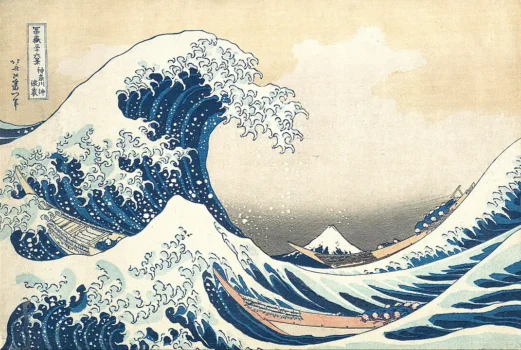
Among all Japanese Masterpieces, The Great Wave off Kanagawa stands as the most universally recognized. Created in the early nineteenth century, this painting captures a towering wave poised to crash upon fragile fishing boats, with Mount Fuji calmly visible in the distance. The work’s dramatic energy, controlled geometry, and symbolic contrast between permanence and impermanence define it as a cornerstone of Japanese painting masterpieces. Its influence extended far beyond Japan, shaping modern European art and redefining global visual culture.
Katsushika Hokusai and Red Fuji
Another iconic Japanese Masterpiece by Hokusai, Red Fuji presents the sacred mountain bathed in early morning light. The simplicity of form and restrained palette demonstrate how Japanese painting masterpieces elevate everyday natural scenes into timeless symbols. This work exemplifies balance, clarity, and spiritual calm, hallmarks of classical Japanese aesthetics.
Utagawa Hiroshige and Sudden Shower over Shin-Ōhashi Bridge
Painted in the mid-nineteenth century, this Japanese Masterpiece captures ordinary travelers caught in a sudden downpour. Diagonal rain lines and compressed space create movement and atmosphere, showing how Japanese painting masterpieces evoke emotion through environment rather than dramatic narrative. The painting’s cinematic composition later inspired Impressionist and Post-Impressionist artists.
Tōshūsai Sharaku and Portrait of Ichikawa Danjūrō VII
Sharaku’s actor portraits represent a bold departure within Japanese Masterpieces. This late Edo-period painting depicts a kabuki actor with exaggerated features and psychological intensity. Rather than idealization, the work emphasizes personality and tension, expanding the expressive boundaries of Japanese painting masterpieces focused on human character.
Hashimoto Gahō and Landscape of the Four Seasons
Created during the Meiji period, this Japanese Masterpiece reflects a time of cultural transition. The painting combines classical ink techniques with broader spatial awareness, illustrating how Japanese painting masterpieces evolved while preserving traditional values. It represents continuity amid modernization.
Yokoyama Taikan and Floating Lights
A defining work of early twentieth-century Japanese Masterpieces, Floating Lights abandons hard outlines in favor of luminous color transitions. The painting evokes spiritual stillness rather than physical detail, showing how Japanese painting masterpieces adapted to modern sensibilities without losing philosophical depth.
Hishida Shunsō and Fallen Leaves
This Japanese Masterpiece captures the quiet melancholy of seasonal change. Through subtle realism and delicate shading, the painting expresses impermanence, a central theme in Japanese painting masterpieces. Emotional resonance is achieved through restraint rather than overt symbolism.
Uemura Shōen and Mother and Child
Painted in the early twentieth century, this work stands as a landmark among Japanese Masterpieces created by women artists. The intimate composition and refined line work highlight domestic grace and emotional connection, broadening the thematic range of Japanese painting masterpieces.
Kaii Higashiyama and Sound of the Tide
In the postwar era, Sound of the Tide emerged as one of the most beloved Japanese Masterpieces. The serene seascape offers contemplation and healing, reflecting how Japanese painting masterpieces respond to historical trauma through quiet reflection rather than explicit commentary.
Toko Shinoda and Eternal
Representing contemporary Japanese Masterpieces, Shinoda’s abstract ink painting fuses calligraphy with modern abstraction. Created in the late twentieth century, it demonstrates that Japanese painting masterpieces remain innovative while rooted in centuries-old brush traditions.
The Evolution of Japanese Painting Masterpieces Across Centuries
The evolution of Japanese Masterpieces reflects a dynamic dialogue between tradition and innovation. Rather than discarding earlier styles, Japanese painters continuously adapted and reinterpreted them. This evolutionary process is one reason Japanese painting masterpieces feel timeless rather than antiquated.
In early periods, painting emphasized flatness and decorative rhythm, aligning with architectural spaces such as sliding screens and folding panels. As ink painting gained prominence, artists explored depth and atmosphere without relying on Western perspective. Later, during Japan’s encounter with Europe, painters selectively incorporated foreign techniques while preserving native sensibilities.
The Meiji era represents a critical turning point in the evolution of Japanese painting masterpieces. Artists faced pressure to modernize while maintaining cultural identity. The resulting works demonstrate remarkable synthesis, blending oil painting techniques with traditional subject matter and compositional restraint. This adaptive evolution ensured that Japanese Masterpieces remained relevant in an increasingly globalized art world.
Hidden Symbols and Techniques in Classic Japanese Painting Masterpieces
One of the most compelling aspects of Japanese Masterpieces is their layered symbolism. Classic Japanese painting masterpieces often communicate meaning indirectly, relying on shared cultural knowledge to complete the narrative. For collectors, recognizing these symbols deepens appreciation and informs valuation.
Natural elements frequently carry metaphorical weight. Pine trees symbolize endurance, cherry blossoms evoke impermanence, and flowing water suggests time’s passage. These motifs are not ornamental but conceptual, reinforcing philosophical themes central to Japanese aesthetics. In many Japanese painting masterpieces, the absence of an element is as meaningful as its presence, encouraging contemplative engagement.
Technique also plays a symbolic role. Brushwork varies from controlled and deliberate to spontaneous and expressive, reflecting the artist’s mental state and philosophical alignment. In ink painting, the visible trace of the brush embodies the moment of creation, transforming technique into a record of consciousness. This fusion of method and meaning is a defining characteristic of Japanese Masterpieces.
Why Japanese Painting Masterpieces Continue to Inspire Modern Art
Japanese Masterpieces exert a powerful influence on modern art because they offer alternative solutions to enduring artistic challenges. Composition, abstraction, and the relationship between form and emptiness are areas where Japanese painting masterpieces provide insights that remain highly relevant.
Modern artists across the world have drawn inspiration from Japanese approaches to asymmetry and negative space. Rather than filling the canvas, Japanese Masterpieces often leave areas intentionally unmarked, allowing viewers to participate imaginatively. This concept has profoundly influenced minimalist and abstract movements in modern art.
Additionally, Japanese painting masterpieces challenge the notion that complexity requires excess. Their refined simplicity demonstrates how restraint can produce emotional depth. Contemporary artists and designers continue to study these works for guidance on balance, clarity, and expressive economy.
Japanese Masterpieces as Collectible Cultural Assets
For collectors, Japanese painting masterpieces represent more than aesthetic investments; they are cultural assets carrying historical and philosophical significance. Authentic Japanese Masterpieces often reflect the collaborative nature of artistic production, involving painters, calligraphers, poets, and craftsmen.
Understanding provenance and context is essential when evaluating Japanese painting masterpieces. Materials, mounting styles, and inscriptions provide insight into a work’s origin and intended function. Unlike Western framed paintings, many Japanese Masterpieces were designed to be viewed temporarily, reinforcing themes of impermanence.
The global market for Japanese painting masterpieces continues to grow, driven by scholarly research and renewed appreciation for traditional craftsmanship. Collectors increasingly seek works that exemplify both technical mastery and cultural depth, qualities that define true Japanese Masterpieces.
The Philosophical Core of Japanese Painting Masterpieces
At the heart of Japanese Masterpieces lies a philosophical orientation that prioritizes harmony with nature and acceptance of transience. Concepts such as impermanence and understated beauty inform every aspect of Japanese painting masterpieces, from subject selection to execution.
Rather than asserting dominance over nature, these works present humanity as part of a larger, interconnected world. This worldview resonates strongly in contemporary contexts where environmental awareness and mindfulness are increasingly valued. Japanese Masterpieces thus offer not only visual pleasure but ethical and philosophical reflection.
This philosophical depth explains why Japanese painting masterpieces continue to engage viewers beyond their historical moment. They address universal concerns through culturally specific expressions, achieving a balance that few artistic traditions sustain so consistently.
The Timeless Relevance of Japanese Masterpieces
Japanese Masterpieces in painting endure because they transcend decorative appeal and speak to fundamental human experiences. Through centuries of evolution, Japanese painting masterpieces have preserved a coherent aesthetic vision while adapting to social and cultural change. Their hidden symbols, refined techniques, and philosophical foundations invite ongoing study and reinterpretation.
For collectors, artists, and scholars, engaging with Japanese Masterpieces is an opportunity to encounter a tradition that values depth over spectacle and meaning over excess. As modern art continues to seek authenticity and balance, Japanese painting masterpieces remain a vital source of inspiration, demonstrating that true artistic greatness lies in the harmonious integration of form, thought, and spirit. image/ wikipedia