How are expensive paintings transported
Shopping Ads: Antique Oil Paintings On Canvas For Sale. Limited Originals Available 💰😊
Authentic hidden masterpieces, Explore old master antique oil paintings from the Renaissance and Baroque eras. From 15th-century to 18th-century Antique Paintings. Bring the Renaissance and Baroque in your home. Shop Now!
🎨 Antique Oil Paintings On Canvas Renaissance, Baroque Art Antique Oil Paintings, Make Offer 16th to 18th Century Portrait Paintings
Transporting painting safely is one of the most critical responsibilities faced by collectors, conservators, dealers, and museums. Antique and high-value oil paintings are not merely decorative objects; they are fragile, layered structures composed of canvas or panel, ground layers, pigments, binders, varnish, and often centuries of environmental exposure. Any mistake during transportation can result in cracking, paint loss, distortion, or irreversible damage that compromises both aesthetic and monetary value. For this reason, transporting painting works, especially antique oil paintings, demands a level of care that goes far beyond ordinary packing or shipping practices.
This comprehensive collector’s guide explains how expensive paintings are transported professionally, how common shipping carriers compare for artwork transport, and how to protect oil paintings during moves, travel, or vehicle transport. It also addresses practical concerns such as wrapping oil paintings correctly, handling paintings that are still wet, and understanding whether materials like bubble wrap are safe for direct contact. Throughout, the emphasis remains on transporting painting objects in a way that respects their physical vulnerabilities and historical significance.
Understanding the Risks Involved in Transporting Painting Works
Before addressing methods and materials, it is essential to understand why transporting painting objects is inherently risky. Oil paintings are sensitive to vibration, impact, temperature changes, humidity fluctuations, and pressure. Antique paintings are particularly vulnerable because aging causes embrittlement of paint layers and ground, making them more susceptible to cracking when subjected to movement or stress.
Transporting painting works exposes them to dynamic forces not encountered while hanging on a wall. Even short trips can introduce micro-vibrations that weaken paint adhesion. Sudden temperature changes can cause expansion and contraction between layers, while excessive humidity may soften varnish or encourage mold growth. These risks increase significantly when paintings are transported improperly or without climate control.
Professional art handlers approach transporting painting objects as a conservation task rather than a logistical one. The goal is not simply to move the painting from one place to another, but to maintain environmental stability and mechanical support throughout the journey.
How Expensive Paintings Are Transported Professionally
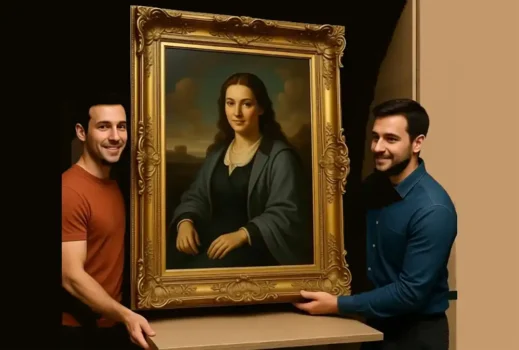
When collectors ask how expensive paintings are transported, the answer lies in specialized art logistics rather than standard shipping practices. High-value paintings are typically transported by fine art shipping companies that offer climate-controlled vehicles, trained handlers, and custom crating services. These professionals treat transporting painting objects as a controlled process that minimizes shock, vibration, and environmental change.
Custom crates are central to professional transporting painting operations. These crates are built to fit the painting precisely, with internal supports that prevent movement while avoiding pressure on the canvas or frame. The interior often includes cushioning materials that absorb vibration and buffers that maintain stable temperature and humidity levels. For international transport, crates may be sealed with vapor barriers to protect against fluctuating conditions during air or sea transit.
For extremely valuable or fragile works, paintings may be transported in dedicated vehicles with no other cargo. Couriers may accompany the artwork to monitor conditions and ensure proper handling at every transfer point. This level of care explains why professional transporting painting services are expensive, but also why they are considered essential for museum-quality works.
Comparing FedEx and UPS for Shipping Artwork
Collectors frequently ask whether FedEx or UPS is better for shipping artwork. While both carriers offer reliable logistics networks, neither is designed specifically for transporting painting works, particularly antique oil paintings. These companies primarily focus on speed and efficiency rather than conservation-grade handling.
FedEx and UPS can be suitable for shipping lower-value or contemporary artworks that are robust and well-packed. However, when transporting painting objects of significant value, the limitations of these services become evident. Packages may pass through multiple sorting facilities, experience automated handling, and be exposed to temperature extremes. Even when marked as fragile, shipments are not guaranteed gentle treatment.
Between the two, FedEx is often perceived as marginally better for artwork due to slightly more consistent handling and insurance options, but the difference is not decisive. Neither carrier provides climate control or specialized art handling by default. For antique oil paintings, relying solely on FedEx or UPS introduces risks that professional art shippers are specifically designed to mitigate.
Collectors who must use these carriers should invest heavily in proper packing and insurance and understand that transporting painting works through standard courier services is always a compromise.
How to Protect Oil Paintings When Moving
Protecting oil paintings during a move requires a systematic approach that prioritizes stability and isolation from external stressors. Transporting painting objects within a home or between residences may seem straightforward, but many artworks are damaged during private moves due to improper handling or rushed packing.
The first consideration is environmental control. Oil paintings should never be exposed to extreme heat, cold, or humidity during a move. They should be transported last and unpacked first to minimize time spent in uncontrolled conditions. Paintings should always remain upright and never laid flat, as horizontal positioning increases the risk of pressure damage and vibration-induced cracking.
Physical protection is equally important. The surface of an oil painting is vulnerable to abrasion and pressure, especially if varnish has softened due to heat. Any protective covering must avoid direct contact with the painted surface. The frame should be stabilized to prevent shifting, and the painting should be immobilized within its container to prevent movement during transport.
When transporting painting objects during a move, patience and planning are more important than speed. Rushed handling is one of the most common causes of accidental damage.
How to Wrap an Oil Painting for Transport Properly
Wrapping an oil painting for transport is not about layering as much material as possible, but about using the right materials in the correct order. The primary objective is to protect the surface without creating pressure, friction, or trapped moisture.
The painted surface should first be shielded with a non-abrasive, non-stick barrier such as glassine or silicone-release paper. This layer prevents contact between the paint or varnish and outer materials. Over this, a rigid support such as corrugated board or foam board can be placed to protect against impact and puncture.
Padding materials should be used around the edges and back, never pressed tightly against the painted surface. The wrapped painting should then be placed in a snug container that prevents shifting. When transporting painting objects, movement inside the package is more dangerous than external shocks, as repeated micro-impacts can gradually weaken paint adhesion.
Proper wrapping is a balance between protection and breathability. Over-sealing an oil painting can trap moisture and create long-term conservation issues.
Transporting an Oil Painting That Is Still Wet
Transporting painting works that are still wet presents unique challenges, as the paint surface is extremely vulnerable to smudging, imprinting, and dust adhesion. Ideally, wet oil paintings should not be transported at all until fully cured, which can take weeks or months depending on paint thickness and medium.
When transport is unavoidable, the painting must be kept in a vertical position with no material touching the painted surface. Temporary travel frames or spacers can be used to create a protective barrier that prevents contact while allowing airflow. The painting should be shielded from dust and temperature extremes without enclosing it in airtight wrapping.
Vibration is particularly dangerous for wet paint, as it can cause subtle movement that disrupts brushwork and surface texture. Transporting painting works in this condition should be done slowly, over short distances, and ideally by hand rather than commercial shipping.
Collectors and artists should recognize that moving wet oil paintings carries inherent risk, and damage sustained at this stage is often impossible to repair invisibly.
Is It Safe to Wrap an Oil Painting in Bubble Wrap?
The question of whether it is okay to wrap an oil painting in bubble wrap is common, and the answer depends on how bubble wrap is used. Bubble wrap should never be placed directly against the surface of an oil painting. The plastic material can stick to varnish, especially in warm conditions, and the bubble texture can imprint permanently into soft paint layers.
When transporting painting objects, bubble wrap can be used as an outer cushioning layer only, separated from the artwork by a rigid barrier and non-stick interleaving material. Its purpose should be shock absorption, not surface protection.
For antique oil paintings, even indirect use of bubble wrap should be approached with caution. Many conservators prefer alternative materials such as polyethylene foam or felted padding that provide cushioning without the risks associated with plastic contact.
Bubble wrap is a tool, not a solution. Misuse is a frequent cause of damage during amateur transporting painting efforts.
How to Travel With an Oil Painting Safely
Traveling with an oil painting, whether by car, train, or plane, requires careful planning to ensure stability and environmental control. Transporting painting objects personally can be safer than commercial shipping if done correctly, as it allows for direct oversight.
Paintings should always be transported upright and secured to prevent tipping. In vehicles, they should be placed between padded surfaces and restrained to avoid movement during braking or turns. Exposure to sunlight through windows should be avoided, as heat buildup can soften paint and varnish layers.
When traveling by air, paintings should be carried in rigid, well-padded containers that meet cabin or cargo requirements. Temperature fluctuations during flights pose significant risks, making climate-controlled cargo or carry-on transport preferable when possible.
The key to traveling with an oil painting is minimizing variables. Every additional transfer, handling step, or environmental change increases risk when transporting painting works.
How to Transport Paintings in a Car Without Damage
Transporting paintings in a car is common during moves or acquisitions, but it is also a scenario where many artworks are damaged due to complacency. Vehicles are subject to vibration, temperature fluctuations, and sudden movements, all of which can affect oil paintings.
Paintings should never be placed loose in a car. They must be secured upright, ideally in the back seat rather than the trunk, where temperature control is better. Padding should be placed around the edges and back, and the painting should be immobilized using seat belts or other restraints.
Long journeys require monitoring interior temperature and humidity. Leaving paintings in a parked car, even briefly, can expose them to extreme heat or cold that causes irreversible damage. Transporting painting objects by car demands constant attention and conservative driving practices.
Why Transporting Painting Safely Is a Collector’s Responsibility
For collectors, transporting painting works safely is not merely a logistical concern but an ethical one. Ownership of an antique or valuable oil painting carries a responsibility to preserve it for future generations. Damage caused by improper transport diminishes cultural heritage as well as financial value.
Professional art handlers and conservators emphasize that most transport damage is preventable with proper planning, materials, and restraint. Rushing, improvising, or underestimating the fragility of oil paintings leads to avoidable loss.
Understanding best practices for transporting painting objects empowers collectors to make informed decisions, whether hiring professionals or handling works personally. In every case, caution, patience, and respect for the artwork should guide the process.
A Conservation-First Approach to Transporting Painting Works
Transporting painting objects, particularly antique oil paintings, is a complex task that requires knowledge, preparation, and care. From understanding how expensive paintings are transported professionally to recognizing the limitations of standard shipping services, collectors must approach transportation with a conservation-first mindset.
Proper wrapping, environmental control, and secure handling are essential whether moving a painting across town or across continents. Special considerations apply to wet paintings, bubble wrap usage, and vehicle transport, all of which carry specific risks when managed incorrectly.
By treating transporting painting as an extension of preservation rather than a simple move, collectors can protect the integrity, beauty, and value of their artworks. Safe transport is not about convenience or cost savings, but about stewardship of irreplaceable cultural objects.