What is The Biggest Museum in the World
Art is a reflection of human history, culture, and creativity. Across the world, numerous art museums preserve and showcase the finest masterpieces that mankind has created. Among them, one stands above the rest in terms of size, prestige, and cultural significance: The Louvre Museum in Paris, France. Not only is it the largest art museum in the world, but it is also one of the most visited, housing some of the most famous artworks in history. This article explores the grandeur of the Louvre, its history, its massive collection, and why it remains the largest and most important art museum in the world.
The History of the Louvre
The Louvre Museum, known as “Musée du Louvre” in French, has a rich history that dates back centuries. Originally, the site was built as a fortress by King Philip II in the late 12th century. Over time, it was transformed into a royal palace by Francis I in the 16th century, and later, under King Louis XIV, it became a repository for the royal collection of art.
The French Revolution played a crucial role in the Louvre’s transformation into a public museum. In 1793, the National Assembly opened the museum to the public, allowing ordinary citizens to experience the grandeur of the nation’s art collection. Since then, the Louvre has grown exponentially, expanding its collection through acquisitions, donations, and archaeological excavations.
The Size and Structure of the Louvre
One of the key reasons why the Louvre is the largest art museum in the world is its sheer size. Covering approximately 782,910 square feet (72,735 square meters), the museum is vast, housing over 615,000 pieces of art, of which around 35,000 are on display at any given time. The museum is divided into three main wings: Richelieu, Sully, and Denon, each filled with extensive galleries and rooms dedicated to different periods and styles of art.
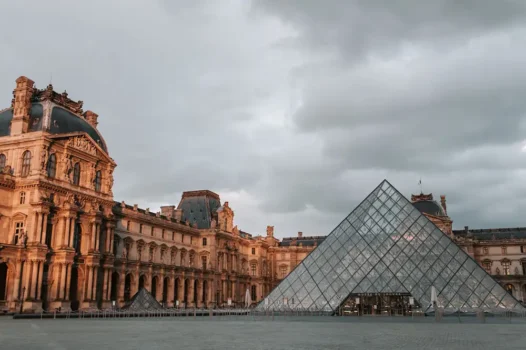
The Louvre is also home to the Louvre Pyramid, a modern glass structure designed by architect I. M. Pei. Completed in 1989, this pyramid serves as the main entrance to the museum and has become an iconic symbol of the Louvre itself. The museum complex also includes underground galleries and storage spaces, making it one of the most extensive museum facilities in the world.
The Art Collection: A Treasure Trove of Masterpieces
The Louvre’s collection spans thousands of years, covering various civilizations and artistic movements. Its vast collection is divided into eight major departments:
- Egyptian Antiquities – This department houses over 50,000 artifacts from Ancient Egypt, including mummies, sarcophagi, and the famous Great Sphinx of Tanis.
- Near Eastern Antiquities – Featuring artifacts from Mesopotamia, Persia, and the Levant, including the famous Code of Hammurabi.
- Greek, Etruscan, and Roman Antiquities – This section includes the Venus de Milo, the Winged Victory of Samothrace, and numerous classical sculptures.
- Islamic Art – Displays exquisite ceramics, metalwork, textiles, and manuscripts from the Islamic world.
- Sculpture – Features European sculptures, including Michelangelo’s Dying Slave and Rebellious Slave.
- Decorative Arts – Houses exquisite furniture, tapestries, and royal treasures from different periods.
- Paintings – The Louvre’s painting collection includes masterpieces from the Renaissance to the 19th century. Among them, Leonardo da Vinci’s Mona Lisa remains the museum’s most famous piece.
- Prints and Drawings – This department includes thousands of sketches, manuscripts, and prints from renowned artists.
Why is the Louvre the Largest Art Museum?
There are several reasons why the Louvre holds the title of the largest art museum in the world:
1. Vast Collection Size
With over 600,000 items in its collection, the Louvre surpasses all other art museums in terms of sheer volume. While other institutions, such as The Metropolitan Museum of Art in New York or The State Hermitage Museum in Russia, hold significant collections, none match the Louvre’s scope.
2. Physical Space and Exhibition Area
The Louvre’s 782,910 square feet of space makes it the largest museum by total area. While other museums may have extensive collections, the Louvre’s display areas, underground archives, and galleries allow it to showcase an unparalleled variety of art.
3. Historical Importance and Influence
As a former royal palace and a cultural landmark of France, the Louvre has played a central role in preserving and displaying art. Its influence extends beyond its size, as it has set standards for how art is curated and exhibited worldwide.
4. Global Recognition and Visitor Numbers
The Louvre consistently ranks as the most-visited museum in the world. In recent years, it has attracted over 7 million visitors annually, demonstrating its global appeal and cultural significance.
5. Expansions and Modernization
The Louvre has continued to grow, adding new galleries, renovating old ones, and even opening satellite museums, such as the Louvre Abu Dhabi. This continuous expansion ensures that it remains the largest and most important art museum in the world.
How Much Is the Louvre Worth
The Louvre’s value is derived not just from its vast and historic structure but also from its role as the home of the world-renowned Louvre Museum. The museum itself houses over 380,000 pieces of art, including Leonardo da Vinci’s Mona Lisa, the Venus de Milo, and The Winged Victory of Samothrace. Some estimates suggest that the artwork alone within the Louvre Museum is worth well over $45 billion. When adding the historical and architectural significance of the Louvre Palace itself, the total worth of the entire complex could easily surpass $100 billion.
Additionally, the Louvre Palace is a UNESCO-recognized cultural landmark, meaning that its real estate value is immeasurable, as it cannot be bought or sold on the open market. The French government preserves it as a national treasure, making its valuation more about cultural and historical significance than actual market price.
If the Louvre Went on Sale: The Priceless Price Tag
If one morning, the world awoke to a headline that seemed impossible: “The Louvre Museum Is Up for Sale.” Paris was in uproar, economists scrambled for calculators, and billionaires quietly made phone calls. The Louvre, home to humanity’s most iconic works of art, was suddenly on the open market, at least in this thought experiment.
The question echoed from boardrooms to coffee shops: How much is the Louvre worth?
At first glance, you might be tempted to value it like any other piece of prime real estate. The Louvre’s sprawling complex covers about 652,000 square feet of galleries in the heart of Paris, an architectural treasure dating back to the late 12th century. If Paris real estate prices average around €10,000 per square meter for luxury properties, the building alone could theoretically be worth over €6 billion. But that’s just the shell.
Inside those walls lies the real fortune: the art collection. The Louvre houses more than 380,000 objects, from ancient Egyptian sarcophagi to Renaissance masterpieces, though only about 35,000 are on display at any given time. The Mona Lisa alone is considered priceless, a word that frustrates accountants and delights curators. Yet if we take a purely hypothetical route, the Mona Lisa could fetch anywhere from $1 billion to $50 billion in a private sale, depending on the buyer’s appetite and disregard for international cultural outrage.
Now, multiply that speculative math across the museum’s holdings. The Raft of the Medusa, Venus de Milo, the Winged Victory of Samothrace, countless works by Rembrandt, Vermeer, Caravaggio, and Delacroix. According to one 2020 French government insurance estimate, the Louvre’s collection is valued at around €35 billion. Many art market analysts argue that this is wildly conservative; if individual pieces were sold at auction to the ultra-wealthy, the total could soar past €200 billion.
But the Louvre’s worth is more than the sum of its paintings and sculptures. It’s a global brand, drawing nearly 8 million visitors a year in pre-pandemic times. That means ticket sales, licensing deals, merchandise, and prestige tourism revenue for Paris. If a tech giant or sovereign wealth fund “bought” the Louvre, they wouldn’t just acquire a building and its contents, they’d inherit an unmatched cultural monopoly. Economists might calculate its brand value at another €10–15 billion.
Even so, a true price is almost meaningless. UNESCO protections, French cultural heritage laws, and public sentiment make the actual sale of the Louvre not just illegal, but unthinkable. Art in the public trust isn’t a commodity, it’s a shared inheritance. Attempting to put a number on it is like pricing the moon: you can try, but you’ll always be wrong in a way that matters.
Still, imagining the Louvre “for sale” is a fascinating mental exercise. It forces us to confront the idea that value isn’t always about money. The Louvre is worth billions on paper, but in reality, it’s worth everything we can’t count: history, identity, and the collective memory of human creativity. And that’s a kind of wealth no check could ever buy.
The Louvre’s Cultural Impact
Beyond its size, the Louvre has a significant cultural impact. It serves as a symbol of artistic excellence and a repository of human history. Some of the most famous moments in art history have taken place within its walls, from exhibitions of groundbreaking works to art heists that have captured global attention.
Additionally, the museum has inspired countless artists, writers, and filmmakers. Its presence in literature and cinema, from “The Da Vinci Code” to various art documentaries, highlights its importance in global culture.
Challenges and the Future of the Louvre
Despite its grandeur, the Louvre faces challenges. Managing such a vast collection requires immense resources, and conservation efforts must be constantly maintained. Additionally, the sheer volume of visitors presents logistical challenges, requiring advanced crowd management strategies.
Looking to the future, the Louvre continues to adapt by incorporating technology, such as virtual tours and digital archives, making its collection accessible to a wider audience. It also collaborates with international institutions to promote art appreciation globally.
The Louvre stands as the largest art museum in the world, not just in terms of physical size but also in cultural significance. Its vast collection, historical importance, and global influence make it an unparalleled institution in the art world. Whether one visits to see the Mona Lisa, explore ancient artifacts, or simply marvel at the grand architecture, the Louvre remains a testament to humanity’s enduring love for art. As it continues to evolve, it will undoubtedly maintain its place as the world’s greatest and largest art museum for generations to come.