Agostino Carracci: The Intellectual Force of the Carracci Revolution
Agostino Carracci (1557–1602) was one of the most important yet often understated figures of late Renaissance and early Baroque art. A painter, engraver, draftsman, poet, and theorist, Agostino played a central role in the artistic revolution led by the Carracci family in Bologna. Alongside his younger brother Annibale and cousin Ludovico, he helped redirect Italian painting away from the artificial complexity of Mannerism toward a renewed naturalism grounded in observation, classical balance, and emotional clarity. While Annibale is often remembered as the greatest painter of the trio, Agostino was its intellectual backbone, shaping both its artistic philosophy and technical breadth.
Born in Bologna in 1557, Agostino grew up in a city that was intellectually vibrant but artistically dominated by late Mannerist conventions. He initially trained as a goldsmith before turning to engraving, a medium in which he would achieve early fame. His work as an engraver exposed him to a wide range of artistic styles, especially those of Correggio, Titian, Veronese, and Tintoretto. Through prints, Agostino became deeply familiar with the compositional clarity of the High Renaissance and the rich colorism of Venetian painting, two influences that would later shape the Carracci reform.
Agostino’s engravings were celebrated throughout Italy and beyond. His prints after works by Correggio and other masters were not simple reproductions but interpretive translations that demonstrated his keen understanding of form, light, and emotional expression. These engravings played a vital role in disseminating the Carracci aesthetic across Europe, making Agostino an important cultural transmitter at a time when prints were the primary means of artistic exchange.
In the 1580s, Agostino joined Annibale and Ludovico in founding the Accademia degli Incamminati (Academy of Those Who Are Making Progress). This school became one of the most influential art academies of its time. Unlike earlier workshops, the academy emphasized life drawing, anatomical study, direct observation of nature, and the study of great masters. Agostino, highly educated and literary-minded, contributed theoretical rigor to the academy. He believed that great art should combine disegno (drawing), colorito (color), invention, and emotional truth, a synthesis of Florentine structure and Venetian sensuality.
As a painter, Agostino’s output was smaller than that of his brother, but his works reveal refinement, intelligence, and expressive depth. One of his most significant paintings is “The Communion of Saint Jerome” (1592), created for the Certosa di Bologna. The work demonstrates a sober realism, emotional restraint, and careful composition that reflect both Counter-Reformation ideals and the Carracci commitment to clarity and devotion. The painting was widely admired and often compared favorably with Renaissance masterpieces for its spiritual gravity.
Agostino also collaborated closely with Annibale on major decorative projects. Their most famous joint effort was the fresco decoration of the Palazzo Fava and later the Palazzo Magnani in Bologna, where classical mythology and history were treated with unprecedented narrative coherence and naturalism. These fresco cycles marked a decisive break from Mannerist exaggeration and laid the groundwork for Baroque storytelling.
In 1597, Agostino followed Annibale to Rome to work on the monumental frescoes of the Farnese Gallery, one of the greatest achievements in Western art. While Annibale is credited as the principal genius behind the project, Agostino’s role was substantial. He contributed figures, compositional ideas, and poetic inscriptions, and his deep knowledge of classical literature enriched the iconographic complexity of the ceiling. Tensions eventually arose between the brothers, likely due to financial disputes and differing temperaments, and Agostino left Rome before the project was fully completed.
After leaving Rome, Agostino traveled to Parma, where he entered the service of Duke Ranuccio I Farnese. There, he continued to paint and engrave, increasingly drawn to introspective and lyrical themes. His later works suggest a growing sensitivity and emotional depth, though his career was cut short by his death in 1602 at the age of 44.
Agostino Carracci’s greatest legacy lies in his role as a reformer, teacher, and intellectual force. He helped establish a new artistic language that balanced realism with ideal beauty, emotion with discipline, and tradition with innovation. Through the academy, he influenced an entire generation of artists, including Guido Reni, Domenichino, and Francesco Albani, who would carry Carracci principles into the heart of the Baroque era.
Historically, Agostino stands at a turning point in European art. He represents the moment when artists consciously reflected on the past to create something new, reviving the ideals of the Renaissance while addressing the spiritual, emotional, and visual needs of a changing world. Though often overshadowed by Annibale’s fame, Agostino Carracci remains essential to understanding the transformation of Italian art around 1600. His combination of technical mastery, theoretical insight, and humanistic learning makes him one of the most important artistic minds of his age.
What Is Agostino Carracci Known For
In the grand and vibrant narrative of the Italian Renaissance and Baroque transition, few names resonate with the depth and influence of Agostino Carracci (1557–1602). Though often overshadowed by his brother Annibale Carracci and cousin Ludovico Carracci, Agostino carved his own path through the Italian art world, not only with his exceptional paintings and engravings but through his pivotal role in shaping a new visual language that broke away from Mannerist conventions and laid the foundation for the Baroque era.
Who Was Agostino Carracci?
Born in Bologna in 1557, Agostino was the eldest of the Carracci trio. His early life was marked by rigorous artistic training, first under Prospero Fontana, and later, crucially, with a specialization in engraving under Cornelis Cort in Venice. This background in engraving would prove instrumental in shaping his precise and intellectual style of painting, one that combined clarity, realism, and a reverence for classical art.
While his cousin Ludovico and brother Annibale focused primarily on painting, Agostino was both a painter and an engraver, and arguably the most erudite of the three. His deep knowledge of classical texts, poetry, and philosophy infused his works with narrative depth and intellectual rigor. This combination of scholarship and artistry positioned him as a key figure in the formation of the Accademia degli Incamminati, the revolutionary art academy founded by the Carracci in Bologna around 1582.
The Carracci Revolution
The art world of late 16th-century Italy was dominated by Mannerism, a style characterized by exaggerated poses, artificial compositions, and often arcane symbolism. The Carracci sought to restore art to a more naturalistic, human-centered approach inspired by the High Renaissance masters like Raphael, Michelangelo, and Titian.
At the Accademia degli Incamminati, Agostino played a vital pedagogical role. He was known not just for his technical skill, but for his passionate advocacy of life drawing, anatomical studies, and engagement with classical literature. The academy’s teachings had a profound impact on future generations of artists, including Guido Reni, Domenichino, and Francesco Albani.
Agostino, while perhaps the least prolific of the trio in terms of paintings, was instrumental in spreading the ideals of the Carracci school through his engravings, which were widely circulated across Europe and deeply influential in shaping the visual culture of the time.
Agostino Carracci is best known for:
His exquisite engravings that interpreted the works of major Renaissance and Venetian masters.
His contributions to the Bolognese School of Painting, emphasizing realism, emotional depth, and classical balance.
His role in founding and teaching at the Accademia degli Incamminati.
Collaborative fresco cycles, especially those with his brother Annibale and cousin Ludovico.
Reviving naturalism in Italian art during a time of Mannerist excess.
Agostino’s work was deeply rooted in observation and classical ideals. He rejected the artificiality of Mannerism, seeking to return to the natural beauty and psychological depth of the human figure. His paintings display harmonious compositions, careful anatomical rendering, and a rich, luminous palette influenced by Venetian masters like Titian.
Most Famous Paintings of Agostino Carracci
Though Agostino was a master engraver, his reputation as a painter grew significantly during and after his life. Here are some of his most well-known paintings:
1. Communion of St. Jerome (1592)
Location: Pinacoteca Nazionale di Bologna
One of Agostino’s most emotionally intense and technically accomplished paintings, this altarpiece shows Saint Jerome receiving the Eucharist before death. The scene is infused with reverence, tenderness, and anatomical precision.
The work is often compared to Domenichino’s later version of the same subject, with art historians noting Agostino’s more somber and devotional interpretation.
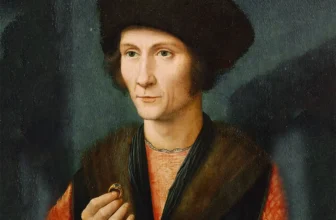
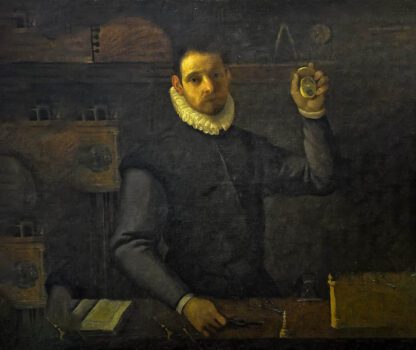
2. Portrait of a Philosopher (or Allegory of Philosophy)
Location: Various copies exist in private and public collections
This introspective portrait reflects Agostino’s deep engagement with classical philosophy. The subject, believed to be a representation of Agostino himself or an allegorical figure, is painted with intense realism and thoughtful expression.
3. Frescoes in Palazzo Magnani, Bologna – “Histories of the Founding of Rome”
Location: Bologna
A collaborative effort by the Carracci cousins, this cycle of frescoes showcases Agostino’s narrative ability, especially in scenes like the “Meeting of Romulus and Hersilia.” His figures are heroic yet grounded, echoing the balance of Michelangelo and the humanity of Raphael.
4. Frescoes in Palazzo Farnese (with Annibale Carracci)
Location: Rome
Agostino joined Annibale in Rome around 1595 to work on the grand decorative project in the Palazzo Farnese, commissioned by Cardinal Odoardo Farnese. While Annibale led the project, Agostino contributed to the earlier stages, especially in ceiling frescoes that glorified love, mythology, and the classical world.
Most Expensive Painting of Agostino Carracci
Agostino Carracci’s works rarely appear on the auction market due to their age, fragility, and museum placement. However, when they do, they often attract considerable interest from collectors and institutions.
Notable Auction Highlight:
One of Agostino Carracci’s portraits was sold at Christie’s for a price nearing $1 million, although prices vary widely depending on authenticity, condition, and provenance.
Most of Agostino’s valuable works are engravings, many of which have fetched tens of thousands of dollars at auction. His “The Last Communion of Saint Jerome” has been considered one of his most valuable painted works, although its institutional setting makes it unlikely to be sold.
As of 2025, the most expensive attributed painting (when factoring in both historical significance and potential market value) is “Communion of St. Jerome”, due to its artistic mastery and rarity.
How Many Paintings Did Agostino Carracci Create?
Unlike his brother Annibale, Agostino was not an extremely prolific painter. His career was split between:
Painting
Engraving and printmaking
Teaching and academic work
Art historians estimate that there are around 30 to 40 known paintings either fully or largely executed by Agostino Carracci. Many of these are altarpieces, portraits, and fresco contributions to collaborative cycles.
He also produced over 60 known engravings, some of which are of masterworks by Raphael, Titian, Veronese, and Correggio. These prints not only demonstrated his technical brilliance but helped disseminate Renaissance art throughout Europe.
Where Are Agostino Carracci’s Paintings Located?
Agostino’s paintings and engravings are now housed in some of the most prestigious museums and galleries across the world. Some notable locations include:
1. Pinacoteca Nazionale di Bologna (Italy)
Home to “Communion of St. Jerome” and other early works.
Also houses works by Ludovico and Annibale, offering a comprehensive look at the Carracci school.
2. Palazzo Magnani, Bologna
Fresco cycle: “Histories of the Founding of Rome” (collaborative work).
3. Palazzo Farnese, Rome
Although his direct contribution was overshadowed by Annibale, Agostino helped in early phases of this monumental decorative project.
4. Louvre Museum, Paris
Houses a number of engravings and attributed paintings by Agostino.
5. British Museum, London
Holds one of the most extensive collections of Agostino Carracci’s prints and engravings.
6. Uffizi Gallery, Florence
Possesses some of Agostino’s drawings and engravings.
7. Metropolitan Museum of Art, New York
Contains select works by and attributed to Agostino, especially prints and studies.
Agostino Carracci’s Legacy
Agostino Carracci’s legacy is best understood not solely through his paintings, but through his profound impact on art education, engraving, and visual culture.
Key Aspects of His Legacy:
1. Academic Influence
As a co-founder of the Accademia degli Incamminati, Agostino helped lay the groundwork for the modern art academy. His emphasis on anatomy, perspective, and classical themes deeply influenced generations of artists in Bologna and beyond.
2. Master of the Engraving
Agostino was arguably one of the greatest engravers of the late Renaissance, rivaled only by figures like Hendrick Goltzius. His engravings of Titian, Michelangelo, and Correggio’s works allowed these masterpieces to be studied across Europe.
3. Bridge Between Renaissance and Baroque
Though his life was cut short in 1602 at age 45, Agostino’s work marked a clear transition from the stylization of Mannerism to the grounded naturalism of the Baroque. His art embodies emotional depth, technical precision, and intellectual clarity, qualities that would be expanded upon by artists like Caravaggio, Guido Reni, and the Roman Baroque masters.
4. Mentorship
Many of the greatest artists of 17th-century Italy passed through the Carracci academy and were directly or indirectly shaped by Agostino’s methods. His philosophical and didactic approach elevated the role of the artist from mere craftsman to intellectual.
A Quiet Master in the Shadow of Giants
While Annibale Carracci dazzled Rome with his grand frescoes and Ludovico led the Bolognese school after their deaths, Agostino Carracci remains the cerebral and poetic heart of this triumvirate. His refined brushwork, expressive engravings, and pedagogical vision helped to redefine what art could be in a world transitioning from Renaissance harmony to Baroque drama.
Though his name may not always echo as loudly as some of his contemporaries, Agostino’s influence is embedded in the very foundations of European academic art. He was a quiet revolutionary, a scholar-painter who wielded the pen and brush with equal authority, and whose legacy still resonates through museums, academies, and the very fabric of Western art.