The Cost of Antique Painting Restoration and What to Expect
Antique paintings hold more than just pigment and canvas , they carry history, heritage, and irreplaceable value. Whether the piece is a family heirloom passed down through generations or an investment purchased at an auction, proper care and restoration are essential to preserve its beauty and value. However, one of the most common questions collectors, galleries, and homeowners ask is: “How much does antique painting restoration cost?”
The cost antique painting restoration can vary widely depending on multiple factors such as the painting’s condition, size, age, and the type of damage. In this comprehensive guide, we will break down everything you need to know about antique painting restoration costs, the restoration process, what to expect from professionals, and how to make informed decisions to protect your treasured artwork.
Why Antique Painting Restoration Matters
An antique painting is more than an object of decoration. Whether it’s a landscape from the Romantic period or a modernist portrait, each piece represents cultural significance and historical craftsmanship. Unfortunately, paintings naturally degrade over time due to environmental conditions, dust, smoke, and improper handling.
Restoration is not just about making the painting look “new” again , it’s about stabilizing and preserving it for future generations. Proper restoration can:
Reverse or mitigate environmental damage.
Prevent further deterioration of the paint layers and canvas.
Enhance the painting’s visual appeal.
Increase or maintain the artwork’s market value.
Preserve historical and sentimental importance.
Common Reasons Paintings Need Restoration
Antique paintings are particularly vulnerable because of their age. Here are the most common problems that may require professional restoration:
Surface Dirt and Grime
Over decades, soot, dust, and pollutants accumulate on the surface, creating a dull, yellowish layer. This can obscure fine details and distort colors.Varnish Discoloration
Many antique paintings were coated with varnish for protection. Over time, varnish can yellow or darken, altering the painting’s appearance.Flaking or Cracking Paint
As the paint and canvas age, they can become brittle, causing cracking (craquelure) or flaking. This requires stabilization to prevent paint loss.Tears or Holes in the Canvas
Accidents, mishandling, or weak canvas fibers can lead to tears, punctures, or sagging, which require structural repair.Mold, Mildew, or Water Damage
High humidity, leaks, or floods can cause severe damage to paintings, often requiring extensive restoration.Smoke or Fire Damage
Smoke residue can seep deep into the painting’s layers, requiring delicate and specialized cleaning methods.
Factors That Affect the Cost of Antique Painting Restoration
The cost of restoring an antique painting can vary significantly, typically ranging from $200 to over $10,000 depending on the complexity of the work. Let’s break down the key factors that influence the cost:
1. Size of the Painting
Larger paintings naturally require more time and materials to restore. A small 8×10 inch portrait may only cost a few hundred dollars to clean, while a large 6-foot canvas can cost thousands.
Small paintings (under 16×20 inches): $200 – $800
Medium paintings (20×30 inches): $800 – $2,500
Large paintings (over 30×40 inches): $2,500 – $10,000+
2. Type and Severity of Damage
Minor surface cleaning costs far less than repairing structural damage.
Simple cleaning and varnish removal: $200 – $1,000
Tear repair or re-lining: $1,000 – $5,000
Major paint loss or mold remediation: $3,000 – $10,000+
3. Age and Historical Value
Older paintings often require more careful and time-consuming techniques. If the painting is by a renowned artist such as Claude Monet or Rembrandt van Rijn, the restoration must be executed with museum-grade precision, often increasing the cost.
4. Type of Medium
Oil paintings typically cost more to restore than watercolors or prints because they involve more complex layers and varnish. Tempera and mixed media works may also require specialized skills.
5. Location and Expertise of Restorer
Restoration costs may be higher in large cities where overhead is greater, especially if you work with a top-tier restorer or a studio that services museums or auction houses.
6. Conservation vs. Restoration
Conservation focuses on stabilizing the artwork to prevent further damage.
Restoration goes further by cleaning, repairing, and improving visual presentation.
Conservation alone is often less expensive, while full restoration tends to be more involved and costly.
Average Cost Breakdown by Service Type
Here is an approximate price range for different antique painting restoration services in the U.S. market. Actual prices can vary depending on the restorer, region, and complexity:
| Restoration Service | Average Cost (USD) | Description |
|---|---|---|
| Surface cleaning | $200 – $800 | Removal of surface dirt and light grime. |
| Varnish removal and re-varnishing | $400 – $1,500 | Removes yellowed varnish and applies new protective coating. |
| Tear repair / patching | $800 – $3,000 | Fixing holes or tears in canvas and blending the area. |
| Re-lining a canvas | $2,000 – $5,000+ | Reinforcing the entire back of the painting with new canvas. |
| Inpainting (paint loss repair) | $500 – $5,000+ | Matching original pigments to restore missing areas. |
| Mold or water damage remediation | $1,500 – $7,000+ | Cleaning and stabilizing affected areas. |
| Structural restoration of frame | $300 – $2,000+ | Optional but often recommended for antique works. |
Tip: Some restorers offer free assessments or consultations to help you estimate costs before committing to a project.
Understanding Antique Painting Restoration Process Step by Step
Knowing what goes into the restoration process will help you understand why it can be costly , and why it’s worth it. Professional restoration typically includes several key steps:
1. Initial Assessment and Documentation
The restorer examines the painting using magnification, raking light, and sometimes infrared or UV photography to identify damage. They’ll take detailed notes, photographs, and sometimes pigment samples. This step ensures a conservation-grade approach rather than quick fixes.
2. Testing and Planning
Before any work begins, small test cleanings are performed on inconspicuous areas to determine the safest method. Each painting requires a custom treatment plan based on its materials and condition.
3. Surface Cleaning
Gentle solvents or cleaning solutions are used to remove dirt, smoke, and pollutants. This step alone can dramatically brighten and reveal hidden details.
4. Varnish Removal (if needed)
Old, yellowed varnish is carefully dissolved and removed, often revealing vibrant colors beneath. This is one of the most transformative steps in restoration.
5. Structural Repairs
If the canvas has tears, holes, or is brittle, conservators may patch, re-line, or stretch it on a new support. This ensures the painting remains stable for decades to come.
6. Inpainting and Retouching
Restorers match original pigments to retouch missing or damaged areas , without overpainting. These materials are reversible, ensuring future restorers can distinguish between original and restored parts.
7. Varnishing and Finishing
A fresh coat of conservation-grade varnish is applied to protect the painting and unify its surface sheen. UV-protective varnishes are often used to safeguard against future light damage.
8. Final Inspection and Documentation
High-resolution photos and treatment reports are provided. This documentation adds to the artwork’s provenance and helps future conservation efforts.
How to Choose the Right Restoration Professional
Entrusting an antique painting to someone requires careful consideration. A poor or amateur restoration can permanently reduce the value of the artwork. Here’s how to find a reputable professional:
Check credentials: Look for membership in organizations like American Institute for Conservation (AIC).
Ask for references: Reputable restorers can provide examples of previous work.
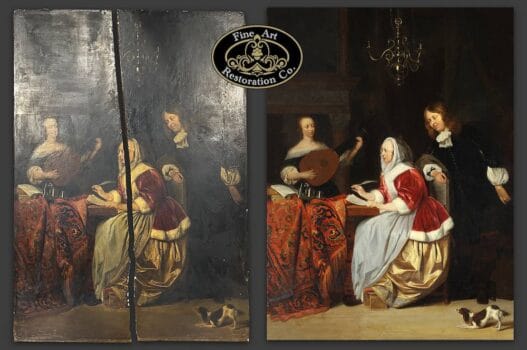
Review before-and-after portfolios: This helps you gauge the quality and subtlety of their work.
Ensure reversibility: All professional conservation work should be fully reversible, following best practices.
Get a written estimate: A clear, detailed quote ensures transparency and helps you compare services.
Discuss timelines: Depending on complexity, restoration may take anywhere from a few weeks to several months.
Cost vs. Value: Is Antique Painting Restoration Worth It?
For many antique paintings, restoration is an investment. Not only does it bring the artwork back to life visually, but it can also:
Increase market value for works intended for sale.
Preserve family heritage for personal collections.
Maintain museum or gallery quality for institutions.
However, in some cases , especially with very minor works of low value , the cost of restoration might exceed the painting’s monetary worth. In these cases, it becomes a personal decision rather than a financial one.
If your painting is by a well-known artist such as John Singer Sargent or Winslow Homer, professional restoration can significantly increase its auction or gallery value. For lesser-known works, restoration might be pursued for sentimental or aesthetic reasons.
Insurance and Appraisal Considerations
If your painting has significant value, whether monetary or historical, insurance and proper appraisal are essential.
Professional appraisal: Before restoration, get an updated appraisal from a certified appraiser. This establishes value and helps you make informed restoration decisions.
Insurance coverage: If the painting is insured, check whether restoration costs are covered. Many policies cover restoration for accidental damage.
Documentation: Keep all receipts, photographs, and reports. These add value to the painting’s provenance and are crucial for insurance claims.
Preventing Future Damage After Restoration
Once your painting has been professionally restored, proper care and maintenance will extend its life and reduce future restoration costs. Here are essential preservation tips:
Control temperature and humidity: Maintain stable conditions between 65–75°F and 40–55% relative humidity.
Avoid direct sunlight: UV rays can fade pigments and yellow varnish.
Keep away from heat sources and vents: These can cause canvas drying and cracking.
Dust gently: Use a soft, natural-bristle brush or microfiber cloth. Never use cleaning products.
Re-varnish periodically: Depending on conditions, paintings may need a new protective varnish layer every 25–50 years.
Regular inspections: Check annually for signs of cracking, flaking, or discoloration.
DIY Restoration vs. Professional Work , A Serious Warning
While it might be tempting to “clean up” a painting yourself, DIY restoration can cause irreversible damage. Common mistakes include:
Using household cleaners or water.
Over-scrubbing and removing original paint layers.
Applying non-reversible varnish or glue.
Ignoring structural issues beneath the surface.
Only trained conservators with specialized tools, solvents, and art historical knowledge should handle valuable paintings. Even well-meaning amateur work can devalue or destroy an artwork.
When Antique Painting Restoration Might Not Be the Right Choice
Although restoration offers numerous benefits, there are situations where it might not be appropriate or cost-effective:
Extremely low-value works: If the restoration cost exceeds the painting’s value, it may not make financial sense.
Historical integrity concerns: Some collectors prefer to keep certain artworks in their “as found” state.
Severe damage: Paintings with extensive losses or poorly executed past restorations may not be fully recoverable.
In these cases, conservation to stabilize the piece rather than full aesthetic restoration might be the best approach.
Case Studies: Real-World Examples of Antique Painting Restoration Costs
Case Study 1: Simple Cleaning and Varnish Removal
A 16×20 oil portrait from the early 1900s had accumulated decades of smoke and dust. The varnish had yellowed significantly.
Service: Surface cleaning, varnish removal, re-varnishing.
Cost: $700.
Result: Vibrant colors and fine details were revealed, increasing its appraised value by 30%.
Case Study 2: Tear Repair and Inpainting
A 24×36 landscape had a 6-inch tear in the canvas and flaking paint around the damage.
Service: Tear repair, canvas stabilization, inpainting, varnish application.
Cost: $3,500.
Result: Seamless repair invisible to the naked eye, restored visual balance.
Case Study 3: Major Water Damage
A 19th-century religious painting suffered mold and water staining after a basement flood.
Service: Mold remediation, canvas re-lining, pigment consolidation, cleaning, inpainting, varnish.
Cost: $8,000.
Result: Restoration preserved an irreplaceable family heirloom that was nearly lost.
The Role of Technology in Modern Restoration
Advances in technology have revolutionized how paintings are restored. Today’s conservators use tools like:
Infrared reflectography and UV light to detect underlying damage or previous restorations.
Spectroscopic pigment analysis to match original colors precisely.
Digital documentation to track every step of the process.
Conservation-grade materials that are stable and reversible.
These technologies ensure precision, safety, and historical integrity, making restorations both more accurate and less invasive than ever before.
Understanding Ethical Guidelines in Restoration
Art restoration is governed by strict ethical standards. Reputable conservators follow guidelines set by organizations such as International Institute for Conservation of Historic and Artistic Works and American Institute for Conservation.
Key ethical principles include:
Reversibility: Any added materials must be removable in the future without harming the original.
Minimal intervention: Only damaged or missing areas should be restored.
Distinguishability: Restored areas should be subtly detectable under UV or magnification.
Full documentation: Every step must be recorded for future conservators.
This ensures the painting remains historically authentic while being visually enhanced.
How Long Does Antique Painting Restoration Take?
The duration of restoration depends on the painting’s size, damage, and the restorer’s schedule. On average:
Minor cleaning and varnish removal: 2–4 weeks.
Moderate repairs with inpainting: 4–12 weeks.
Major restoration projects: 3–6 months or longer.
Rushing restoration can compromise quality. Professional conservators often have waiting lists, so it’s wise to plan well in advance if you need the piece restored for a specific exhibition, sale, or family event.
Antique Painting Restoration Hidden Costs to Be Aware Of
In addition to the main restoration service, there may be additional costs:
Transport and insurance fees for shipping or delivering the painting.
Frame restoration if the frame is damaged or historically significant.
Crating and packing materials for protection during transport.
Condition reporting and photography for insurance or appraisal.
Always clarify these details in the estimate to avoid surprises.
Where to Find Professional Antique Painting Restoration Services
If you’re searching for qualified restorers, here are a few reliable options:
Museums and galleries: Many have in-house or affiliated conservators.
Professional directories: American Institute for Conservation offers a public directory of qualified conservators.
Auction houses and appraisers: They often work with trusted restoration experts.
Private studios: Many independent conservators offer competitive pricing and personalized service.
Before hiring, always check qualifications, references, and portfolios.
Restoration vs. Conservation: Knowing the Difference
Although the terms are sometimes used interchangeably, restoration and conservation have different goals:
Conservation: Stabilizes and preserves the artwork in its current state. Often involves cleaning and structural reinforcement but minimal visual alteration.
Restoration: Goes further to restore visual appearance, including inpainting, varnish renewal, and repairs.
Some owners opt for conservation only, especially when the painting’s historical patina is part of its charm. Others prefer full restoration to bring the painting closer to its original look.
Preserving Art for the Future
The cost of antique painting restoration is more than just a price tag , it’s an investment in preserving history, culture, and personal stories. Whether your painting requires a light cleaning or a full structural overhaul, understanding the factors that affect costs and the process involved will help you make informed decisions.
Professional restoration:
Revives faded colors and details.
Stabilizes fragile materials for decades of preservation.
Protects and sometimes increases the artwork’s value.
Honors the artist’s original intent.
Working with a qualified, ethical, and experienced restorer ensures your treasured painting receives the care it deserves.
Key Takeaways
Restoration costs can range from $200 to over $10,000 depending on size, damage, and complexity.
Professional restoration involves cleaning, structural repairs, inpainting, varnish renewal, and documentation.
Choosing a qualified restorer is essential to preserve the painting’s value and integrity.
Restoration is often an investment that pays off both financially and sentimentally.
Proper care and environment after restoration can prevent future damage and reduce long image/ antique-collecting