Art Restoration: Preserving Masterpieces and Material
Art restoration plays a critical role in preserving the world’s cultural heritage. Masterpieces created centuries ago are inherently vulnerable to the effects of time, environmental conditions, material degradation, and human intervention. Restoration is the discipline through which conservators stabilize, repair, and sometimes visually reintegrate artworks to ensure their longevity while respecting their historical and aesthetic integrity. Far from being a purely technical exercise, art restoration sits at the intersection of science, art history, ethics, and craftsmanship, requiring informed judgment and restraint at every stage.
The Purpose and Scope of Art Restoration
The primary objective of art restoration is not to make an artwork look “new,” but to preserve it in a condition that allows future generations to experience it as authentically as possible. Over time, paintings may darken due to oxidized varnish, frescoes may flake because of moisture infiltration, sculptures may crack under structural stress, and textiles may weaken through light exposure. Restoration addresses these issues by stabilizing materials, preventing further deterioration, and, where appropriate, improving legibility.
Restoration must be distinguished from conservation, though the terms are often used interchangeably. Conservation emphasizes preventive care, controlling temperature, humidity, light, and handling, while restoration involves active intervention. In practice, most modern projects integrate both approaches, prioritizing minimal intervention and reversibility.
Historical Development of Restoration Practices
Historically, restoration practices were often invasive and guided more by aesthetic preferences than scientific understanding. During the Renaissance and well into the nineteenth century, restorers frequently repainted damaged areas extensively, altered compositions, or applied heavy varnishes to enhance color saturation. While well-intentioned, such interventions sometimes obscured original surfaces or introduced materials that aged poorly.
The twentieth century marked a turning point, as conservation science emerged as a formal discipline. Advances in chemistry, physics, and imaging technologies enabled conservators to analyze artworks at a microscopic and molecular level. This scientific foundation transformed restoration into a methodical and evidence-based practice, guided by ethical standards developed by institutions such as the International Council of Museums (ICOM) and the American Institute for Conservation (AIC).
Scientific Tools and Techniques
Modern art restoration relies heavily on scientific analysis. Non-invasive imaging techniques such as X-radiography, infrared reflectography, and ultraviolet fluorescence allow conservators to examine underlying layers, previous restorations, and structural weaknesses without damaging the artwork. These methods have revealed hidden sketches beneath famous paintings, alterations made by artists during execution, and areas of later overpainting.
Material analysis is equally important. Pigment identification, binder analysis, and fiber testing help restorers understand the original materials used by the artist and select compatible restoration materials. For example, knowing whether a Renaissance painter used egg tempera or oil-based pigments directly affects the choice of solvents and consolidants used during cleaning and stabilization.
Cleaning, often the most controversial aspect of restoration, requires exceptional precision. Removing aged varnish or surface grime can dramatically alter the appearance of a painting, revealing brighter colors and sharper details. However, excessive or poorly controlled cleaning risks removing original paint layers. As a result, cleaning is typically conducted incrementally, with constant testing and documentation.
Ethical Considerations and Controversies
Ethics lie at the core of art restoration. One of the guiding principles is reversibility: any intervention should, as far as possible, be undone without harming the original material. Another is discernibility, meaning restored areas should be identifiable upon close inspection, even if they blend visually at normal viewing distance.
High-profile restorations have sparked public debate. The cleaning of Michelangelo’s Sistine Chapel frescoes in the late twentieth century is a prominent example. While the project revealed vibrant colors long obscured by soot and grime, critics argued that subtle shading and surface finishes may have been lost. Similarly, the restoration of Leonardo da Vinci’s The Last Supper raised questions about how much of the visible painting remains the artist’s original work versus modern reconstruction.
These controversies underscore the interpretive nature of restoration. Conservators must make informed decisions based on incomplete evidence, balancing aesthetic recovery with historical authenticity. Transparency through detailed documentation and public communication has therefore become an essential component of responsible practice.
Restoration Across Different Media
Restoration approaches vary significantly depending on the medium. Paintings on canvas or panel require attention to paint layers, ground layers, and structural supports. Sculptures, whether carved from stone, cast in bronze, or modeled in wood, present different challenges, such as corrosion, fractures, and surface erosion. Works on paper, including drawings and manuscripts, are especially sensitive to light and acidity, requiring delicate chemical treatments and controlled storage conditions.
Architectural masterpieces, such as frescoed churches or monumental buildings, represent a further level of complexity. These projects often involve interdisciplinary teams of conservators, engineers, and architects, as the structural integrity of the building directly affects the survival of the artwork.
The Role of Documentation and Education
Comprehensive documentation is a cornerstone of modern restoration. Every stage of treatment is recorded through written reports, high-resolution photography, and scientific data. This documentation ensures accountability, facilitates future research, and allows subsequent conservators to understand past interventions.
Education and public engagement have also become increasingly important. Museums now frequently accompany restoration projects with exhibitions, lectures, and digital content, allowing audiences to appreciate the skill and care involved. By demystifying the process, institutions foster greater trust and understanding of why restoration decisions are made.
Conclusion
Art restoration of masterpieces is a discipline defined by precision, responsibility, and respect for cultural heritage. It demands not only technical expertise and scientific knowledge, but also a deep understanding of art history and ethical judgment. When carried out thoughtfully, restoration extends the life of irreplaceable works and enhances our ability to engage with them meaningfully. As technologies advance and ethical frameworks continue to evolve, art restoration will remain an essential practice, quietly safeguarding the material and symbolic legacy of humanity’s greatest artistic achievements.
How Art Restorations Preserve Multi-Million Dollar Masterpieces
The Truth About Value, Risks, and Controversies
Why Art Restoration Matters
Artworks, especially museum pieces, Renaissance paintings, and Old Masters, are fragile survivors. They face centuries of dust, smoke, moisture, UV light, cracking varnish, environmental pollutants, and physical damage. Without careful conservation, many of the world’s most valuable masterpieces would deteriorate beyond recognition.
Art restoration is the practice of repairing or stabilizing artworks while preserving original intention. When done well, it can literally save multi-million-dollar paintings from total loss. When done poorly, it can destroy value and spark global controversy.
This in-depth article explores:
How restoration preserves valuable masterpieces
Whether restoration increases or decreases value
When NOT to restore an antique
What restoration of paintings is officially called
Why art restoration is controversial
The famous painting that was ruined by a restorer
By the end, you’ll understand the delicate balancing act behind restoring priceless artworks.
How Art Restorations Preserve Multi-Million Dollar Masterpieces
Restoration is essential for the survival of valuable paintings. Even the best-cared-for artwork deteriorates naturally over time. Professional conservators use scientific techniques to stabilize, repair, and preserve artworks for future generations.
Removing Yellowed or Darkened Varnish
Most oil paintings, especially Old Masters, were coated with natural varnishes that darken over decades. Yellowed varnish obscures colors, mutes highlights, and hides original brushwork.
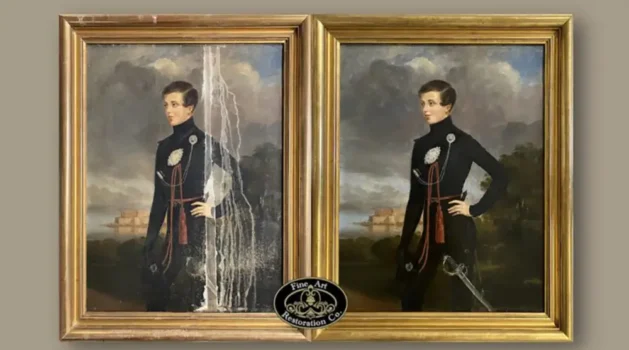
Conservators use solvents tested under microscopes to dissolve varnish micrometer by micrometer, revealing previously hidden brightness and details. This often has a breathtaking visual impact. Many restored masterpieces are unrecognizable compared to their pre-cleaned versions.
Repairing Tears, Holes, and Canvas Weakness
Paintings can be damaged by:
physical impact
humidity fluctuations
old re-linings
brittle canvas fibers
Restorers mend tears using microscopic stitching techniques, custom adhesives, or patching methods that restore structural integrity while remaining reversible.
Consolidating Flaking or Lifting Paint
If temperature or humidity becomes unstable, paint layers lift or flake. Without intervention, entire sections can detach.
Conservators use heated spatulas, adhesives, and stabilizers to reattach flaking paint. This prevents catastrophic loss of original material.
Correcting Past Restoration Mistakes
Many restorations from the 17th–20th centuries used:
industrial glues
overly aggressive cleaning
retouching that covered original paint
Modern conservators reverse harmful past repairs using reversible materials that follow today’s ethical standards.
Removing Dirt, Smoke, and Environmental Grime
Over centuries, artwork absorbs smoke from candles, fireplaces, and pollution. Cleaning reveals hidden contrast and detail, restoring the artist’s original color palette.
Scientific Imaging to Guide Conservation
Today’s restorations rely on advanced technologies:
X-rays to reveal underdrawings and earlier compositions
Infrared scanning to detect overpainting
Ultraviolet fluorescence for varnish mapping
Microscopic pigment sampling
This scientific approach reduces risk and ensures authenticity.
Ethical, Reversible Retouching
Modern standards require retouching to be:
reversible
minimal
clearly distinguishable under UV light
respectful to the original paint
This ensures long-term safety and prevents future contamination.
Does Restoring a Painting Decrease Value?
Short Answer:
Restoration can decrease value, but it can also increase value. It all depends on quality, extent, and necessity.
A well-executed, minimally invasive restoration by a reputable conservator usually increases or preserves value. A bad or amateur restoration can permanently damage a painting and drastically reduce value.
Below is a detailed breakdown.
When Restoration Increases Value
Professional restoration can increase the value of a painting when it:
Restores aesthetic clarity
Removing yellowed varnish can dramatically improve appearance and marketability.
Stabilizes deterioration
If a painting is flaking, torn, moldy, or structurally unstable, restoration prevents further loss, preserving value.
Reveals hidden colors and details
Buyers and museums often prefer a painting that reflects the artist’s intended palette.
Is done by a respected conservator
A restoration report from a top conservation studio is a major value booster in the art market.
Confirms authenticity
Scientific imaging can uncover signatures, hidden layers, or evidence of original work.
When Restoration Decreases Value
Restoration can harm value when:
The restorer uses non-reversible materials
Old restorations using epoxy, industrial glue, or overpainting often devalue a work.
Original paint is removed during over-cleaning
Once original pigment is gone, the loss is irreparable.
The painting becomes extensively retouched
Too much repainting compromises authenticity.
Restoration is done by an amateur
“Home cleaning,” aggressive solvents, or DIY fixes often destroy value.
Damage is severe and restoration cannot hide it
Large losses or repainted sections can reduce collector interest.
General Rule
Good restoration preserves or improves value.
Bad restoration destroys it.
Auction houses usually disclose restoration history. Buyers understand that older artworks usually need some level of conservation.
When NOT to Restore an Antique
Restoration is not always the right choice. Sometimes cleaning, repairing, or refinishing an antique can destroy its historical integrity and reduce value.
Below are the situations where restoration is discouraged.
When the Antique’s Value Relies on Its Original Condition
Patina, wear, and age marks can be essential. Examples:
antique wooden furniture
bronze sculptures
vintage jewelry
original surface clocks
historic documents
Stripping patina or refinishing surfaces can wipe out centuries of history.
When Restoration Will Cost More Than the Object Is Worth
Not every antique justifies expensive professional work.
When Restoration Would Remove Authentic Materials
If repairs require removing original wood, metal, pigment, or textiles, it may be better to leave the item untouched.
When the Damage Does Not Threaten Structural Stability
Minor wear or discoloration may not justify the risks or cost of restoration.
When You Don’t Know the Object’s True Value
Always consult an expert before touching an antique. Many valuable objects have been destroyed by well-meaning owners who polished, cleaned, or refinished them improperly.
What Is It Called When You Restore Paintings?
The official term for restoring paintings is:
Art Conservation or Art Restoration
But they are not identical.
Art Conservation
Conservation focuses on:
slowing deterioration
stabilizing the artwork
preserving original materials
using reversible techniques
It is science-based and minimally invasive.
Art Restoration
Restoration focuses on:
repairing damage
improving visual appearance
reconstructing missing details
retouching paint losses
It is more interventionist.
Modern standards favor “conservation” over “restoration.”
Professional studios now use:
Conservator (preferred title)
Conservation scientist
Paintings conservator
Art conservator-restorer
These terms emphasize ethics and preservation.
Why Is Art Restoration Controversial?
Art restoration can be controversial for several major reasons.
Risk of Removing Original Paint
Aggressive solvents or poor technique can remove original pigment, an irreversible loss.
Even skilled restorers sometimes struggle with fragile, oxidized paint layers.
Over-Restoration Can Alter the Artist’s Intent
Some restorers have historically:
re-painted entire faces
changed color palettes
corrected “mistakes” that were intentional
brightened paintings beyond their original tone
This raises the question: Is it still the artist’s work?
Ethical Concerns Over Reversibility
Modern conservation insists on reversible materials. Some older restorations used glue, wax, or resin that hardened permanently, damaging the artwork.
Cultural and National Identity Issues
Restoration of murals, religious art, or heritage objects can cause political and cultural conflict. Communities may disagree on how much change is acceptable.
Market Manipulation Concerns
Restoration can be used to:
hide flaws
disguise damages
misrepresent authenticity
This complicates art sales and valuations.
High Costs and Unequal Access
Elite museums afford state-of-the-art conservation. Smaller institutions struggle, leading to inequalities in preserving cultural heritage.
The Famous Painting Ruined by a Restorer
The most infamous example is:
“Ecce Homo” (also called ‘Behold the Man’) , Botched by an Amateur in 2012
In Borja, Spain, an elderly parishioner attempted to “touch up” a fresco of Jesus Christ painted by Elías García Martínez in 1930.
The result became globally known as:
“Monkey Christ”
“Beast Jesus”
The face was transformed into an unrecognizable cartoonish figure. The “restoration” was beyond repair.
Ironically, the botched fresco became a viral phenomenon, attracting tourism and inspiring memes and merchandise. Yet art experts considered it an extreme example of why restoration must remain in trained hands.
Additional Famous Restoration Controversies
7.1 The Sistine Chapel Cleaning Controversy
Between 1980 and 1994, the Vatican cleaned Michelangelo’s frescoes. Critics argued that cleaning was too aggressive and removed intended shadows, altering Michelangelo’s stylistic nuances.
Supporters claim it restored original brilliance.
Debate continues.
7.2 Leonardo da Vinci’s “The Last Supper”
This mural suffered centuries of poor restoration attempts. Modern conservators removed extensive overpainting but inevitably altered damaged areas. Some argue it is now partly a modern creation.
7.3 Rembrandt and Vermeer Cleaning Debates
Cleaning Old Masters has sparked arguments about removing varnish vs. preserving intended tonality. Because varnish darkens over time, some believe painters purposely accounted for this, while others argue varnish should be removed.
Should You Restore Your Own Painting or Art Piece?
Never attempt to restore valuable artwork yourself.
Common DIY mistakes include:
wiping with household cleaners
applying incorrect varnishes
using oils or polishes
attempting tear repairs
retouching with modern paints
Even gentle cleaning can permanently erase pigment.
Always consult professional conservators.
How to Tell If a Painting Needs Restoration
Signs your painting may require professional help:
yellowed or cracked varnish
flaking paint
mold or mildew
water stains
dents or structural weakness
scratches or abrasions
discoloration or uneven surface
loose canvas
tears or punctures
A conservator will examine the painting under UV, IR, and magnification before determining treatment.
How Much Does Professional Restoration Cost?
Prices vary dramatically depending on size, damage, and technique:
Approximate ranges:
Basic varnish removal: $300–$1,500
Tear repair: $500–$2,500
Structural stabilization: $800–$4,000
Major restorations: $5,000–$25,000+
Restoring high-value or museum-grade works may cost tens or hundreds of thousands due to research, imaging, and specialized conservation.
Modern Conservation Ethics: “Do No Harm”
Today’s conservators follow strict ethical principles:
Reversibility , all materials can be removed in the future
Minimum intervention , only what is necessary
Historic respect , preserving original intent
Documentation , before/after reports and imaging
Stability and longevity , prevent future damage
This modern approach seeks to avoid the mistakes of overwrought restorations from past centuries.
The Delicate Balance of Preserving Artistic Heritage
Art restoration is essential for preserving multi-million-dollar masterpieces, but it requires a combination of scientific precision, deep historical knowledge, and ethical responsibility. When done well, restoration:
protects original materials
reveals hidden beauty
stabilizes aging artworks
preserves cultural heritage
maintains or increases value
When done poorly, it can alter history and destroy priceless works.
This is why restoration is both indispensable and controversial. image / antique-collecting