The Best Antique Painters of the 18th Century
Masters Who Defined an Artistic Era
The 18th century was a golden age of artistic transformation, a period of elegance, enlightenment, and experimentation. From the lavish grandeur of Rococo to the disciplined ideals of Neoclassicism, this century gave rise to painters whose brushstrokes shaped Western art for generations. The best antique painters of the 18th century were not merely artists; they were visionaries who bridged the gap between the ornate traditions of the past and the rational modernity that would define the Enlightenment.
In this article, we’ll explore the most influential 18th-century antique painters, examining their techniques, legacies, and why their works remain cornerstones of antique art collections and art history today.
Table of Contents
The Artistic Landscape of the 18th Century
Rococo and the Rise of Sensual Elegance
Neoclassicism and the Return to Classical Ideals
Romanticism’s Emergence at the Century’s End
The Best Antique Painters of the 18th Century
Antoine Watteau
François Boucher
Jean-Honoré Fragonard
Giovanni Battista Tiepolo
Joshua Reynolds
Thomas Gainsborough
Jean-Baptiste-Siméon Chardin
Francisco Goya
Jacques-Louis David
Angelica Kauffman
Artistic Legacy and Collecting 18th-Century Paintings Today
Conclusion: The Enduring Power of 18th-Century Masters
The Artistic Landscape of the 18th Century
The 18th century, stretching roughly from 1700 to 1800, was an age of intellectual awakening. The Enlightenment encouraged reason, philosophy, and science, but art served as both a reflection and a reaction to these shifts. European antique painters found themselves caught between opulent aristocratic tastes and the growing call for moral virtue and realism.
Antique painting from this era carries a unique duality, it is at once decorative and deeply intellectual. The best 18th-century painters navigated social upheavals, revolutions, and changing patronage systems. Whether creating pastoral fantasies for French salons or heroic historical canvases for royal courts, their work continues to captivate collectors, historians, and art lovers worldwide.
Rococo and the Rise of Sensual Elegance
At the dawn of the century, Rococo painting dominated Europe. Originating in France, Rococo art emphasized lightness, playfulness, and intimacy. Its subjects often revolved around love, leisure, and idyllic scenes, imbued with soft colors and fluid brushwork.
Rococo painters were masters of decorative detail, producing works for aristocratic patrons who craved beauty and sensuality over solemnity. Gold-framed canvases adorned palace walls, echoing the ornate architecture and furniture styles of the time.
This artistic style would reach its zenith under painters like Antoine Watteau, François Boucher, and Jean-Honoré Fragonard, whose works epitomized the Rococo spirit.
Neoclassicism and the Return to Classical Ideals
As the century progressed, however, tastes shifted. The frivolity of Rococo came under criticism as society sought moral clarity and intellectual rigor. The discovery of ancient Roman sites like Pompeii and Herculaneum reignited interest in classical antiquity, inspiring a Neoclassical revival.
Neoclassical painting celebrated heroism, virtue, and rational beauty. Artists such as Jacques-Louis David and Angelica Kauffman embraced themes of ancient mythology and Roman history. Their compositions featured sharp lines, balanced symmetry, and moral narratives, contrasting sharply with the playful sensuality of Rococo art.
This movement aligned perfectly with Enlightenment ideals, becoming not only an aesthetic choice but also a philosophical stance.
Romanticism’s Emergence at the Century’s End
By the late 18th century, the winds of Romanticism began to blow. The French Revolution, Napoleonic Wars, and rising nationalism stirred emotions and inspired artists to focus on individuality and passion. Though Romanticism would dominate the 19th century, its roots began in the works of painters like Francisco Goya, whose powerful imagery captured both human suffering and the supernatural.
This transition underscores why the 18th century remains so fascinating, it was a bridge between order and emotion, reason and imagination.
The Best Antique Painters of the 18th Century
Below is a detailed look at ten of the most influential painters who defined 18th-century art. Each artist contributed uniquely to the evolution of antique painting, blending technical mastery with timeless vision.
1. Antoine Watteau (1684–1721)
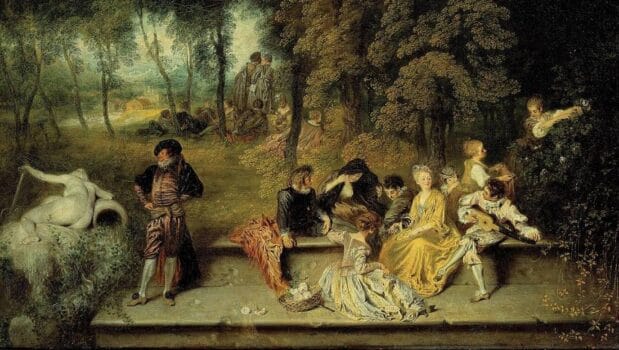
Often regarded as the founder of the Rococo movement, Antoine Watteau transformed the course of French painting in just a short life. His hallmark was the “fête galante”, a genre depicting elegantly dressed figures engaging in leisure within dreamlike pastoral landscapes.
His most famous work, The Pilgrimage to Cythera (1717), encapsulates Rococo grace: refined color palettes, poetic atmosphere, and delicate brushwork. Watteau’s ability to blend reality with fantasy influenced generations of artists and made him one of the most collectible antique painters today.
2. François Boucher (1703–1770)
A favorite of Madame de Pompadour, the influential mistress of King Louis XV, François Boucher was the quintessential Rococo painter. His art celebrated beauty, sensuality, and mythological storytelling. Works like Diana Leaving the Bath and The Triumph of Venus showcase his mastery of texture and erotic subtlety.
Boucher’s paintings are emblematic of 18th-century French aristocratic life, filled with color, luxury, and romanticism. Critics later accused him of decadence, but his influence on decorative arts, tapestry design, and porcelain painting remains profound.
3. Jean-Honoré Fragonard (1732–1806)
Fragonard carried the Rococo style to its dazzling peak. His most famous painting, The Swing (1767), captures both playful innocence and erotic suggestion. Fragonard’s rapid brushwork and luminous colors exemplify the joyful spirit of 18th-century France before the Revolution.
Despite the decline of Rococo after 1789, Fragonard’s works regained appreciation in the 19th and 20th centuries, particularly among collectors seeking the elegance and whimsy of the pre-revolutionary period.
4. Giovanni Battista Tiepolo (1696–1770)
Venetian artist Giovanni Battista Tiepolo stands as one of the last great Baroque painters, blending grandeur with lightness. His frescoes, such as those in the Würzburg Residence and the Palazzo Labia, are marvels of illusionistic perspective and celestial beauty.
Tiepolo’s style combined the dynamism of Baroque with the airy charm of Rococo, making his art highly sought after across Europe. His mastery of ceiling decoration and monumental compositions made him a global ambassador of Venetian art.
5. Sir Joshua Reynolds (1723–1792)
As the first president of the Royal Academy of Arts in London, Sir Joshua Reynolds was instrumental in elevating British portraiture to international prestige. His “Grand Manner” style fused classical idealism with contemporary portraiture.
Reynolds’s paintings, such as Mrs. Siddons as the Tragic Muse, reveal a blend of psychological depth and theatrical elegance. He believed art should inspire virtue and moral reflection, a Neoclassical ideal that shaped English art for decades.
6. Thomas Gainsborough (1727–1788)
A contemporary and rival of Reynolds, Thomas Gainsborough offered a more naturalistic alternative. Known for portraits like The Blue Boy and Mrs. Sheridan, Gainsborough’s loose brushwork and emotional sensitivity set him apart.
He excelled equally in landscape painting, merging portraiture with nature’s poetry. His romantic yet realistic approach influenced later British landscape artists, including Constable and Turner.
7. Jean-Baptiste-Siméon Chardin (1699–1779)
In contrast to the ornate Rococo style of his peers, Chardin focused on simplicity and domestic still life. His masterpieces like The Ray and The Soap Bubble emphasize texture, light, and everyday tranquility.
Chardin’s humble subjects and masterful technique earned him admiration from philosophers like Diderot, who saw in his paintings the virtues of honesty and restraint, core Enlightenment values.
8. Francisco Goya (1746–1828)
Though straddling two centuries, Francisco Goya began his career in the 18th century as a court painter in Spain. Initially producing tapestries and portraits for the Bourbon monarchy, Goya evolved into a visionary artist who chronicled human emotion and turmoil.
His early works, such as The Parasol, reflect Rococo influences, while his later pieces, like The Third of May 1808, prefigure modern expressionism. Goya’s evolution from decorative painter to political commentator marks him as one of the most significant antique painters of his time.
9. Jacques-Louis David (1748–1825)
A towering figure in Neoclassical painting, Jacques-Louis David redefined historical art with moral gravitas and classical precision. His Oath of the Horatii (1784) and Death of Socrates (1787) exemplify rational composition and emotional restraint.
David’s art became intertwined with the French Revolution, he painted portraits of revolutionaries and served as an official painter for Napoleon. His works are not just artistic achievements but visual documents of an era of political transformation.
10. Angelica Kauffman (1741–1807)
One of the most celebrated female artists of the 18th century, Angelica Kauffman was a founding member of the Royal Academy in London. Her refined Neoclassical style combined beauty, intellect, and virtue, qualities rare for women artists of her time.
Her works, such as Cornelia Presenting Her Children as Her Treasures, embody Enlightenment ideals of moral virtue and feminine strength. Today, Kauffman is recognized not only for her talent but also for breaking barriers in a male-dominated art world.
Artistic Legacy and Collecting 18th-Century Antique Paintings Today
The legacy of these antique painters extends far beyond their lifetimes. Their works are treasured in museums such as the Louvre, the Prado, and the National Gallery, and command high prices in international auctions. Collectors of 18th-century art value not only the beauty of these pieces but also their historical significance.
Key qualities sought by collectors include:
Authentic brushwork and provenance
Original frames and condition preservation
Stylistic authenticity within Rococo or Neoclassical traditions
Historical documentation connecting the painting to royal or aristocratic collections
Art historians emphasize that 18th-century paintings provide insight into European society, its moral codes, aesthetic preferences, and shifting ideologies. The blend of personal intimacy and monumental grandeur makes antique painting from this period endlessly fascinating.
The Enduring Power of 18th-Century Masters
The 18th century stands as one of the richest chapters in art history. From Watteau’s romantic fêtes to David’s heroic narratives, these painters shaped not only the visual language of their time but also the emotional vocabulary of Western art.
Their mastery of light, color, and composition continues to inspire contemporary artists and art enthusiasts alike. Whether viewed in grand museums or studied through antique collections, the best antique painters of the 18th century remain timeless ambassadors of human creativity.
Key Takeaways
The 18th century bridged the ornate Rococo and the intellectual Neoclassical movements.
Painters like Watteau, Fragonard, and Boucher defined Rococo’s sensual elegance.
Artists such as David, Kauffman, and Reynolds brought moral virtue and classical discipline to painting.
Goya and Tiepolo introduced new emotional depths and visual innovations.
18th-century antique paintings remain highly collectible, embodying elegance, intellect, and artistic mastery.