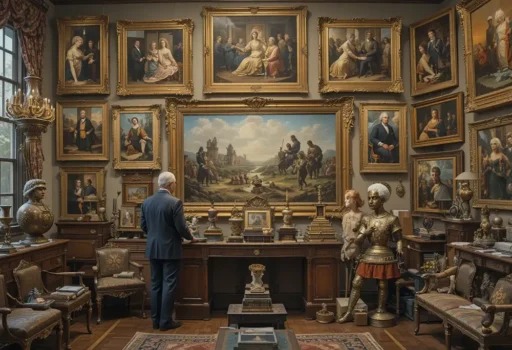
How Collecting Art Can Boost Your Creativity
Psychology, History, Motivation, and What Collectors Truly Desire
Collecting art is far more than a hobby or an investment. Across history, cultures, and social classes, people have collected art to express identity, preserve beauty, build status, and, increasingly, expand their own creative capacity. Today, collecting art is recognized not only as a way to engage with culture but also as a powerful method for stimulating creative thinking, emotional awareness, and personal growth. This article explores how collecting art boosts creativity, when the art market began, the psychology behind collecting, why the wealthy are especially drawn to art, and what collectors ultimately desire most. Understanding these elements offers a deep view into why art collecting persists as one of humanity’s most enduring and meaningful practices.
How Collecting Art Boosts Creativity
Creativity thrives on exposure to new ideas, patterns, and emotional experiences. Art provides exactly that: complex visual information, symbolic messages, unexpected forms, and emotional cues that stretch the imagination. When you collect art, you are constantly curating, evaluating, and interpreting what you see. This ongoing engagement triggers cognitive flexibility, the ability to shift perspectives and make novel connections. Researchers have found that interacting with art activates parts of the brain linked to imagination, introspection, and visual processing, all essential components of creativity. Collecting art, therefore, trains the mind to look at the world in more innovative and multidimensional ways.
Collecting also encourages sustained attention, a key driver of creativity. When you spend time studying artworks, you train yourself to notice details others might overlook. This habit of deep observation often transfers into your everyday thinking and problem-solving. Furthermore, collecting art encourages curiosity. Each new artwork raises questions about its meaning, its creator, its technique, and its cultural context. Curiosity fuels learning, and learning fuels creativity. Collectors often find their creativity expanding simply by trying to understand the story behind each piece.
Another dimension of creativity boosted by collecting art is emotional creativity. Art elicits feelings that are sometimes difficult to articulate, and trying to understand these feelings fosters emotional intelligence. When you recognize subtle emotional shifts and interpret symbolic expressions, your ability to generate creative emotional responses expands. This is valuable not only for artists but for entrepreneurs, leaders, designers, and anyone involved in innovation. Even arranging a collection, choosing what to display, where to place it, and how pieces relate to one another, becomes an exercise in creative vision. The home or office becomes a personal gallery, a living environment that constantly stimulates creative thought.
When Did the Art Market Start?
The art market as we know it today began to take shape during the Renaissance, particularly in 15th-century Italy and the Netherlands. Before this period, most art commissioning occurred through the church or royal families. Wealthy patrons hired artists directly, and artworks served religious, ceremonial, or political purposes. During the Renaissance, however, a growing merchant class began purchasing art for private enjoyment, signaling the shift from patronage to an open market. Art dealers, workshops, and independent studios began to emerge, creating new opportunities for artists to sell their work publicly.
By the 17th century, the Dutch Golden Age pushed the art market further toward modernity. The Netherlands had a flourishing middle class that desired paintings for their homes, resulting in an unprecedented demand for affordable art. Public auctions became popular, and artists created specialized genres such as still life, landscapes, and domestic scenes. Art collecting became more democratic, no longer restricted to royalty or churches.
The industrial revolution and the rise of capitalism expanded the art market globally. Paris, London, and later New York became major art centers. Auction houses like Sotheby’s (founded in 1744) and Christie’s (founded in 1766) formalized art sales and created transparent records of market value. By the 20th century, galleries, museums, and international art fairs transformed the market into a sophisticated global ecosystem. Today’s art market is a multi-billion-dollar industry involving collectors, dealers, curators, consultants, and investors participating in auctions, online platforms, and worldwide cultural events.
The Psychology of Collecting Art
The psychology behind art collecting is complex, blending emotional, cognitive, and social motives. At its core, collecting fulfills a desire for meaning. Art captures stories, identities, values, and emotions, and owning it allows individuals to connect deeply with something that resonates with their worldview. Many collectors report a sense of self-expression through their collections, as if the artworks collectively narrate who they are or what they care about.
Psychologists have identified several motivations for collecting. One is aesthetic pleasure, the simple enjoyment of beauty or craftsmanship. Another is emotional resonance; people often collect works that make them feel understood or emotionally stimulated. Some collectors seek a sense of control or order, finding comfort in building and organizing a cohesive collection. Others pursue intellectual fulfillment, appreciating the challenge of researching artists, styles, and historical context.
There is also a social dimension. Collecting can provide a sense of belonging within a community of like-minded enthusiasts. It can serve as a social signal of taste, knowledge, or status. Moreover, collecting can satisfy the human drive for mastery. Tracking down rare pieces, negotiating purchases, and curating a coherent collection all stimulate a sense of achievement. Art also triggers nostalgia and memory, giving people a tangible way to preserve meaningful moments or identity markers.
Psychologically, collecting engages dopamine pathways in the brain. The thrill of discovery, the satisfaction of acquisition, and the anticipation of future finds all deliver dopamine surges. This creates a rewarding cycle that keeps collectors motivated. Additionally, the unpredictability of the hunt, never knowing what you might find next, adds an element of excitement. This combination of emotion, cognition, and reward makes art collecting uniquely compelling.
Why Do the Rich Collect Art?
Wealthy individuals collect art for many of the same reasons as anyone else, emotional connection, aesthetic pleasure, and intellectual curiosity, but their resources allow them to pursue collecting at a larger scale and with different strategic considerations. One major motivation is investment. Art can serve as a long-term store of value, often performing well during economic instability. High-value artworks can appreciate significantly over time, making them appealing assets in wealth-management strategies.
Another reason is cultural capital. Elite circles often view art as a marker of sophistication, education, and global awareness. Owning a notable collection can enhance a person’s social standing. Wealthy collectors frequently donate or loan artworks to museums, sponsor exhibitions, or support emerging artists, further strengthening their influence within cultural institutions. Philanthropy plays a role too; many wealthy individuals see art collecting as a way to contribute to cultural preservation or artistic innovation.
Additionally, art offers privacy and control. Unlike many assets, art can be privately owned, stored, and moved discreetly. For some, this makes it an attractive financial and symbolic asset. Art also provides emotional rewards, offering respite from high-pressure careers. Many wealthy collectors describe art as grounding, inspiring, or spiritually fulfilling. Ultimately, while financial and social factors matter, the emotional pull of art remains one of the strongest motivators, even among the rich.
Personality Traits Common Among Art Collectors
Art collectors often share distinct personality traits. Curiosity is one of the most prominent. Collectors enjoy learning, exploring, and seeking new experiences. They are often open-minded, drawn to diverse styles and ideas. High openness to experience, a trait measured in psychological personality models, is strongly associated with art appreciation and collecting.
Another key trait is perseverance. Building a meaningful collection takes time, dedication, and strategic thinking. Collectors are naturally patient and willing to wait for the right piece or opportunity. Many possess a strong sense of intuition, allowing them to sense potential in an artist or artwork before the market recognizes it.
Confidence also plays a role. Collectors make subjective decisions that require trusting their own taste. Risk tolerance is common too, especially among those who collect emerging artists or speculative works. Organizational skill is another trait, as managing a collection requires documentation, storage, and careful planning.
Emotionally, collectors tend to be sensitive, introspective, and perceptive. They respond deeply to imagery, symbolism, and emotional nuance. Many are natural storytellers who see their collection as an ongoing narrative. Socially, collectors vary from introverts who seek personal meaning to extroverts who enjoy engaging with the art world. Across all types, however, a shared drive for discovery unites most collectors.
What Art Collectors Desire Most
What collectors desire most ultimately depends on their motivations, but several universal desires emerge across the art-collecting world. The first is connection, connection to beauty, to culture, to history, or to personal identity. Many collectors seek artworks that mirror their values or challenge their thinking. They want pieces that evoke emotion or spark curiosity.
Authenticity is another major desire. Collectors value originality, unique expression, and the genuine voice of the artist. They often look for works that feel honest or meaningful. Rarity also carries strong appeal. Owning something that few others possess satisfies the desire for uniqueness and status.
Collectors also desire mastery. They enjoy the pursuit: learning the market, understanding artistic movements, discovering emerging talent, and making informed choices. The acquisition process itself is meaningful. Some collectors desire legacy, hoping their collection will endure beyond their lifetime. Whether through museum donations, private foundations, or family inheritance, they envision their artworks continuing to inspire future generations.
Finally, collectors desire growth. Art challenges people emotionally and intellectually. Many collectors say their collections help them evolve, broaden their worldview, and understand themselves more deeply. In this sense, collecting is not just about owning objects, it is about engaging in a lifelong journey of creativity, meaning, and personal transformation.
The Lasting Impact of Art Collecting on Creative Life
In the long term, collecting art becomes more than a pastime; it becomes a catalyst for continuous creative evolution. Collectors report that the artworks they live with shape their thinking every day. Visual stimulation has a cumulative effect, slowly influencing perception, imagination, and emotional depth. The presence of art in one’s environment encourages mental openness and helps maintain a sense of wonder. Living with complexity, color, symbolism, and ambiguity builds a tolerance for uncertainty, a key element of creative problem-solving.
Collectors also experience creativity through storytelling. Every artwork carries a narrative, not only the story of the piece itself, but also its journey into the collection. The process of discovering, selecting, and integrating art forms a personal narrative arc. Sharing these stories with others reinforces creative communication skills, enhancing the ability to express ideas vividly and meaningfully. Creativity often emerges from the act of connecting stories, and collectors do this naturally as their collections grow.
Another long-term impact is the way collecting fosters community and collaboration. Participating in gallery openings, art fairs, and cultural events exposes collectors to diverse perspectives and global ideas. These interactions stimulate creative dialogue, generating new inspirations that can influence personal projects, business innovations, or artistic endeavors. Social creativity, the ability to generate ideas collectively, is strengthened by the shared excitement and intellectual exchange surrounding art.
Art collecting also supports resilience. Creative breakthroughs often require emotional endurance, patience, and adaptability. Engaging deeply with art, especially works that challenge or unsettle, helps individuals build emotional flexibility. By confronting complex themes such as identity, loss, joy, or transformation through the lens of art, collectors become more capable of handling ambiguity and emotional nuance in their own lives. This resilience enhances creative capacity because it becomes easier to navigate setbacks and reinterpret them in constructive ways.
Finally, collecting art reinforces a lifelong creative identity. Over time, collectors come to see themselves not only as owners of objects, but as participants in a cultural ecosystem. They support artists, preserve heritage, and contribute to the broader narrative of art history. This sense of purpose enriches their creative lives by connecting their personal passions to a meaningful global legacy. Creativity is not a momentary action; it is a way of seeing the world. By immersing themselves in the visual language of art, collectors cultivate a mindset that thrives on growth, imagination, and thoughtful exploration.