Top 20 Famous Paintings from the 14th to 17th Century
The Legacy of Early European Masterpieces and Why They Will Never Be Forgotten
From the 14th through the 17th century, European art underwent one of the most transformative periods in cultural history. This era, spanning the Late Middle Ages, the Renaissance, and the dawn of the Baroque, ushered in radical ideas about beauty, perspective, spirituality, humanism, and the expressive power of visual storytelling. Many of the era’s most iconic works still shape how the world understands artistic mastery today. In this in-depth article, we will explore the top 20 most famous paintings from the 14th to 17th century, examine their influence, and uncover why they continue to endure in both scholarly study and popular imagination.
1. Giotto di Bondone – The Lamentation (1305)
Giotto’s Lamentation marks a turning point from medieval symbolism toward naturalistic emotion. The figures grieve with real human anguish, foreshadowing Renaissance attention to anatomy and psychological nuance. As one of the earliest fresco masterpieces to break from the flat style of the Byzantine tradition, it redefined Western visual storytelling by prioritizing relatable human sorrow over purely theological iconography.
2. Simone Martini – Annunciation with St. Margaret and St. Ansanus (1333)
Simone Martini’s elegant Gothic masterpiece shows the refinement and courtly sophistication of pre-Renaissance Europe. Its flowing lines, gold background, and delicate gestures highlight the international Gothic style’s grace. While Renaissance realism would soon replace this aesthetic, the painting endures as a testament to the transitional moment when symbolism and beauty carried spiritual authority.
3. Jan van Eyck – The Arnolfini Portrait (1434)
Often celebrated for its astonishing detail, symbolism, and pioneering use of oil painting, this iconic work stands as a marvel of Northern Renaissance precision. Every object, from the convex mirror to the dog to the ornate textiles, carries layers of meaning. Van Eyck’s technical mastery established oil painting as the dominant medium for centuries.
4. Fra Angelico – The Annunciation (1437–1446)
Fra Angelico blended serene spirituality with early Renaissance perspective. The quiet exchange between Mary and the angel Gabriel, bathed in soft light, expresses divine mystery without dramatic flourish. Its calm beauty and architectural clarity demonstrate the era’s merging of faith with the ideals of order, harmony, and proportion.
5. Piero della Francesca – The Baptism of Christ (1450)
A master of geometry and proportion, Piero della Francesca created a mathematically balanced composition that symbolizes divine order. The painting’s luminous stillness represents a milestone in Renaissance exploration of scientific perspective. Its restrained elegance continues to influence modern artists interested in structure and clarity.
6. Sandro Botticelli – The Birth of Venus (c. 1485)
One of the most beloved images of the Renaissance, this painting celebrates beauty, mythology, and classical revival. Venus’s arrival on the shore represents both idealized feminine form and Neoplatonic philosophy. Its lyrical, flowing lines and dreamlike composition ensure its lasting popularity and cultural significance.
7. Leonardo da Vinci – The Last Supper (1495–1498)
Leonardo’s revolutionary depiction of Christ’s final meal with his disciples transformed the familiar biblical episode into a dynamic psychological drama. Each apostle reacts uniquely to Christ’s announcement of betrayal. Leonardo’s mastery of composition and emotional expression cemented the work as one of the most studied paintings in Western history.
8. Leonardo da Vinci – Mona Lisa (1503–1506)
Perhaps the most famous painting in the world, the Mona Lisa endures thanks to its enigmatic smile, atmospheric sfumato, and subtle psychological depth. Leonardo blurred the boundaries between portraiture and philosophy, presenting a sitter who seems alive, thinking, and forever mysterious. Its notoriety only grows with time.
9. Michelangelo – The Creation of Adam (1512)
As one of the most iconic frescoes on the Sistine Chapel ceiling, The Creation of Adam captures the monumental moment of divine spark. Michelangelo’s muscular figures and dynamic tension between God and Adam define High Renaissance grandeur. It symbolizes human potential, spiritual origin, and artistic mastery.
10. Raphael – The School of Athens (1509–1511)
Raphael’s fresco celebrates intellectual achievement by gathering ancient philosophers under a harmonious architectural setting. Plato and Aristotle stand at the center, surrounded by thinkers such as Pythagoras, Euclid, and Diogenes. The painting embodies Renaissance humanism, emphasizing knowledge, inquiry, and the pursuit of truth.
11. Titian – Venus of Urbino (1538)
Titian revolutionized the portrayal of the reclining nude by combining sensuality with sophisticated color harmony. Commissioned as a private artwork, the painting explores themes of sexuality, marriage, and ideal beauty. Its painterly technique deeply influenced later artists, including Manet and the Impressionists.
12. Pieter Bruegel the Elder – The Hunters in the Snow (1565)
This Northern Renaissance masterpiece captures a winter landscape full of vivid details and everyday activity. Bruegel’s ability to depict nature, peasant life, and seasonal atmosphere established him as a pioneer of landscape painting. The work’s realism and humanity continue to resonate across cultures.
13. El Greco – The Burial of the Count of Orgaz (1586)
El Greco fused Byzantine tradition with elongated Mannerist forms to create a visionary masterpiece. The painting combines heaven and earth in a mystical vertical composition. Dramatic colors and expressive figures convey spirituality with emotional intensity, making it one of Spain’s greatest artistic treasures.
14. Caravaggio – The Calling of Saint Matthew (1599–1600)
Caravaggio revolutionized art through his stark realism and powerful chiaroscuro. In this painting, Christ’s subtle gesture and the dramatic beam of light create an unforgettable moment of spiritual awakening. Caravaggio’s bold naturalism helped launch the Baroque era and influenced generations of artists.
15. Caravaggio – Judith Beheading Holofernes (c. 1599)
This uncompromisingly raw depiction of violence merges faith, drama, and psychological tension. Judith’s determination and Holofernes’s horror are captured with shocking immediacy. Caravaggio’s cinematic approach reshaped narrative painting and established new standards for emotional realism.
16. Peter Paul Rubens – The Elevation of the Cross (1610–1611)
Rubens’s dynamic altarpiece showcases the muscular energy and emotional intensity of the Baroque style. The dramatic diagonal composition, twisting bodies, and vigorous brushwork heighten the sense of struggle. Rubens’s synthesis of color, movement, and storytelling made him one of Europe’s leading painters.
17. Diego Velázquez – Las Meninas (1656)
Considered one of the most complex and innovative paintings ever created, Las Meninas explores the nature of reality, perception, and artistic identity. The viewer is both observer and participant. Velázquez blurred the lines between portrait, genre scene, and intellectual puzzle, inspiring centuries of analysis.
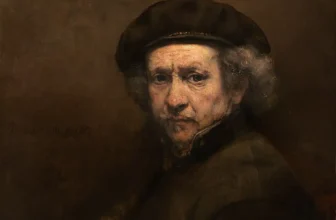
18. Rembrandt – The Night Watch (1642)
Rembrandt’s monumental group portrait stands out for its dramatic lighting and sense of motion. Rather than static poses, the figures spring into action, creating a lively narrative. The painting demonstrates Rembrandt’s mastery of shadow, emotion, and humanity, cementing his place as a Dutch Golden Age titan.
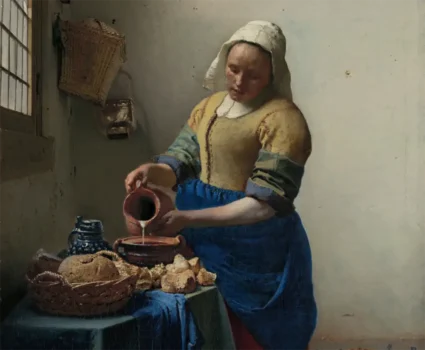
19. Johannes Vermeer – The Milkmaid (1657–1658)
Vermeer transformed a simple domestic moment into a poetic study of light, texture, and serenity. His meticulous attention to detail and use of soft luminosity elevate everyday life into timeless beauty. The painting exemplifies his quiet, intimate approach to composition.
20. Artemisia Gentileschi – Judith Slaying Holofernes (1614–1620)
Artemisia’s powerful interpretation of the biblical story stands as a bold statement of female agency. Her dynamic composition and vivid realism showcase technical brilliance and emotional depth. As one of the most important women of the Baroque era, she earned renewed recognition for her contributions to art history.
The Legacy of Early European Masterpieces
The masterpieces of the 14th to 17th centuries represent far more than artistic achievement; they embody cultural shifts, scientific discoveries, religious transformations, and evolving understandings of the human experience. Their legacy rests on several key foundations:
1. The Birth of Humanism
These painters helped shift focus from divine symbolism to human emotion, individuality, and earthly experience. The emergence of humanism shaped everything from education to philosophy and created a new foundation for Western thought.
2. Advances in Perspective and Naturalism
Linear perspective, anatomical accuracy, and observational detail radically changed how artists represented reality. These innovations still form the basis of contemporary visual arts training.
3. Exploration of Light and Emotion
From Leonardo’s sfumato to Caravaggio’s chiaroscuro, artists discovered ways to deepen psychological impact. Their treatment of light reflects philosophical questions about truth, revelation, and humanity.
4. A Bridge Between Medieval and Modern Worlds
These artworks capture a world in transition, moving from medieval spirituality to Renaissance rationality, and then into Baroque dynamism, complexity, and emotion.
5. Enduring Cultural Influence
Their images appear in films, advertisements, educational materials, popular culture, and collective memory. They continue to inspire modern artists, architects, designers, and storytellers.
Why These 14th–17th Century Paintings Will Never Be Forgotten
These masterpieces endure because they reveal eternal truths about human experience, love, fear, beauty, mortality, and the search for meaning. They embody innovation, emotional resonance, and cultural identity. Their techniques form the foundation of modern art, while their narratives continue to speak across centuries.
Whether through the quiet contemplation of Vermeer, the monumental energy of Rubens, the psychological depth of Rembrandt, or the visionary genius of Leonardo, these works remain essential not only to art history but to human history.
Their legacy is not simply aesthetic. It is intellectual, spiritual, and universal.
These paintings will never be forgotten because they reflect who we are, where we came from, and what we continue to strive for: understanding, beauty, and the power of creative expression.