Madness on the Walls: Unraveling Goya’s Black Paintings
Few works in the history of Western art carry the same enigmatic aura and haunting intensity as Francisco Goya’s Black Paintings. Created during the final years of the Spanish master’s life, these nightmarish frescoes remain both disturbing and deeply fascinating. They are as much a mirror of Goya’s personal torment as they are reflections of the turbulence of 19th-century Spain. But what exactly are the Black Paintings? What influenced their creation? What do they represent? And why do they continue to command such fascination today?
Today’s topic takes you deep into the story of Goya’s Black Paintings, exploring their origins, meanings, location, and cultural value while unraveling the lasting mystery they hold.
The Story of Goya’s Black Paintings
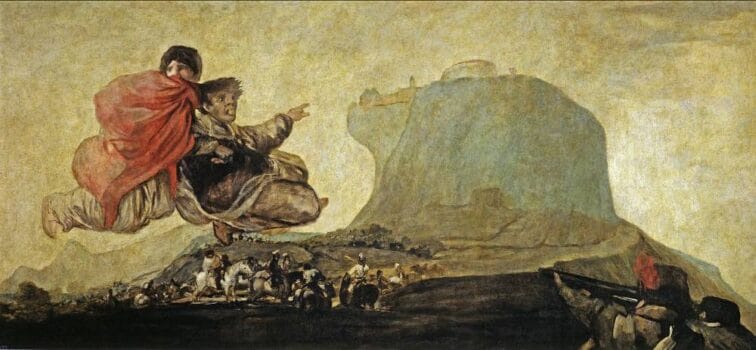
The Black Paintings refer to a series of 14 murals painted by Francisco Goya directly onto the plaster walls of his home, known as the Quinta del Sordo (“House of the Deaf Man”), between 1819 and 1823. At the time, Goya was in his seventies, nearly deaf, and in fragile health. Having survived multiple illnesses and living in political exile within his own country, he retreated to this rural house outside Madrid.
What makes the story of Goya’s Black Paintings extraordinary is that he never intended for them to be shown publicly. They were intensely private, created as an outlet for his own thoughts and emotions. Unlike his commissioned works for the Spanish court or the religious frescoes of his earlier career, these paintings were deeply personal, raw, and dark in tone.
The murals included haunting scenes such as:
- Saturn Devouring His Son – depicting the mythological titan Saturn consuming one of his children.
- Witches’ Sabbath – a disturbing gathering presided over by a goat-headed figure.
- Two Old Men Eating Soup – grotesque figures portrayed in eerie silence.
- Judith and Holofernes – a violent Biblical episode filled with shadowy menace.
- Fight with Cudgels – two men battling each other with clubs, sinking into the earth.
Each painting carried a surreal, unsettling quality. Figures seemed trapped between madness and despair, with dark color palettes and loose brushwork heightening the sense of unease.
The paintings were never titled by Goya himself. The names we use today were assigned later by art historians, which only deepens the intrigue of the Black Paintings, what exactly did Goya mean by them?
What Influenced Goya’s Black Paintings?
To understand what influenced Goya’s Black Paintings, one must look at both his personal struggles and the broader historical context of Spain.
1. Illness and Isolation
Goya had been plagued by serious health problems since the late 1790s, including a mysterious illness that left him completely deaf. The experience of isolation from society, unable to hear or fully engage, likely influenced the somber, inward tone of the Black Paintings.
2. Political Upheaval in Spain
The Spain of Goya’s lifetime was a country in turmoil. The Peninsular War (1808–1814) devastated the nation, leaving famine, executions, and social collapse. Following Napoleon’s invasion, Goya witnessed horrific violence and recorded it in his earlier series The Disasters of War. After the war, Spain returned to monarchy under Ferdinand VII, whose oppressive regime persecuted liberals and intellectuals. Goya, disillusioned, withdrew from public life.
The violence, injustice, and disillusionment of Spain during this time undoubtedly influenced the pessimistic worldview reflected in the Black Paintings.
3. Fear of Mortality and Old Age
By the time he painted these works, Goya was elderly, weakened, and deeply aware of his own mortality. The grotesque imagery of the paintings, deformed bodies, demonic faces, scenes of violence, reflects an obsession with death and the fragility of human existence.
4. Superstition and Folklore
Goya had long been fascinated with Spanish folklore, witchcraft, and superstition, themes he explored earlier in his Los Caprichos prints. The Black Paintings expand on these themes but in a darker, more despairing way, blending folklore with existential dread.
Together, these influences shaped paintings that were unlike anything seen before in European art, expressions of the unconscious, decades before modern psychology or Surrealism would emerge.
What Do Goya’s Black Paintings Represent?
The meaning of the Black Paintings is still debated by scholars, critics, and historians. Without written explanation from Goya himself, interpretations remain speculative. However, several themes recur:
1. The Darkness of Human Nature
Many of the works, such as Saturn Devouring His Son and Fight with Cudgels, reflect raw violence, cruelty, and destruction. They suggest that Goya saw humanity as trapped in cycles of brutality.
2. Fear of Death and Madness
The grotesque faces, twisted bodies, and shadowy atmospheres seem to represent the inner workings of a tormented mind. Critics often see these as reflections of Goya’s own anxieties about mortality, insanity, and decay.
3. Political Allegory
Some interpretations suggest that the paintings symbolically critique Spain’s political climate. For instance, the Fight with Cudgels could represent Spaniards fighting each other, tearing the country apart, while Witches’ Sabbath might echo superstition and ignorance manipulated by the ruling elite.
4. Spiritual Despair
Unlike Goya’s earlier religious works, the Black Paintings offer no divine redemption. They are devoid of hope, reflecting a spiritual void and perhaps Goya’s loss of faith in religion and humanity alike.
In essence, the Black Paintings represent the shadow side of existence, violence, madness, despair, and the inexorable passage of time.
Goya never exhibited or wrote about them, the initial reception of the Black Paintings was almost nonexistent. After his death in 1828, the murals remained inside the walls of the Quinta del Sordo.
It was only decades later, in the 1870s, that they were transferred from plaster onto canvas by Salvador Martínez Cubells under the patronage of Baron Frédéric Émile d’Erlanger, who later donated them to the Spanish state.
When the public first saw them, the reaction was shock and bewilderment. Critics were struck by how modern the works seemed, foreshadowing later movements like Expressionism, Surrealism, and Symbolism. Some considered them disturbing products of a diseased mind, while others praised them as profound insights into human existence.
Over time, the intrigue behind Goya’s Black Paintings has only grown. They are now seen as some of the most important works of Western art, precursors to modern explorations of the psyche and the irrational.
Where Are Goya’s Black Paintings Located?
Today, the entire collection of Goya’s Black Paintings is housed in the Museo del Prado in Madrid, Spain.
The Prado Museum is considered one of the most important art museums in the world, and the Black Paintings occupy a special place in its collection. They are displayed together in dedicated rooms, allowing visitors to experience the haunting atmosphere Goya created in his home.
Originally painted on the walls of the Quinta del Sordo, they were carefully transferred to canvas in the 19th century to preserve them. While this process saved them, it also altered their original context. In Goya’s home, they surrounded the viewer in an immersive environment, with dark murals covering multiple walls. At the Prado, they can be studied individually, though some scholars argue their power is diminished outside their original setting.
Nonetheless, visiting the Prado to see the location of Goya’s Black Paintings remains a pilgrimage for art lovers and historians worldwide.
Goya’s Black Paintings Worth
Assigning a monetary worth to Goya’s Black Paintings is nearly impossible. As cultural treasures owned by the Spanish state, they are not for sale. Their value lies not only in monetary terms but also in their unparalleled significance in the history of art.
If hypothetically placed on the art market, each Black Painting would likely command prices in the hundreds of millions, rivaling works by da Vinci, Picasso, or Van Gogh. The series as a whole would be considered priceless.
Beyond monetary worth, their cultural and artistic value is immeasurable. They represent a turning point in Western art, bridging the gap between classical painting and modern explorations of the subconscious. They are also central to Spain’s cultural heritage, much like Velázquez’s Las Meninas or Picasso’s Guernica.
Thus, while we can speculate about financial estimates, the true worth of Goya’s Black Paintings lies in their enduring impact and mystery.
The Intrigue Behind Goya’s Black Paintings
Why do these works continue to fascinate us two centuries later? The intrigue behind Goya’s Black Paintings stems from several factors:
- Lack of explanation: Goya never wrote about them, leaving their meanings open to endless interpretation.
- Psychological depth: They seem to anticipate modern understandings of the unconscious, dreams, and nightmares.
- Historical resonance: They reflect not only Goya’s personal torment but also Spain’s national trauma.
- Artistic innovation: Their dark palette, rough brushwork, and surreal themes broke from tradition, influencing modern artists like Picasso, Dalí, and Francis Bacon.
- Atmosphere of secrecy: Because they were hidden in his private home, the paintings carry an aura of intimacy, as though we are glimpsing the private visions of a haunted mind.
This combination of mystery, horror, and genius ensures that Goya’s Black Paintings remain endlessly compelling to scholars, artists, and casual viewers alike.
Legacy of Goya’s Black Paintings
The legacy of the Black Paintings extends far beyond Goya’s lifetime. They are often cited as forerunners of modern art movements such as:
- Expressionism, with its focus on raw emotion and psychological intensity.
- Surrealism, with its dreamlike and irrational imagery.
- Modernism, in the freedom of brushwork and abandonment of classical order.
Artists such as Pablo Picasso, Salvador Dalí, and Francis Bacon drew inspiration from Goya’s vision. Even filmmakers like Luis Buñuel and modern horror directors have cited the Black Paintings as influences on their exploration of darkness and the grotesque.
The reception and intrigue behind Goya’s Black Paintings continue to resonate across centuries. Born from personal suffering, political turmoil, and existential despair, these haunting works offer no comfort, only a raw, unfiltered look at the darkness of human existence.
They represent the intersection of history, psychology, and art, capturing the fears and struggles of both Goya and his era. Their location in the Prado Museum ensures they remain accessible to the world, though their original atmosphere in Goya’s home is lost. Their worth, while impossible to measure in monetary terms, lies in their unparalleled cultural significance.
In the end, the story of Goya’s Black Paintings is one of survival, art born from despair that continues to inspire, disturb, and fascinate generations. They are not just paintings but portals into the human condition, reminders that even in darkness, creativity finds its most powerful expression.