Streets of French village on a rainy evening
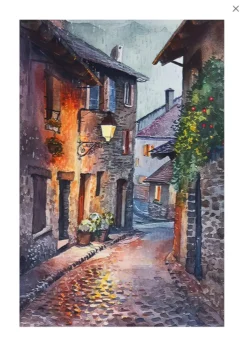
Step into the enchanting streets of a French village on a rainy evening, where the cobblestone pathways glisten under the gentle patter of raindrops. A soft, ethereal mist hangs in the air, casting a veil of mystery over the quaint buildings that line the winding streets.
Amidst the twilight gloom, the warm glow of street lamps casts a soft radiance, their golden light reflecting off the slick cobblestones below. Each lamp post stands like a sentinel, guiding weary travelers through the labyrinth of alleys and lanes.
Through windows adorned with trailing ivy and blooming flowers, glimpses of cozy interiors beckon, their inviting glow a refuge from the damp chill outside. Potted plants sit nestled on windowsills, their verdant leaves trembling in the breeze, adding a touch of life to the tranquil scene.
Along the cobbled streets, the delicate fragrance of rain-kissed flowers fills the air, their petals adorned with glistening droplets that sparkle like jewels in the fading light. The sound of distant footsteps mingles with the gentle patter of rain, creating a symphony of tranquility that envelops the village in a timeless embrace.
In this moment of serene beauty, the village exudes a quiet elegance, its streets alive with the whispered secrets of centuries past, inviting you to lose yourself in the timeless charm of a rainy evening in rural France.
A French village painting, such as the one depicted above, with its cobblestone street, warm lamplight, and weathered stone façades, can be an exceptionally strong addition to home décor. Its value derives not only from aesthetic appeal but also from the psychological, spatial, and social benefits that art of this type provides. Below is a focused, approximately 500-word analysis articulating why such a piece functions so effectively within a residential environment.
The Hidden Benefits of Displaying French Village Artwork at Home
A French village painting brings a uniquely atmospheric quality into a home, blending old-world charm with an inviting sense of serenity. The depicted scene, a narrow street illuminated by soft amber light, textured stone buildings, and reflective wet cobblestones, creates a visual vignette that instantly slows the pace of perception. In domestic interiors, this effect is powerful. It offers a consistent counterbalance to modern momentum: the hurried aesthetic of urban life, the sharpness of digital interfaces, and the constant influx of visual noise. A tranquil village street is an anchor. It encourages occupants to exhale, pause, and reorient themselves toward calm.
Aesthetically, the composition contributes warmth and depth. The interplay of warm and cool tones, golden lamplight against damp evening blues, provides dynamic visual contrast that enriches a room’s color palette. Because French village scenes typically combine natural materials (stone, wood, foliage) with soft ambient lighting, they integrate well with diverse décor styles. Whether the room leans rustic, contemporary, or transitional, the painting acts as a harmonizing element. Its textural richness invites repeated viewing; each time, the eye catches new nuances in brushwork or light reflection. This durability of interest is one reason such art remains timeless in interior spaces.
Lifestyle benefits are equally notable. Hanging art that evokes calm, nostalgia, or wanderlust contributes to emotional well-being. Visual cues influence mood, and an image that depicts a peaceful, walkable environment promotes a sense of retreat, an important psychological counterbalance that supports stress reduction. Furthermore, artistic representations of quaint European villages often stimulate imagination and curiosity. They remind residents of travel aspirations, cherished memories, or the simple beauty found in daily life. In this sense, the painting becomes not only décor but also a soft behavioral nudge toward mindfulness and appreciation.
From a social perspective, artwork of this caliber enhances the experience of visitors. Guests often gravitate toward pieces that evoke narrative potential, and a French village streetscape does exactly that. It encourages conversation, about travels, architecture, culture, or the ambiance of old-world towns, creating natural social engagement. This conversational value enriches the perceived hospitality of the home. The painting signals intentionality: the host has curated an environment designed for comfort, beauty, and thoughtful aesthetic experience. That, in turn, increases the perceived warmth and sophistication of the space.
Finally, such artwork contributes to the overall spatial dynamics of a room. Village street scenes with receding perspective lines subtly extend visual depth, making small rooms feel more expansive. The illusion of distance draws the viewer inward, giving the impression of a window into another world. This is particularly effective in entryways, living rooms, and hallways, areas where first impressions matter and spatial enhancement is valuable.
In summary, a French village painting improves interior design by merging aesthetic warmth, psychological calm, social engagement, and spatial enhancement. Its presence elevates both the lived experience of residents and the visitor’s perception of the home.