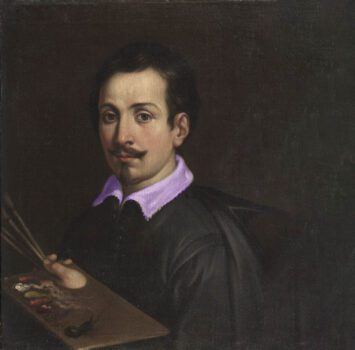
Guido Reni: Harmony, Devotion, and Ideal Beauty in the Baroque Age
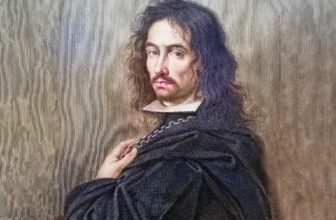
Guido Reni (1575–1642) is one of the most influential and admired painters of the Italian Baroque period. Celebrated during his lifetime and revered for centuries afterward, Reni was known for his ability to blend classical harmony with emotional restraint and spiritual depth. His art reflects a pursuit of ideal beauty, shaped by Renaissance ideals yet infused with the dramatic sensibility of the seventeenth century. Through religious paintings, mythological scenes, and expressive portraits, Guido Reni helped define a distinctive path within Baroque art, one marked not by excess, but by grace, balance, and moral seriousness.
Early Life and Training
Guido Reni was born in Bologna in 1575, a city that played a central role in the reform of Italian painting at the turn of the seventeenth century. Initially trained as a musician, Reni soon turned to painting and entered the influential Accademia degli Incamminati, founded by the Carracci family, Ludovico, Annibale, and Agostino Carracci. This academy emphasized drawing from life, the study of classical antiquity, and a return to clarity and naturalism, countering the artificiality of late Mannerism.
Under the Carracci, Reni developed strong draftsmanship and a refined sense of composition. Early in his career, his works showed dynamic movement and rich color, reflecting Annibale Carracci’s influence. However, Reni quickly began to cultivate a more serene and idealized style, increasingly focused on calm expressions, soft lighting, and spiritual elevation.
Rome and Artistic Maturity
Reni’s move to Rome in the early 1600s marked a turning point in his career. Rome was the epicenter of artistic patronage, dominated by powerful patrons such as Pope Paul V and major religious orders. There, Reni encountered both the art of classical antiquity and the dramatic realism of Caravaggio. While he admired Caravaggio’s power, Reni rejected his raw naturalism and harsh lighting, favoring instead a purified, idealized vision of humanity.
One of Reni’s most important Roman commissions was The Crucifixion of St. Peter (1605), painted for San Paolo alle Tre Fontane. Although more dramatic than his later works, it already shows his concern for clarity and emotional control. Another major Roman masterpiece is Aurora (1614), a ceiling fresco in the Casino dell’Aurora at the Palazzo Pallavicini-Rospigliosi. This mythological scene, depicting Apollo leading the chariot of the sun, is a perfect example of Reni’s classical restraint. Inspired by ancient reliefs and Raphael, the fresco emphasizes rhythm, harmony, and ideal proportions rather than Baroque illusionism.
Return to Bologna and Personal Struggles
After his success in Rome, Reni returned to Bologna permanently around 1614. There, he ran a large workshop and received commissions from across Europe. However, his personal life was marked by inner turmoil. Reni was deeply religious, plagued by guilt, anxiety, and a lifelong addiction to gambling, which often caused financial instability despite his fame.
These struggles may have influenced the increasingly spiritual and introspective tone of his later works. His palette became lighter, with silvery grays, pale blues, and soft flesh tones replacing earlier richness. Figures appear more ethereal, removed from earthly weight, embodying an almost otherworldly purity.
Major Artworks and Themes
Guido Reni is best known for his religious paintings, especially images of Christ, the Virgin Mary, and saints. Among his most famous works is St. Michael the Archangel (c. 1636), painted for the Capuchin church in Rome. The archangel is depicted as an elegant, youthful warrior, calmly subduing Satan. The painting exemplifies Reni’s ability to convey moral victory through beauty rather than violence.
Another iconic work is Beatrice Cenci (traditionally attributed to Reni), a haunting portrait of a young woman condemned to death. Whether or not the attribution is correct, the image reflects the emotional subtlety often associated with Reni’s style. His numerous versions of Ecce Homo and The Penitent Magdalene reveal his sensitivity to human suffering expressed through gentle sorrow rather than dramatic agony.
Reni also painted mythological subjects, such as Atalanta and Hippomenes, where movement is frozen into idealized poses, and the narrative is subordinated to visual harmony. Across all themes, his art consistently seeks balance between emotion and restraint.
Legacy and Historical Importance
During his lifetime, Guido Reni was considered one of the greatest painters in Europe, often compared to Raphael. His works were highly sought after by popes, princes, and collectors. In the eighteenth century, his reputation remained strong, especially in academic circles that valued ideal beauty and moral clarity.
However, in the nineteenth century, tastes shifted toward realism and emotional intensity, leading to a temporary decline in his reputation. Modern scholarship has since restored Reni’s importance, recognizing him as a key figure who offered an alternative vision of the Baroque, one rooted in classical serenity and spiritual aspiration.
Today, Guido Reni is understood as an artist who bridged Renaissance ideals and Baroque expression, creating images that continue to resonate through their quiet power, elegance, and devotional depth. His life and work reveal the enduring human desire to find order, beauty, and meaning amid inner conflict and historical change.
What Is Guido Reni Known For
Guido Reni, a master of Baroque painting, left behind a body of work filled with divine grace, idealized beauty, and emotional depth. His paintings have adorned cathedrals, palaces, and museums across the globe, inspiring generations of artists and art lovers alike. As one of the most prominent painters of the 17th century, Reni combined the drama of the Baroque with a classical elegance that set him apart from his contemporaries. In this post, we will explore the life and legacy of Guido Reni, his most famous works, and the continuing impact of his artistic vision.
Born on November 4, 1575, in Bologna, Italy, Guido Reni showed artistic promise from a young age. His father, Daniele Reni, was a musician, but it was clear early on that Guido’s talents lay in the visual arts. At just nine years old, he was apprenticed to the Flemish painter Denis Calvaert, whose workshop in Bologna was renowned for its rigorous training.
In Calvaert’s studio, Reni learned the fundamentals of drawing and the techniques of Mannerism. However, by the time he reached his early twenties, Reni sought a different kind of artistic expression. Along with fellow students such as Francesco Albani and Domenichino, he left Calvaert’s workshop and joined the Accademia degli Incamminati, founded by the Carracci family, Agostino, Annibale, and Ludovico Carracci. The Carracci were pioneers of the Baroque style and emphasized naturalism and the emotional power of art.
This shift proved pivotal. Under the Carracci, Reni found his mature voice as an artist. He synthesized the dramatic flair of the Baroque with a refined classical beauty, which would define his best-known works.
Guido Reni is celebrated for his religious and mythological paintings, characterized by a graceful, idealized style that blends Renaissance balance with Baroque emotionalism. His work was deeply spiritual, often depicting biblical figures, saints, and classical deities in poses of quiet contemplation or transcendent ecstasy.
What set Reni apart was his pursuit of an ethereal beauty. He avoided excessive theatricality, preferring serene compositions and delicate color palettes. His figures, often with elongated limbs and serene faces, are reminiscent of ancient Greek sculpture and Raphael’s paintings, indeed, Reni was often referred to as the “Divine Guido” for his heavenly portrayals.
Reni was also known for his fastidiousness and perfectionism. He would sometimes destroy his own work if it failed to meet his lofty standards. This pursuit of perfection extended beyond art; Reni was known to live a disciplined and even austere life. He avoided courtly pleasures and was intensely devoted to his art.
Most Famous Paintings of Guido Reni
Aurora (1613–1614)
Commissioned by Cardinal Scipione Borghese for the Casino dell’Aurora in the Palazzo Pallavicini-Rospigliosi in Rome, this fresco is perhaps Reni’s most famous work. It depicts the goddess Aurora leading Apollo’s chariot across the sky, surrounded by dancing Hours. The composition is a masterclass in classical harmony and has been celebrated for its luminous beauty and perfect proportions.The Archangel Michael (circa 1635)
Painted for the church of Santa Maria della Concezione in Rome, this dramatic image shows the Archangel Michael triumphantly standing over Satan. Michael’s youthful beauty, dynamic pose, and glowing armor exemplify Reni’s ability to imbue divine figures with both grace and power.Atalanta and Hippomenes (circa 1625–1628)
This mythological painting captures the moment of the fateful race between Atalanta and Hippomenes. With elegant movement and sensuous forms, it exemplifies Reni’s mastery of narrative and figure painting. It is housed in the Museo del Prado, Madrid.The Penitent Magdalene (various versions)
Reni painted several versions of Mary Magdalene in contemplative sorrow. These images, with downcast eyes and soft lighting, are some of the most emotive representations of the saint in Baroque art.Saint Sebastian (circa 1615)
Reni’s Saint Sebastian, depicted bound and pierced by arrows, is one of the most iconic renditions of the martyr. His beauty and vulnerability have made this version particularly popular and widely reproduced.Crucifixion of St. Peter (1604–1605)
One of Reni’s early Roman works, this painting shows the apostle Peter being crucified upside down. The composition is bold and dramatic, showcasing Reni’s emerging style that balanced realism with idealism.
The Most Expensive Painting of Guido Reni
As of recent art market history, the most expensive Guido Reni painting ever sold is “David with the Head of Goliath”, which fetched over $32 million USD at a Sotheby’s auction in 2022. This masterpiece had remained in private hands for centuries before being rediscovered and identified as an original work by Reni. The dramatic composition, masterful use of chiaroscuro, and intense psychological tension between the young David and the severed head of Goliath contributed to its high valuation.
This sale confirmed Reni’s enduring value in the art world and positioned him among the most sought-after Old Masters in the 21st century.
How Many Paintings Did Guido Reni Create?
Guido Reni is believed to have produced over 300 paintings during his lifetime. However, due to his perfectionism and tendency to destroy unsatisfactory works, the exact number is difficult to pin down.
Additionally, Reni operated a large workshop in Bologna, and many pieces attributed to him were partially or entirely painted by assistants under his close supervision. These workshop productions often followed Reni’s designs and compositional schemes, though they may lack the refined touch of his hand.
Art historians continue to debate the authorship of some works, especially given Reni’s habit of repeating compositions and allowing versions of his popular paintings to circulate widely.
Where Are Guido Reni’s Paintings Located?
Today, Reni’s masterpieces can be found in the world’s most prestigious art institutions, as well as in churches and private collections across Europe.
Italy
Bologna: The Pinacoteca Nazionale di Bologna holds many of Reni’s paintings, including religious works and portraits. The San Domenico Church and San Pietro Cathedral also house notable pieces.
Rome: His fresco “Aurora” is in the Palazzo Pallavicini-Rospigliosi. The Galleria Borghese and Santa Maria della Concezione dei Cappuccini feature several of his masterpieces.
Naples: The Museo di Capodimonte includes several mythological and religious works.
France
Louvre Museum, Paris: Houses several paintings, including “Cleopatra Dying” and “The Abduction of Helen”.
Spain
Museo del Prado, Madrid: One of the finest collections of Reni’s mythological works, including “Atalanta and Hippomenes”.
United Kingdom
National Gallery, London: Holds Reni’s “The Adoration of the Shepherds” and other key works.
Germany
Alte Pinakothek, Munich: Home to “The Assumption of the Virgin” and other religious works.
United States
The Metropolitan Museum of Art, New York: Several paintings including religious and mythological themes.
Los Angeles County Museum of Art (LACMA) and the Getty Museum also include works by or attributed to Reni.
The Legacy of Guido Reni
Guido Reni’s impact on the Baroque era and beyond cannot be overstated. While many of his contemporaries embraced intense drama and dynamic chaos, think Caravaggio or Rubens, Reni offered an alternative: calm, celestial, and graceful beauty.
His art influenced painters across Italy and Europe. In France, his idealized figures inspired classical painters like Nicolas Poussin. In Spain, Reni’s compositions were studied and emulated by court artists. Even in the 19th century, the Nazarenes, a German group of Romantic painters, revered Reni for his spiritual purity and classicism.
Reni also played a crucial role in defining the Bolognese School of Painting, helping to elevate Bologna as a major artistic center during the Baroque period. His legacy persists not only through his art but through the many students and followers who carried forward his vision.
Despite periods of fluctuating reputation, where critics viewed his idealized figures as overly sentimental, modern scholarship has rediscovered Reni as a sophisticated and highly intellectual artist. Today, his works are again appreciated for their subtlety, psychological depth, and formal perfection.
The Eternal Appeal of Guido Reni
Guido Reni remains one of the most fascinating figures of the Baroque period. In an age of extremes, his work offered serenity. In a world of bold contrasts, he painted harmony. His idealized figures and poetic interpretations of sacred and mythological subjects continue to move viewers centuries later.
From the divine tranquility of his Magdalene to the radiant dawn of Aurora, Reni captured something timeless: a vision of humanity elevated by beauty, touched by the divine. As his works continue to grace the halls of major museums and the altars of Italian churches, Guido Reni’s legacy as the “Divine Painter” lives on, a testament to the enduring power of grace in art.