Leonardo da Vinci impact in the Renaissance
Leonardo da Vinci is often hailed as the quintessential Renaissance man, embodying the spirit of innovation, curiosity, and creativity that defined the era. His profound impact on the Renaissance was multifaceted, influencing art, science, engineering, anatomy, and beyond. This article delves into how Leonardo da Vinci shaped the Renaissance and left a legacy that continues to inspire humanity.
In art, Leonardo transformed Renaissance painting through his technical mastery and innovative approaches. He advanced the use of realism by carefully studying human anatomy, light, and perspective. Techniques such as sfumato, which involved the subtle blending of tones and colors, allowed Leonardo to create lifelike figures with emotional depth and natural movement. Masterpieces such as The Last Supper and Mona Lisa exemplify these innovations. Rather than depicting figures as static or symbolic, Leonardo portrayed them as psychologically complex individuals, reflecting the Renaissance emphasis on human experience and individuality. His work influenced generations of artists, including Raphael and Michelangelo, and helped elevate painting from a craft to an intellectual discipline.
Leonardo’s impact extended far beyond art into science and anatomy. At a time when scientific inquiry was still closely tied to ancient authorities, Leonardo emphasized direct observation and empirical study. He dissected human and animal bodies to understand muscles, bones, and organs, producing anatomical drawings of unprecedented accuracy. Although many of his findings were not published during his lifetime, his methods anticipated modern scientific practices. By integrating art and science, Leonardo demonstrated that careful observation of nature could lead to deeper understanding, a principle that aligned closely with Renaissance humanism.
Engineering and technological innovation were also central to Leonardo’s legacy. He designed machines related to warfare, construction, flight, and hydraulics, including early concepts for helicopters, tanks, and flying machines. While most of these designs were never built, they revealed a forward-looking imagination grounded in scientific reasoning. Leonardo’s notebooks show a mind constantly experimenting, questioning, and refining ideas. This spirit of innovation reflected the Renaissance belief in human potential and the capacity to shape the world through intellect and creativity.
Equally important was Leonardo’s influence on Renaissance thought and culture. He challenged traditional boundaries between disciplines, refusing to separate art from science or theory from practice. This interdisciplinary approach encouraged a more holistic view of knowledge, one that valued curiosity, experimentation, and critical thinking. Leonardo’s emphasis on learning through experience rather than solely through texts mirrored broader Renaissance efforts to move beyond medieval scholasticism and recover classical ideals of inquiry.
Leonardo da Vinci also contributed to the Renaissance shift in humanity’s self-perception. His studies of proportion, most famously represented in the Vitruvian Man, symbolized the belief that humans were the measure of all things and that the human body reflected universal order. This idea reinforced the humanist focus on dignity, balance, and rationality, placing humanity at the center of intellectual and artistic pursuits.
Leonardo da Vinci profoundly impacted the Renaissance by redefining artistic standards, advancing scientific observation, fostering technological imagination, and promoting an integrated approach to knowledge. His work embodied the core Renaissance values of humanism, curiosity, and innovation. Although many of his ideas were not fully realized until centuries later, Leonardo’s legacy endures as a symbol of the Renaissance itself, a period marked by the rebirth of learning and the limitless potential of the human mind.
A Polymath Ahead of His Time
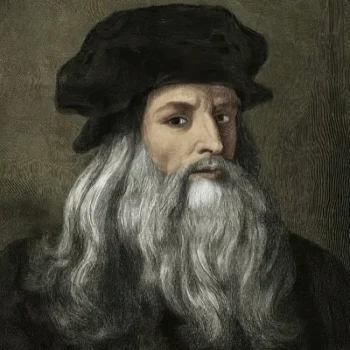
Leonardo da Vinci (1452–1519) was born in Vinci, a small town in Italy. From an early age, he exhibited an insatiable curiosity about the natural world and a remarkable talent for art. As a polymath, Leonardo’s interests spanned diverse fields, and he approached each with a rigorous scientific method. His multidisciplinary expertise exemplified the Renaissance ideal of merging art and science to explore human potential and the universe.
Revolutionizing Art
Leonardo’s artistic contributions were revolutionary. His meticulous techniques, use of perspective, and mastery of light and shadow elevated Renaissance art to new heights.
- The Mona Lisa: One of Leonardo’s most celebrated works, the Mona Lisa, is a masterpiece of portraiture. Its enigmatic smile and intricate sfumato technique, a method of blending colors and tones, captured a lifelike quality previously unseen in painting.
- The Last Supper: This mural painting is a triumph of composition and emotional expression. Leonardo’s innovative approach to perspective and his portrayal of human emotion make it a cornerstone of Western art.
- Anatomical Studies in Art: Leonardo’s anatomical sketches were groundbreaking. By dissecting human cadavers, he gained a deep understanding of the human form, which he translated into art. His studies bridged the gap between science and art, ensuring greater realism in his depictions of the human body.
Advancing Scientific Understanding
Leonardo’s scientific inquiries were groundbreaking, laying the groundwork for modern disciplines.
- Anatomy: Leonardo’s anatomical drawings, such as the Vitruvian Man, combined art with precise scientific observation. He meticulously documented muscles, bones, and organs, providing insights that were centuries ahead of his time.
- Engineering and Inventions: Leonardo designed innovative machines, from flying devices to war machines. His sketches of helicopters, tanks, and hydraulic systems demonstrate his visionary thinking. Although many of his inventions remained unrealized during his lifetime, they foreshadowed modern engineering marvels.
- Hydraulics and Hydrodynamics: Leonardo’s studies of water flow and his designs for canals and water systems were pioneering. His understanding of fluid dynamics was instrumental in advancing engineering and environmental science.
Transforming the Renaissance Worldview
Leonardo’s work challenged established norms and encouraged others to question and explore. His approach to integrating observation, experimentation, and documentation became a model for scientific inquiry.
- Humanism and Individualism: Leonardo embodied the Renaissance humanist ideal, emphasizing the value of human experience and creativity. His works celebrated individuality and the potential of human intellect.
- Interdisciplinary Approach: By seamlessly blending art, science, and technology, Leonardo demonstrated that disciplines are interconnected. This holistic perspective influenced Renaissance thinkers and set the stage for future innovations.
Cultural Impact
Leonardo’s influence extended beyond his lifetime, shaping the cultural and intellectual landscape of Europe and beyond.
- Inspiring Artists and Scientists: Leonardo’s techniques and ideas inspired countless artists, including Raphael and Michelangelo. Scientists such as Galileo and Newton also benefited from his scientific methodologies.
- Legacy of Curiosity: Leonardo’s relentless curiosity and thirst for knowledge serve as a timeless reminder of the importance of lifelong learning and exploration.
- Preservation of Knowledge: His extensive notebooks, filled with drawings, ideas, and observations, have been invaluable resources for understanding Renaissance thought and innovation.
Challenges and Mysteries
Leonardo’s life and work were not without challenges. Many of his projects remained unfinished due to his perfectionism and the immense breadth of his interests. Additionally, his secretive nature and use of mirror writing have left some of his ideas shrouded in mystery.
Leonardo da Vinci, the ultimate Renaissance man
Leonardo da Vinci is widely regarded as the ultimate Renaissance man because he embodied the central ideals of the Renaissance more fully than any other historical figure. Living from 1452 to 1519, Leonardo demonstrated extraordinary mastery across a vast range of disciplines, including art, science, engineering, anatomy, architecture, and philosophy. His life and work exemplify the Renaissance belief that human potential is virtually limitless when guided by curiosity, observation, and reason.
At the core of Leonardo’s reputation is his unparalleled artistic achievement. Paintings such as The Last Supper and Mona Lisa are celebrated not only for their technical excellence but also for their psychological depth and realism. Leonardo revolutionized painting through techniques such as sfumato, which allowed for subtle transitions between light and shadow, creating lifelike forms and emotional complexity. Unlike many artists before him, he approached art as a science, grounding aesthetic beauty in mathematics, proportion, and close observation of nature.
However, Leonardo’s greatness extended far beyond art. He was an insatiable student of the natural world, driven by a desire to understand how everything functioned. His notebooks, which contain thousands of pages of sketches and writings, reveal groundbreaking studies in anatomy, botany, geology, and physics. Through dissections of human bodies, Leonardo produced anatomical drawings of astonishing accuracy, centuries ahead of their time. His work on the human skeleton, muscles, and internal organs laid foundations for modern medical science, even though much of it remained unpublished during his lifetime.
Leonardo was also a visionary engineer and inventor. His designs included flying machines, armored vehicles, bridges, hydraulic systems, and military devices. While many of these inventions were never built, they demonstrate an advanced understanding of mechanics, aerodynamics, and structural engineering. Importantly, Leonardo did not view engineering as separate from art or science; rather, he saw all knowledge as interconnected. This integrative approach is a defining characteristic of the Renaissance ideal.
Equally significant was Leonardo’s intellectual mindset. He rejected blind acceptance of authority and emphasized direct observation and experimentation. At a time when much knowledge was derived from classical texts or religious doctrine, Leonardo insisted on learning from experience. This empirical approach aligns closely with the principles that would later shape the scientific method. His habit of constant questioning, about the movement of water, the flight of birds, or the proportions of the human body, reflects a restless curiosity that defined his entire life.
Ultimately, Leonardo da Vinci is considered the ultimate Renaissance man because he achieved excellence across multiple fields while uniting them into a coherent vision of knowledge. He did not specialize narrowly but pursued understanding in its broadest sense, believing that art, science, and technology were mutually enriching. His legacy represents the Renaissance ideal of uomo universale, the universal man, whose intellect and creativity know no boundaries. Through his work, Leonardo demonstrated what humanity could accomplish at the intersection of imagination, observation, and disciplined study.
Leonardo da Vinci’s impact on the Renaissance was profound and enduring. Through his groundbreaking art, scientific discoveries, and visionary ideas, he epitomized the spirit of the era. His legacy transcends time, continuing to inspire creativity, innovation, and the pursuit of knowledge. As a bridge between art and science, Leonardo da Vinci remains a symbol of what humanity can achieve when imagination and intellect converge. image/ leonardodavinci