When Time Becomes Art: How Luxury Watchmakers Incorporate Fine Art
The Watch as a Portable Work of Art
For centuries, fine art was confined to walls, plinths, and palaces, while watches were valued primarily for precision and engineering. Today, those boundaries have dissolved. The most ambitious luxury watchmakers no longer treat decoration as an afterthought or marketing flourish. Instead, they approach the wristwatch as a miniature, self-contained artwork, capable of carrying the same emotional, intellectual, and cultural weight as a painting or sculpture. For art collectors, this convergence has opened a parallel collecting universe where aesthetics, provenance, technique, and authorship matter just as deeply as mechanical innovation.
The appeal is not simply visual. A fine-art watch compresses time on multiple levels. It measures hours and minutes while simultaneously embodying historical time through traditional crafts and contemporary artistic expression. It can be worn, handled, and lived with in a way that few artworks allow. This intimacy is one of the reasons collectors increasingly view high-end watches not merely as luxury accessories but as legitimate artistic objects.
From Decorative Craft to Artistic Ambition
The relationship between watchmaking and art predates modern luxury branding. As early as the seventeenth and eighteenth centuries, European watchmakers decorated cases with enamel miniatures, allegorical scenes, and mythological figures inspired by court painting. These pocket watches were often commissioned by aristocrats who expected the same level of artistry found in their portraits or cabinets of curiosities. The watchmaker’s workshop functioned much like a small studio, employing engravers, enamellers, and miniature painters whose skills overlapped with those of fine artists.
During the industrial nineteenth century, much of this artistry receded as mass production and technical standardization took precedence. Yet the finest houses preserved these skills quietly, passing them down through generations. When mechanical watchmaking faced existential crisis during the quartz era of the late twentieth century, art returned not as nostalgia but as strategy. Decoration, handcraft, and artistic individuality became powerful differentiators, transforming the mechanical watch into a cultural artifact rather than a utilitarian object.
How Fine Art Lives Inside a Watch
The incorporation of fine art into watchmaking relies on techniques that demand extraordinary patience and visual sensitivity. Unlike large-scale artworks, these methods operate within spaces measured in millimeters, where a single error can destroy weeks of work. For collectors accustomed to examining brushstrokes and surface textures, these techniques offer familiar territory, albeit in radically compressed form.
Enameling remains one of the most revered artistic processes in haute horlogerie. Grand feu enamel involves applying powdered glass mixed with pigments onto a metal surface, then firing it repeatedly in a kiln at extremely high temperatures. Each firing risks cracking or discoloration, making success uncertain even for masters. The resulting surface possesses a depth and luminosity comparable to oil paint, yet is permanently fused to the dial. Cloisonné enamel, where fine gold wires outline forms that are then filled with enamel, echoes medieval manuscript illumination and Byzantine mosaics, linking contemporary watches to ancient artistic traditions.
Engraving introduces sculptural qualities into watches, transforming metal into relief compositions. Hand engraving is not merely decorative but interpretive. An engraver reads the design much as a sculptor reads stone, deciding where light should catch and where shadows should deepen. In skeletonized movements, engraving extends into the mechanical heart of the watch, turning bridges and plates into ornamental architecture. For art collectors, this internal decoration is particularly compelling, as it mirrors the hidden craftsmanship found on the backs of paintings or within sculptures.
Miniature painting on dials represents one of the most direct translations of fine art into watchmaking. Using brushes often made from a single hair, artists paint landscapes, portraits, or abstract compositions onto surfaces no larger than a coin. The challenge lies not only in scale but in permanence, as pigments must withstand firing or sealing processes. These dials often require dozens of hours and multiple attempts, making each successful example effectively unique.
Examples That Define the Genre
Certain watches have become benchmarks for the integration of fine art and horology. Patek Philippe’s rare hand-painted enamel pocket watches and wristwatches, often depicting historical scenes or naturalistic motifs, are treated by collectors much like Old Master drawings. Their appeal lies not only in beauty but in continuity, representing an unbroken lineage of craftsmanship.
Vacheron Constantin’s Métiers d’Art collections offer another instructive example. These watches frequently reinterpret famous artworks or cultural themes through enamel, engraving, and guilloché. Rather than reproducing art mechanically, they translate its spirit into a new medium, raising questions about interpretation, originality, and authorship that resonate deeply with art-historical discourse.
Audemars Piguet has approached art from a more contemporary angle, integrating avant-garde engraving and architectural skeletonization that recalls modern sculpture. In these watches, the movement itself becomes an abstract composition, echoing the spatial experimentation of twentieth-century art.
Artist and Brand Collaborations
In recent decades, luxury watchmakers have increasingly collaborated directly with contemporary artists, blurring the line between decorative craft and fine art authorship. These partnerships differ fundamentally from traditional decoration. Instead of artisans interpreting pre-existing motifs, artists impose their own visual language onto the watch, often challenging conventions of symmetry, legibility, and finish.
Collaborations with artists such as Takashi Murakami, KAWS, and others have introduced pop art, street aesthetics, and conceptual humor into watchmaking. These watches function as wearable multiples, yet they retain the exclusivity and craftsmanship expected of haute horlogerie. For collectors already active in the contemporary art market, such collaborations offer a familiar entry point, combining recognizable artistic signatures with mechanical legitimacy.
Crucially, successful collaborations respect both disciplines. When the watch becomes merely a canvas, the result feels superficial. When the artist engages with the mechanics, materials, and constraints of watchmaking, the outcome can be genuinely innovative. These pieces often provoke debate within collecting circles, much like boundary-pushing artworks do within museums.
Artist–brand collaborations have become one of the most intellectually provocative ways luxury watchmakers engage with fine art. Unlike traditional decorative métiers, which translate established motifs through artisanal techniques, these collaborations introduce an external artistic voice that actively reshapes the watch’s identity. For art collectors, such projects are compelling precisely because they sit at the intersection of authorship, edition culture, and material experimentation, echoing familiar dynamics from the contemporary art market.
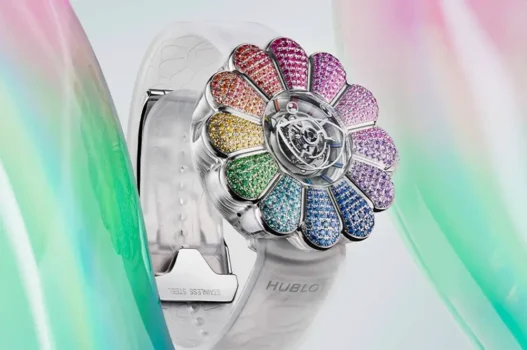
Hublot’s collaboration with Takashi Murakami stands as one of the clearest examples of this shift. Murakami’s iconic smiling flower, a symbol deeply rooted in postwar Japanese pop culture and Superflat theory, becomes the conceptual core of the watch. Rather than functioning as a static image, the flower’s gemstone-set petals rotate, transforming the dial into a kinetic artwork. The result is neither a conventional watch nor a simple artist edition, but a wearable sculpture that fuses Murakami’s visual language with mechanical motion, appealing to collectors who value conceptual clarity as much as craftsmanship.
Louis Vuitton’s ongoing collaboration with Yayoi Kusama approaches art from a different angle, emphasizing immersion and repetition. Kusama’s polka dots, long associated with infinity, self-obliteration, and psychological intensity, spread across dials and reflective cases, dissolving the boundary between object and viewer. These watches resonate strongly with collectors familiar with Kusama’s installations, as they translate her core themes into an intimate, portable scale while maintaining her unmistakable authorship.
Hermès offers a more poetic and materially driven approach through collaborations with porcelain masters such as Yoshitaka Fukushima. Here, the watch dial becomes a fragile ceramic canvas, hand-fired and hand-painted, echoing traditions more commonly associated with East Asian decorative arts than Swiss horology. These watches feel closer to studio ceramics than industrial luxury goods, attracting collectors who value rarity, surface nuance, and the quiet authority of craft-based art.
Audemars Piguet, meanwhile, embeds itself within the contemporary art ecosystem rather than attaching itself to a single visual motif. Through artist residencies, sponsored competitions, and studio collaborations, the brand positions watchmaking as a cultural participant. This strategy resonates with collectors who see value in institutional involvement and long-term patronage, much as they would with museums or foundations.
Three additional collaborations further underscore the breadth of this movement. Richard Mille’s partnership with artists such as Daniel Arsham transforms watches into speculative artifacts, blending erosion, futurism, and mechanical transparency in ways that mirror contemporary sculpture. Bulgari’s collaborations with digital and conceptual artists, including projects engaging data and light, push the watch into dialogue with new media art. Vacheron Constantin, through its artistic partnerships linked to cultural institutions, integrates historical art narratives with contemporary interpretation, reinforcing continuity between heritage and innovation.
Collectively, these collaborations matter because they reposition the luxury watch as a legitimate site of artistic experimentation. For art collectors, they offer familiar questions of authorship, edition, and legacy, while adding the unique dimension of time itself as both subject and medium.
The Art Inside Movement
One of the most significant developments for serious collectors is the growing emphasis on movement decoration as an artistic field in its own right. Known informally as the “art inside” movement, this approach insists that beauty must extend beyond visible surfaces. Bridges are beveled by hand, screws are polished to a mirror finish, and interior angles are shaped with techniques that machines cannot replicate.
This hidden artistry resonates strongly with art collectors accustomed to valuing works that reveal their depth slowly. Just as a painting rewards close inspection, a finely finished movement reveals layers of intention and labor. The fact that much of this work remains unseen during normal wear enhances its conceptual appeal, aligning it with ideas of integrity and authenticity that underpin serious collecting.
Some watchmakers have taken this philosophy further by inviting artists to influence movement architecture itself. In these cases, the mechanics are not merely decorated but composed, arranged according to aesthetic principles as much as functional ones. The watch becomes a kinetic sculpture, animated by time.
Why It Matters: Cultural, Intellectual, and Market Significance
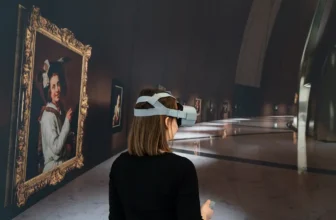
For art collectors, the fusion of fine art and watchmaking matters on several levels. Culturally, it represents a broader collapse of traditional hierarchies between fine art and applied art. Museums increasingly exhibit watches alongside paintings and sculptures, acknowledging their artistic significance. This institutional validation reinforces the idea that watches can be collected, studied, and discussed using the same frameworks applied to other art forms.
Intellectually, art-infused watches invite critical engagement. Questions of originality, edition size, authorship, and conservation all apply. An enamel dial raises issues of condition and restoration familiar to Old Master collectors. An artist collaboration prompts debates about authenticity and legacy. These parallels enrich the collecting experience, transforming ownership into an ongoing dialogue rather than a static acquisition.
From a market perspective, watches that successfully integrate fine art often demonstrate remarkable resilience and desirability. Their value is supported not only by mechanical complexity but by aesthetic distinction and narrative depth. As with art, the strongest examples are those where technique, concept, and execution align seamlessly.
A New Chapter in Collecting
The incorporation of fine art into luxury watchmaking is not a passing trend but a mature evolution rooted in history and propelled by contemporary creativity. For collectors, these watches offer something rare: an object that can be worn daily yet studied endlessly, that bridges craft and concept, intimacy and legacy. In treating time itself as a medium, luxury watchmakers have created a new category of art, one measured not only in hours and minutes, but in meaning. image / thehourglass