Who Were the Most Influential Painters of the 15th Centuries
The 15th century marked a turning point in the history of Western art, ushering in a period of profound transformation known as the Early Renaissance. During this century, painting evolved from the flat, symbolic styles of the medieval world into a more naturalistic and human-centered form of expression. Artists began to explore realism, perspective, anatomy, light, and emotion with an intensity never seen before, fundamentally changing how the world was represented on canvas and fresco.
This artistic revolution was closely tied to broader cultural shifts. The rise of humanism encouraged a renewed interest in classical antiquity, placing emphasis on human experience, individuality, and the study of nature. Wealthy patrons, such as the Medici family in Florence, supported artists financially, allowing them to experiment, innovate, and elevate painting from a craft to an intellectual pursuit. As a result, painters gained higher social status and greater creative freedom.
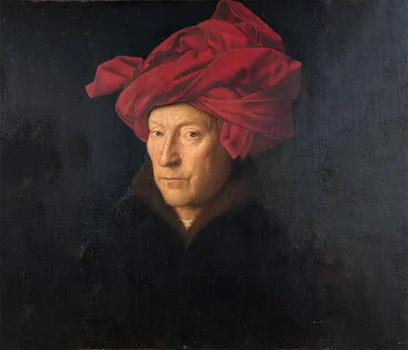
Among the most influential painters of the 15th century were figures whose innovations shaped the future of art for generations. Masaccio pioneered the use of linear perspective and realistic human figures, giving paintings a convincing sense of depth and physical presence. Fra Angelico blended spiritual devotion with gentle realism, while Piero della Francesca brought mathematical precision and serene harmony to composition and light. In Northern Europe, Jan van Eyck revolutionized painting through his mastery of oil paint, achieving extraordinary detail, texture, and luminosity that transformed portraiture and religious art alike.
These painters did more than create beautiful images; they redefined the purpose and possibilities of art. Their breakthroughs laid the foundation for the High Renaissance and influenced masters such as Leonardo da Vinci, Michelangelo, and Raphael. Understanding the most influential painters of the 15th century is therefore essential to understanding how modern Western art was born, out of curiosity, observation, and a renewed belief in the power of human creativity.
The Most Influential Painters of the 15th Century
The 15th century (1400s), often considered the Early Renaissance, was dominated by painters who revived classical values and developed new technical skills such as linear perspective and naturalism.
Below are the painters who defined this era.
1. Giotto di Bondone (1267–1337): The Pioneer Who Lit the Spark
Although Giotto lived slightly before the 15th century, he is widely considered the founding figure of Renaissance art. His works influenced every painter who followed.
Giotto di Bondone, often called the father of Renaissance painting, fundamentally transformed European art by shifting the focus from the abstract, symbolic figures of the Byzantine tradition to the tangible, emotional, and spatially coherent depictions of the human experience. Working primarily in Florence and Padua, Giotto introduced a convincing sense of three-dimensional space and volume in his figures, using light, shadow, and naturalistic proportions to make his subjects appear grounded in reality. His frescoes in the Scrovegni Chapel in Padua, created around 1305, are particularly notable for their narrative clarity, dramatic expression, and spatial innovation. Here, Giotto depicted biblical stories with unprecedented emotional depth: faces show grief, compassion, or wonder, while bodies are convincingly posed within a believable architectural and natural environment.
Beyond his technical contributions, Giotto’s approach to storytelling redefined the purpose of religious art, emphasizing human experience and emotion alongside spiritual devotion. He inspired generations of artists, including Masaccio and Michelangelo, whose work carried forward the principles of realism and spatial coherence he pioneered. Giotto’s legacy lies not only in his frescoes but also in the philosophical shift he initiated, painting became a study of humanity, grounded in observation and emotional truth. By breaking away from rigid formalism, he laid the foundation for the artistic explosion of the Renaissance, showing that art could both instruct and move viewers. His integration of narrative, emotion, and spatial depth marked a turning point in Western art history, positioning him as a transitional figure between the medieval world and the dawn of modern artistic sensibility. Without Giotto, the humanist and naturalistic impulses that defined the Renaissance may have emerged far later, making his role in art history nothing short of revolutionary.
Why Giotto Was Influential
Introduced three-dimensionality into painting.
Focused on human emotion and realism.
Broke away from the flat, symbolic style of Byzantine art.
Giotto’s frescoes in the Scrovegni Chapel are considered revolutionary for their naturalistic space and expressive figures. Without Giotto, the Renaissance artistic explosion might never have occurred.
2. Masaccio (1401–1428): The Father of Perspective
Masaccio is recognized as the first great painter of the 15th century and the artist who fully implemented linear perspective into painting.
Masaccio, despite his brief life, is widely regarded as the painter who fully realized the principles of linear perspective in the early 15th century, creating a transformative impact on the visual arts. Working primarily in Florence, Masaccio advanced the study of light, shadow, and form to depict the human body and architectural space with unprecedented realism. In the frescoes of the Brancacci Chapel, Masaccio’s figures possess a solidity and physical presence that had never been seen before, demonstrating mastery of chiaroscuro and foreshortening to create three-dimensionality. His ability to convey mass and volume made human figures appear tangible, grounded, and alive, while his careful use of perspective established coherent spatial depth within complex narrative scenes. One of his most celebrated works, The Tribute Money, exemplifies Masaccio’s revolutionary approach: Christ and the apostles occupy a believable space defined by vanishing points, while their gestures and expressions convey emotion and narrative clarity.
Masaccio’s innovations went beyond technique; he bridged medieval iconography with a new humanist vision, portraying divine figures as real and relatable beings rather than distant, abstract symbols. His integration of naturalistic forms, spatial accuracy, and expressive realism set a precedent that would influence generations of Renaissance masters, including Michelangelo, Leonardo, and Raphael. By combining mathematical precision with emotional resonance, Masaccio elevated painting from decorative illustration to an intellectual and humanistic pursuit. His legacy lies in demonstrating that art could faithfully mirror the physical and psychological reality of the human experience, a cornerstone of Renaissance visual culture. Despite dying at only twenty-seven, Masaccio’s profound impact endures, marking him as a key figure in the foundation of modern Western art.
Why Masaccio Was Influential
Used mathematical perspective to create realistic depth.
Mastered chiaroscuro (light and shadow to model form).
Introduced highly naturalistic human figures.
His frescoes in the Brancacci Chapel became a training ground for later masters like Michelangelo. Art was never the same after Masaccio.
3. Fra Angelico (c. 1395–1455): The Saintly Painter of Light
Fra Angelico combined religious devotion with innovative artistic technique.
Fra Angelico, born Guido di Pietro, was both a devout Dominican friar and a master painter whose works exemplify the synthesis of spiritual devotion and Renaissance artistic innovation. Active primarily in Florence and Rome, Fra Angelico approached painting as an act of worship, infusing his frescoes and altarpieces with a luminous, ethereal quality that became his signature. His palette is distinguished by soft, glowing colors that evoke serenity and divine presence, while his figures are delicately rendered, expressing subtle human emotion within a transcendent framework. Notably, in the frescoes of the Convent of San Marco in Florence, Angelico combined architectural precision with narrative clarity, creating devotional spaces that both instruct and inspire. Each figure and scene is carefully composed to convey theological significance without sacrificing naturalistic detail, reflecting the broader Renaissance interest in harmonizing the spiritual and the empirical.
Fra Angelico’s influence extended to contemporaries and later generations, including Beato Angelico’s apprentices, who absorbed his gentle approach to composition and light, and Renaissance artists who sought to unify realism with spiritual resonance. His works demonstrate a balance between the formal rigor of perspective and the intangible quality of light, prefiguring the integration of scientific observation with poetic expression that defined later Renaissance painting. Beyond technical mastery, Fra Angelico’s paintings embody a profound empathy for humanity, emphasizing dignity, humility, and grace. In blending the devotional and the innovative, he bridged the medieval and Renaissance sensibilities, demonstrating that art could serve both spiritual and aesthetic purposes. His luminous frescoes continue to captivate viewers, representing an ideal fusion of faith, beauty, and human understanding, marking him as a pivotal figure in the evolution of Western art.
Influence
Introduced soft, glowing color palettes.
Excelled in delicate human expression.
Blended medieval spirituality with Renaissance realism.
Fra Angelico’s serene and luminous frescoes influenced many generations of painters.
4. Sandro Botticelli (1445–1510): The Poet of Mythological Beauty
Botticelli is one of the most iconic painters of the 15th century and a leading figure in the Florentine Renaissance.
Sandro Botticelli emerged in Florence during the early Renaissance as a painter of extraordinary poetic and aesthetic sensitivity, whose works bridged humanist thought and visual expression. Unlike contemporaries primarily concerned with technical realism, Botticelli pursued beauty through elegant line, graceful form, and symbolic meaning. He revived classical mythology in painting, bringing figures such as Venus, Mars, and the Muses into a Renaissance visual language, most famously in The Birth of Venus and Primavera. These works exhibit elongated, flowing figures that suggest rhythm and movement, often imbued with allegorical significance reflecting Neoplatonic ideas about the harmony of beauty, virtue, and divine love. Botticelli’s art is characterized by a lyrical linearity: contours are emphasized, forms are idealized, and gestures convey narrative subtly yet expressively.
While he incorporated advances in perspective and human anatomy, his primary achievement lies in the creation of a symbolic, imaginative, and highly decorative style, blending realism with dreamlike abstraction. His approach resonated in the intellectual and cultural circles of Florence, attracting patrons such as the Medici family and inspiring other artists to consider the interplay between classical ideals and contemporary Christian thought. Botticelli’s paintings capture both a technical mastery of form and a uniquely poetic sensibility, emphasizing the aesthetic and spiritual dimensions of art. Even today, his works continue to influence visual culture, symbolizing Renaissance humanism’s engagement with mythology, beauty, and symbolic storytelling. By combining elegance, emotion, and allegory, Botticelli created a visual poetry that transcends the purely realistic approach, demonstrating that the Renaissance was as much about intellectual and emotional resonance as it was about technical achievement.
Why Botticelli Matters
Revived classical mythology in art.
Created graceful, linear, highly stylized figures.
Developed a poetic, symbolic approach that differed from strict realism.
His masterpieces like The Birth of Venus and Primavera remain among the most reproduced images in art history.
5. Paolo Uccello (1397–1475): The Perspective Innovator
Uccello obsessed over perspective, treating it almost mathematically.
Paolo Uccello is celebrated for his obsessive study of perspective and his daring experimentation with geometric space, positioning him as a key figure in the mathematical evolution of Renaissance painting. Working in Florence and Venice, Uccello approached painting as a disciplined investigation of form, using vanishing points, foreshortening, and architectural constructs to create dramatic spatial effects. His most famous works, such as the Battle of San Romano panels, demonstrate an intense focus on linear perspective, where receding lines, diagonals, and overlapping forms guide the viewer’s eye, generating a sense of depth unprecedented in earlier art. Uccello’s figures, though sometimes stylized or elongated, interact convincingly within their environment, reflecting his dual interest in medieval narrative traditions and emerging Renaissance realism.
Unlike many of his contemporaries, Uccello often treated perspective almost as a formal problem to be solved mathematically, experimenting with tilts, angles, and orthogonals in ways that appear both innovative and sometimes intentionally exaggerated. Beyond technical mastery, his work bridged the symbolic tendencies of Gothic art with the scientific ambitions of the Renaissance, influencing artists who would seek to reconcile visual realism with narrative drama. His fascination with spatial order, combined with decorative elegance, laid important groundwork for later masters like Piero della Francesca, Leonardo da Vinci, and Raphael. Uccello demonstrates that the early Renaissance was not solely a revival of classical forms but also a period of intellectual inquiry, where mathematical principles could reshape aesthetic experience. By obsessively exploring the mechanics of perspective, he expanded the vocabulary of painting, proving that space itself could be an expressive and dynamic element in storytelling. His contributions remind us that innovation in art often comes from the intersection of science, observation, and imagination.
Influence
Pushed the limits of geometric perspective.
Experimented with dramatic foreshortening.
Blended medieval fantasy and modern technique.
His work influenced later masters seeking dynamic spatial representation.
6. Piero della Francesca (1415–1492): The Mathematician of Art
Piero della Francesca is one of the most intellectually sophisticated artists of the 15th century.
Piero della Francesca represents the union of mathematics and art at the height of the Early Renaissance, embodying the intellectual rigor and serene clarity that defined 15th-century Florentine painting. Known both as a painter and a mathematician, Piero authored treatises on perspective, geometry, and proportion, demonstrating an analytical approach to visual composition that was deeply influential. His paintings, including The Baptism of Christ and Flagellation of Christ, exemplify his pursuit of balance, harmony, and monumental calm, where figures are rendered with precise volumetric forms, arranged within mathematically constructed spaces. Piero’s use of perspective is meticulous yet subtle, guiding the viewer’s perception without overwhelming the spiritual or narrative content.
His integration of light and color contributes to a sculptural effect, enhancing the physicality of figures while maintaining an overarching serenity. Beyond technical mastery, Piero’s work reflects humanist ideals, emphasizing clarity, rational order, and dignity of the human form. His fusion of mathematical insight and aesthetic sensibility influenced later masters, including Leonardo da Vinci and Raphael, who adopted similar principles of proportion and spatial coherence. Piero demonstrates that Renaissance art was as much an intellectual pursuit as a visual one, requiring rigorous study and systematic understanding. By bridging theory and practice, he helped elevate painting to a discipline in which science and creativity were inseparable. His compositions convey a sense of timeless order, where geometry and human presence coexist harmoniously, leaving a legacy that extends well beyond his own works. Piero della Francesca remains a testament to the Renaissance ideal of the artist-scholar, where technical precision and spiritual contemplation coexist to produce art of enduring significance.
Contribution
Authored treatises on perspective and geometry.
Created deeply calm, monumental compositions.
Achieved extraordinary balance and clarity.
His fusion of math and art shaped the foundations of High Renaissance painting.
7. Hans Memling and Jan van Eyck: The Flemish Revolutionaries
While Italy was the heart of the Renaissance, Northern Europe produced groundbreaking painters.
The Flemish painters Jan van Eyck and Hans Memling revolutionized Northern European art through their mastery of oil painting, meticulous attention to detail, and innovative treatment of light and texture. Van Eyck, often considered the father of oil painting, perfected techniques that allowed for luminous color, intricate textures, and unprecedented realism. Works like the Ghent Altarpiece demonstrate his ability to render surfaces, from skin to fabrics to reflective metal, with startling clarity, creating an intimate yet transcendent visual experience. He combined Northern precision with a growing awareness of perspective, creating compositions that were both symbolically rich and spatially coherent. Hans Memling, building on van Eyck’s innovations, became a master of portraiture and altarpiece painting, blending meticulous naturalism with serene religious sentiment.
His works, such as the St. John Altarpiece, exemplify calm, harmonious compositions where figures are rendered with exquisite care and psychological subtlety. Together, van Eyck and Memling elevated oil painting to a dominant medium in Europe, influencing both Northern and Italian artists, including Leonardo da Vinci, who studied their ability to render light and texture. Their contributions lie not only in technical mastery but also in advancing the expressive potential of painting: portraits become intimate studies of character, religious scenes resonate with human presence, and landscapes attain new depth and realism. By fusing observation, symbolism, and technical innovation, these Flemish masters reshaped European painting, demonstrating that the Northern Renaissance had its own creative vitality, parallel to and intertwined with developments in Italy. Their legacy endures in the precision, richness, and emotive power of modern realist painting, marking them as pivotal figures in the history of art.
Jan van Eyck (1390–1441)
Perfected oil painting.
Achieved unprecedented realism and detail.
Master of texture, light, and atmosphere.
Hans Memling (1430–1494)
Continued van Eyck’s naturalistic style.
Specialized in portraits and altarpieces.
Flemish oil techniques transformed European painting and influenced Italian masters like Leonardo da Vinci.
The most influential painters of the 15th century transformed European art and laid the foundations of the Renaissance. Artists such as Leonardo da Vinci, Sandro Botticelli, Jan van Eyck, and Masaccio revolutionized painting through their mastery of perspective, anatomy, light, and realism. Their innovations moved art away from medieval symbolism toward a more human-centered and naturalistic approach. By blending technical skill with emotional depth and intellectual curiosity, these painters reshaped how the world was visually represented. Their enduring influence continues to shape artistic expression and remains essential to the history of Western art.