The Secret Rooms of the World’s Elite Museums
Every museum has a public face, a choreography of galleries, display cases, velvet ropes, and carefully curated lighting meant to reveal the narrative of humanity. But behind that polished façade lies another world, one that few visitors will ever see. Hidden spaces, sealed chambers, and strictly controlled vaults hold art too fragile, too controversial, too powerful, or too mysterious to display. These secret rooms are not the dusty clichés of detective novels; they are scientifically maintained, obsessively catalogued, and steeped in stories that blur the line between scholarship and secrecy.
For serious collectors, these hidden realms offer more than myth. They reveal how institutions think, what they guard, and how culture is shaped not only by what is shown, but by what is withheld. Understanding these rooms allows collectors to view art not merely as objects but as living archives of political power, cultural identity, and historical tension.
What follows is a journey into the secret rooms of the world’s most elite museums: why they were created, what they protect, and how they influence everything from provenance to future scholarship.
Michelangelo’s Secret Room (Florence, Italy)
A Hidden Chamber Beneath the Medici Chapels
Of all the world’s hidden spaces, none is more evocative or cinematic than Michelangelo’s Secret Room in Florence. This small chamber, concealed beneath the Medici Chapels in the Basilica of San Lorenzo, was discovered only in 1975, after lying untouched for more than four centuries. What researchers found stunned the world: the walls were covered in charcoal drawings that many scholars now believe were created by Michelangelo himself.
The chamber’s origin is as dramatic as its contents. In 1530, during the violent conflict between the Medici family and Florentine republicans, Michelangelo fell out of political favor. Fearing execution, he fled into hiding, and this room, barely large enough for a man to lie down, became his refuge for months. By candlelight, he sketched muscular torsos, architectural lines, anatomical studies, and reworkings of earlier compositions. These drawings were not public works but private meditations by a master confronting the possibility of death.
Today, the room remains sealed and rarely opened. The charcoal murals are so fragile that light exposure could damage them beyond repair. For collectors, this chamber stands as a reminder of how much of an artist’s life remains hidden beneath the fame of finished masterpieces. It also illustrates the way institutions walk the fine line between preservation and revelation. Museums often keep their rarest treasures locked away not out of secrecy but out of duty, to protect works that cannot survive the modern world.
Michelangelo’s room, perhaps more than any other, expresses the quiet intimacy of creation. It is the closest we can come to being inside the mind of the artist. Yet it also proves that behind every major museum lies a deeper, unseen archive of human expression.
Smithsonian Storerooms (Washington D.C., USA)
The Largest Hidden Museum Complex on Earth
If Michelangelo’s room is a poetic secret, the Smithsonian’s hidden storerooms are its opposite: vast, industrial, and magnificent in scale. Known unofficially as the “Smithsonian’s city of artifacts,” these spaces span multiple off-site facilities across Maryland, Virginia, and beyond. More than 150 million objects belong to the Smithsonian Institution, but only a fraction can ever be displayed. The rest live in meticulously controlled vaults where temperature, humidity, pollutants, and even vibrations are calibrated with scientific precision.
Walk through these storerooms and you will find tens of thousands of paintings stacked in towering rows of sliding panels. Dinosaur skeletons lie suspended in mid-air, awaiting reconstruction. Flight suits from Apollo missions rest beneath archival sheeting. Millions of photographs, manuscripts, textiles, sculptures, biological specimens, Indigenous cultural items, and enigmatic relics from unexplored corners of the world lie locked in rolling cabinets and steel vaults.
For collectors, these secret spaces reveal the institutional logic of scale. Museums must acquire broadly to preserve universally, even if most objects will never see public display. The storerooms also highlight another truth: that an artwork’s value is shaped not by where it is shown, but by the provenance the institution chooses to recognize. Many objects in the Smithsonian vaults are priceless precisely because they are too important to exhibit casually.
These rooms are not mysterious for mystery’s sake, they are the engines of preservation for global heritage.
Secretum (British Museum, London)
A Hidden Collection Born From Victorian Morality
The British Museum’s Secretum is one of the most controversial hidden collections in history. Established in 1865, it began as a private, restricted-access room holding objects deemed too immoral, erotic, or shocking for the public. While Victorian society was outwardly repressive, archaeology during this period was unearthing ancient cultures that embraced sexuality far more freely than nineteenth-century England could tolerate.
Excavations in Pompeii and Herculaneum produced frescoes, sculptures, and household items featuring explicit scenes from Greco-Roman mythology. Egyptian and Mesopotamian artifacts depicted fertility rites and sacred erotic symbolism. Many of these objects were promptly locked away.
The Secretum thus became a paradoxical institution: a museum within a museum, shaped not by scholarship but by censorship. Access required special approval, and early visitors included scholars, clergy, and gentlemen who wished to view the collection under the guise of scientific study. The collection also reveals the ways museums can act as moral gatekeepers, selectively displaying art that aligns with contemporary notions of propriety.
Today, many objects have been reclassified and integrated into public galleries. Yet parts of the Secretum remain closed, not for moral purposes but because they contain fragile, uncurated, or politically sensitive pieces still under study. For collectors, the Secretum is an important lesson in context: the value and visibility of an artwork can shift dramatically as cultural norms evolve.
The O Museum Secret Rooms (Washington D.C., USA)
A Mansion of Hidden Doors and Curated Mysteries
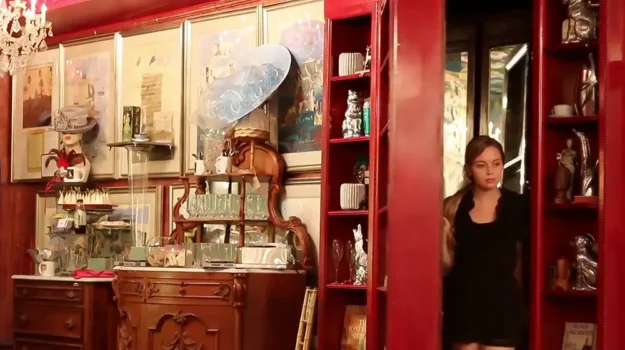
Unlike institutional museums, the O Museum in Washington D.C. embraces secrecy as an aesthetic experience. The 100-room mansion contains more than 80 secret doors, hidden passageways, and concealed alcoves. The building functions as both museum and immersive artwork, housing an eclectic collection of fine art, rare books, rock-and-roll memorabilia, and eccentric curiosities.
The secret rooms at the O Museum are not designed for restriction but for discovery. Some contain private collections donated by celebrities, others hold rotating exhibitions or archives waiting for cataloguing. The building’s clandestine architecture encourages visitors to explore, search, and uncover.
Though whimsical, the O Museum demonstrates an important aspect of collecting: that presentation can shape meaning. A hidden room turns a simple artifact into a treasure; the act of discovery creates a personal connection between viewer and object. For collectors who design private galleries in their homes, the O Museum is a reminder that the display environment can elevate the narrative power of a collection.
Naples National Archaeological Museum Secret Chambers (Italy)
Home of the “Gabinetto Segreto” and Beyond
Naples is guardianship itself, a city whose archaeological bounty from Pompeii and Herculaneum is so vast that much of it has never been exhibited. The most famous secret space here is the Gabinetto Segreto, or Secret Cabinet, which once held the erotic art and artifacts excavated from the ancient Roman cities. Like the British Museum’s Secretum, the Cabinet reflected nineteenth-century anxieties about sexuality. Today, most of the collection is accessible, though some fragile items remain stored in closed chambers.
Beyond this, the museum holds countless storerooms containing mosaics too large to mount, frescoes awaiting restoration, statues with incomplete provenance, and thousands of everyday objects that reveal intimate details of Roman life. The volume of material is so immense that archaeologists estimate centuries of future work remain.
For collectors, the Naples secret chambers illustrate the sheer depth of ancient artistic production. They remind us that the classical world was not defined solely by masterworks; it was built on ordinary objects, domestic decoration, and everyday craftsmanship. The museum’s hidden spaces hold not just treasures but context, context that continually reshapes our understanding of antiquity.
Vatican Secret Archives (Vatican City)
The Most Mythologized Secret Repository in the World
Few places evoke as much speculation as the Vatican Secret Archives, now officially renamed the Vatican Apostolic Archive. Despite the dramatic reputation, the archive is not filled with conspiratorial relics but with approximately 53 miles of shelving holding papal correspondence, diplomatic records, legal documents, and administrative histories dating back to the eighth century.
Access is highly restricted. Scholars must apply for permission, and only a limited portion of the archive is open to study. Some documents remain classified due to diplomatic sensitivity, others because they require conservation or have yet to be fully catalogued. Among the treasures are letters from Michelangelo, Galileo’s trial transcripts, and crown jewels of historical documentation involving monarchs, emperors, and world leaders.
For art collectors, the importance of the Vatican Archives lies not in physical artworks but in provenance. Many documents reveal the ownership histories of paintings, manuscripts, and sacred objects. When traced, these histories can transform an artwork’s value instantly. The Archives thus function as both historical repository and silent influencer of the global art market.
Why These Secret Rooms Exist
The idea of a secret room naturally invites speculation: Are museums hiding uncomfortable truths? Protecting fragile wonders? Concealing controversial histories? In reality, the reasons are both practical and philosophical.
Preservation Above All
Many artworks are too delicate for regular display. Light, humidity, and even the presence of visitors can accelerate deterioration. A single beam of sunlight can fade a Renaissance drawing; a change in humidity can fracture an ancient mosaic. Secret rooms function as conservation sanctuaries, spaces where time is slowed by science.
Storage of Vast Collections
No museum can display everything it owns. Storerooms are not signs of secrecy but of abundance. Institutions collect with the understanding that display rotates while preservation remains constant.
Scholarly Access and Research
Some materials are kept hidden because they are under study or require deeper contextual understanding before being shown. Museums prioritize accuracy over spectacle.
Cultural Sensitivity and Ethical Responsibility
Artifacts involving sacred traditions, human remains, or colonial-era acquisitions may require restricted access. Museums must navigate the ethical complexities of displaying, or withholding, objects tied to painful histories.
Security and Risk Management
Certain objects are simply too valuable or too vulnerable to exhibit. High-risk items may be kept in vaults designed to withstand fire, theft, or natural disasters.
Political and Historical Considerations
Institutions like the Vatican Archives hold documents that influence international relations, reputations, and legal claims. Secrecy here functions as a form of diplomatic protocol.
Art collectors often imagine the art world as a marketplace defined by auctions, galleries, and private sales. But the real foundation of cultural value lies in the hidden rooms of the great museums. These spaces influence authenticity, scholarship, and scarcity, the three pillars of art collecting.
Authenticity emerges from archives, conservation reports, and comparative study with similar works locked away from public view.
Scholarship evolves by examining thousands of unseen pieces that contextualize the few that enter galleries or auction rooms.
Scarcity is shaped by what museums choose to reveal. A masterpiece unveiled after decades in storage can shift collector interest overnight.
In many ways, the hidden rooms of museums are the backstage of civilization. They are the laboratories where knowledge is built, the vaults where humanity’s memory rests, and the sanctuaries where fragile beauty sleeps indefinitely.
To understand these spaces is to understand the deeper logic of collecting: that art does not merely exist to be admired, but to be preserved, studied, debated, and continually rediscovered. image/ washington