Painting Forgery Explained: A Collector’s Guide to Authenticating Artwork
Understanding Painting Forgery in the Art World
Shopping Ads: Antique Oil Paintings On Canvas For Sale. Limited Originals Available 💰😊
Authentic hidden masterpieces, Explore old master antique oil paintings from the Renaissance and Baroque eras. From 15th-century to 18th-century Antique Paintings. Bring the Renaissance and Baroque in your home. Shop Now!
🎨 Antique Oil Paintings On Canvas Renaissance, Baroque Art Antique Oil Paintings, Make Offer 16th to 18th Century Portrait Paintings
Painting forgery has existed for as long as valuable art has been collected. Wherever artistic reputation, financial value, and historical importance intersect, forgery inevitably follows. A painting forgery is not simply a poorly made copy; in many cases, it is a sophisticated deception created with technical skill, historical knowledge, and deliberate intent to mislead collectors, institutions, and scholars. Some forgeries are created as outright frauds, while others originate as workshop pieces, student works, or later imitations that are eventually misrepresented as originals.
For collectors, the emotional and financial stakes of painting forgery are significant. Discovering that a cherished painting is not authentic can result in substantial financial loss and reputational damage, particularly for dealers or investors. As a result, understanding how to tell if a painting is a forgery is not merely academic curiosity but a practical necessity for anyone participating seriously in the art market.
How to Tell If a Painting Is a Forgery
Identifying a painting forgery begins with careful observation and contextual understanding rather than immediate scientific testing. Many warning signs emerge from inconsistencies that reveal themselves only when the artwork is examined as part of a broader historical, stylistic, and material framework. Experienced collectors often describe an intuitive sense that something feels “wrong,” but this intuition is grounded in knowledge built over time.
A common indicator of painting forgery lies in stylistic discrepancies. Every artist develops habits that appear consistently across their body of work, including brush pressure, compositional rhythm, treatment of light, and even recurring anatomical quirks. When a painting appears to imitate surface-level characteristics without capturing these deeper patterns, suspicion arises. Forgeries often exaggerate what the forger believes to be the artist’s defining traits, resulting in a work that feels overly theatrical or rigid compared to genuine examples.
Another critical factor is condition. An alleged centuries-old painting that appears remarkably fresh may indicate modern materials or artificial aging techniques. Conversely, excessive or uneven wear can also signal manipulation intended to mimic age. Painting forgery frequently involves deliberate distressing, including cracking, discoloration, or surface abrasion, but such effects often lack the organic irregularity of genuine aging.
Provenance also plays a central role. A painting with gaps in its ownership history, vague documentation, or unverifiable past collectors raises legitimate concerns. While not all authentic works have complete records, painting forgery thrives in uncertainty. Forgers rely on ambiguity, knowing that the absence of documentation can delay or complicate challenges to authenticity.
How to Verify a Painting Through Professional Examination
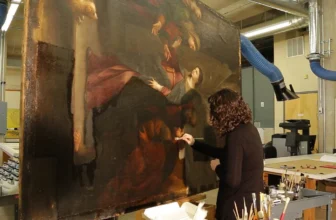
Verifying a painting requires moving beyond surface impressions into structured expert analysis. The process typically begins with an art historical assessment conducted by a specialist familiar with the artist, period, or school in question. This step involves comparing the painting against known authentic works, catalog raisonnés, archival references, and historical context.
Art historians look closely at iconography and subject matter, asking whether the theme aligns with what the artist was producing at that stage of their career. Painting forgery often reveals itself when the subject matter reflects knowledge or trends that postdate the artist’s lifetime. Even subtle anachronisms can expose a forgery, such as architectural features, clothing styles, or symbolic references that would not have been accessible to the purported artist.
Scientific analysis then provides another layer of verification. Modern authentication frequently employs techniques such as pigment analysis, infrared reflectography, ultraviolet light examination, and radio graphic imaging. These methods allow experts to see beneath the surface, revealing under drawings, corrections, or materials inconsistent with the claimed era. Painting forgery is often exposed when modern pigments or binders are detected in works alleged to be centuries old.
The combination of historical scholarship and scientific testing creates a holistic verification process. Neither approach alone is sufficient, as forgers have become adept at using period-appropriate materials or mimicking historical styles. True verification depends on the convergence of evidence from multiple disciplines.
The Cost of Authenticating a Painting
The cost of authenticating a painting varies widely depending on the complexity of the case, the reputation of the experts involved, and the level of scientific testing required. At the lower end, a preliminary evaluation by an art historian or appraiser may cost a few hundred dollars, particularly if the assessment relies primarily on visual comparison and historical knowledge.
As cases become more complex, costs increase significantly. Scientific testing, which is often essential when painting forgery is suspected, can involve specialized laboratories and advanced equipment. Pigment analysis, carbon dating of organic materials, and imaging studies each carry their own fees, which can collectively reach several thousand dollars.
For high-value works attributed to major artists, authentication may involve recognized artist foundations or committees. These bodies often charge substantial fees to review submissions, reflecting the time, expertise, and legal responsibility involved. In some cases, the cost of authentication can reach tens of thousands of dollars, particularly when extensive research and testing are required.
Collectors should view these costs as an investment rather than an expense. Confirming authenticity not only protects against painting forgery but also establishes market confidence, liquidity, and long-term value.
How Long It Takes to Authenticate a Painting
The time required to authenticate a painting depends on the depth of analysis and the availability of experts. Simple cases, where a painting can be clearly identified as authentic or as a forgery through stylistic analysis alone, may be resolved within weeks. However, most serious authentication efforts take several months.
Scientific testing introduces additional delays. Laboratory scheduling, sample preparation, and analysis require careful handling to avoid damaging the artwork. When multiple tests are conducted, results must be interpreted collectively rather than in isolation, which further extends the timeline.
Artist foundations and authentication boards often have lengthy review processes due to high demand and limited resources. Submissions may take six months to several years to receive a final determination. Painting forgery investigations are rarely rushed, as premature conclusions can result in legal disputes or reputational harm.
Collectors should approach authentication with patience and realistic expectations. The time invested reflects the seriousness of the inquiry and the need for defensible conclusions.
How to Show Proof of Authenticity
Proof of authenticity is not a single document but a body of evidence that collectively supports a painting’s legitimacy. The most persuasive proof includes expert opinions, scientific reports, and documented provenance that align coherently with one another. In the context of painting forgery, isolated certificates or unsigned letters carry little weight without supporting documentation.
A written expert opinion from a recognized authority in the field is often central to establishing authenticity. Such opinions typically include detailed reasoning, references to comparable works, and explanations of why the painting aligns with the artist’s known practices. When multiple experts independently reach similar conclusions, the credibility of the authentication increases substantially.
Scientific reports further strengthen proof by providing objective data about materials and techniques. These reports are especially valuable when they confirm that the painting’s components are consistent with the claimed period. In cases involving painting forgery, scientific evidence often serves as the decisive factor that confirms or refutes authenticity.
Provenance documentation, including sales records, exhibition histories, and archival references, ties the painting to a verifiable historical narrative. Together, these elements form a defensible proof of authenticity that can withstand scrutiny from collectors, insurers, and institutions.
The Three Ways Artworks Are Verified as Authentic
Artworks are verified through the convergence of connoisseur ship, scientific analysis, and documentary research. Connoisseur ship refers to the trained visual judgment of experts who study an artist’s work extensively and can recognize subtle nuances that are difficult to quantify. While sometimes criticized as subjective, connoisseur ship remains indispensable in identifying painting forgery, particularly when scientific evidence is inconclusive.
Scientific analysis provides measurable data that either supports or contradicts an artwork’s claimed origin. By examining pigments, supports, and construction techniques, scientists can identify inconsistencies that expose forgeries. Painting forgery often fails under this scrutiny because materials betray their true age or origin.
Documentary research completes the verification process by situating the artwork within a historical context. Provenance records, archival photographs, and exhibition catalogs help establish continuity over time. When documentation aligns with expert opinion and scientific findings, authenticity becomes far more credible.
These three methods are most effective when applied together. Painting forgery thrives in gaps between disciplines, but comprehensive verification leaves little room for deception.
The Collector’s Responsibility in Avoiding Painting Forgery
Collectors play a crucial role in preventing the circulation of painting forgery by exercising due diligence and skepticism. Relying solely on reputation, price, or aesthetic appeal invites risk. Instead, informed collectors ask detailed questions, seek independent verification, and remain cautious of deals that seem unusually favorable.
Education is one of the strongest defenses against forgery. By studying artists, movements, and market practices, collectors develop the ability to recognize inconsistencies and demand proper documentation. Painting forgery often succeeds because buyers hesitate to question authority or fear missing out on an opportunity.
Working with reputable dealers, auction houses, and advisors further reduces exposure to risk. Transparency, documentation, and a willingness to subject artworks to scrutiny are hallmarks of ethical market participants. Collectors who prioritize these values contribute to a healthier art ecosystem.
Navigating the Reality of Painting Forgery
Painting forgery is an enduring challenge that reflects both the value we place on art and the ingenuity of those who seek to exploit that value. While no method guarantees absolute certainty, understanding how to tell if a painting is a forgery, how to verify a painting, and how authenticity is established equips collectors with practical tools to make informed decisions.
Authentication requires time, financial investment, and collaboration among experts, but these efforts protect not only individual collectors but the integrity of art history itself. By approaching each acquisition with diligence and respect for the verification process, collectors can navigate the risks of painting forgery with confidence and clarity.