The Painting That Changed a Millionaire’s Life Forever
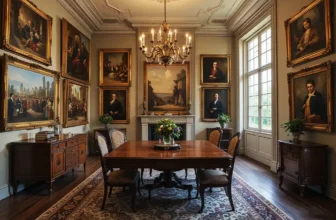
The world of art collecting has always been a landscape of emotion, intuition, extraordinary luck, and often, unimaginable wealth. But occasionally, a story emerges that captures the essence of what makes collecting so intoxicating: the moment when one artwork, seemingly just an acquisition, becomes a turning point in someone’s life. Among these stories, the tale of a quiet tech millionaire, known in the art world under the pseudonym A.M., stands out as a testament to how a painting can shift the meaning of success, ignite a lifelong passion, and connect an individual to centuries of human expression.
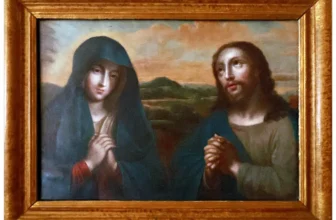
A.M. had built his fortune during the early waves of digital innovation. His world was one of screens, algorithms, and growth charts, not pigments or canvases. But a chance encounter with a painting, an early nineteenth-century portrait attributed to a forgotten French academic artist, changed the trajectory of his existence. The painting wasn’t expensive, at least not compared to the acquisitions made by elite collectors. It hung quietly in the corner of a regional auction house, its surface coated with a century of dust and its frame dull with oxidation. Yet something about it captivated him. It wasn’t the subject’s aristocratic poise or elegance. It was the sensation, the inexplicable recognition that the painting was speaking to him in a language far older and richer than anything he knew.
He bought it impulsively, a gesture he would later describe as an awakening. It was only afterward, when conservators revealed the original luminosity of the paint layers, that he realized he was holding an overlooked masterpiece. More importantly, he discovered the emotional force of living with art: the painting transformed his home, but more significantly, it transformed him. He began to feel history not as a sequence of facts but as a presence in the room, as intimate as a whisper.
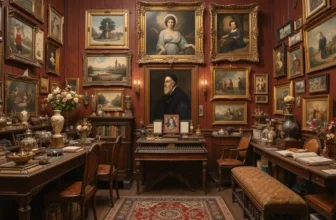
That first purchase led A.M. into a world populated by billionaires, dealers, museum directors, and art historians. He developed a deep appreciation not only for recognized masters but also for the forgotten and the undervalued. His collection grew from one painting to dozens, then to hundreds, eventually becoming one of the most significant private holdings of nineteenth-century European portraiture. His life’s trajectory, once measured by technological achievements, was now measured in discoveries, acquisitions, restorations, and conversations with curators who treated his collection as an essential contribution to art history.
The story of A.M. illustrates a profound truth: while wealth can open the doors to art, art often opens the doors to deeper meaning. And in the rarefied upper layers of the collecting world, these transformations occur with artworks whose prices and provenances read like myths. Understanding that world requires stepping into the lives of the collectors who dominate it and the masterpieces that define its highest peaks.
The Richest Art Collector Today
Although wealth fluctuates with markets, a few names consistently appear at the top of global rankings. The title of richest art collector is often associated with François Pinault, the French luxury-goods titan behind Kering and the founder of the Pinault Collection, valued in the billions. His holdings include works by Gerhard Richter, Jeff Koons, Louise Bourgeois, Rudolf Stingel, and countless Post-War and contemporary masters. With two Venice museums, Palazzo Grassi and Punta della Dogana, dedicated exclusively to showcasing his collection, Pinault’s influence in the art world is unparalleled.
Yet some argue that the title should go to Bernard Arnault, chairman of LVMH and at times the richest person on earth. Arnault owns a formidable personal collection and oversees the Foundation Louis Vuitton, whose acquisitions and exhibitions shape the entire contemporary art market. The foundation’s scale, mission, and financial backing place Arnault firmly among the world’s most powerful cultural actors.
Then there are the collectors whose wealth comes from finance, technology, or real estate: Leonard Lauder, Philip Niarchos, Ken Griffin, and Steve Cohen, all of whom own collections worth several billions. Their acquisitions have set record prices, reshaped museum landscapes, and dictated market trends for decades.
While it is impossible to crown a single definitive “richest collector” due to private wealth structures, François Pinault and Bernard Arnault remain the two figures most widely recognized for combining immense fortune with monumental, historically transformative collections.
Inside the World’s Wealthiest Art Empires: Ranking Today’s Top Collectors
A deep dive into the mega-collectors whose private troves rival national museums
The world of high-end art collecting has never been more powerful, more competitive, or more influential than it is today. Over the last two decades, a new generation of billionaire collectors has emerged, tech titans, hedge-fund magnates, real-estate moguls, industrial dynasties, and global financiers, each building private art empires so vast and valuable that many now outshine national museums. Their collections shape cultural trends, redirect the market, and redefine what artistic legacy means in the 21st century.
At the top of the pyramid are collectors like Ken Griffin, the American hedge-fund founder whose acquisitions frequently dominate headlines. Known for his precision-driven collecting philosophy, Griffin focuses on museum-quality masterpieces with decades, even centuries, of historical weight. His record-breaking purchase of Willem de Kooning’s Interchange for over $300 million instantly transformed him into one of the most powerful forces in global art. Griffin’s approach is strategic, rooted in an obsession with works that not only hold cultural significance but also embody the pinnacle of an artist’s career. His private holdings rival major institutions, and his philanthropy ensures that many pieces eventually find their way into public collections.
Across the world, China’s new billionaire class has produced collectors whose influence is rapidly expanding, none more so than Liu Yiqian and Wang Wei, founders of the Long Museum in Shanghai. Their philosophy combines cultural reclamation with aggressive acquisition. Liu’s splashy purchase of a $170 million Modigliani nude, paid partly with an AmEx card, symbolized a shift in global art power from Western capitals to Asia. Their empire, spanning multiple private museums, blends traditional Chinese art and blockbuster Western masterpieces, making them central figures in the globalization of the art market.
Meanwhile, tech-era fortunes have created collectors like Yusaku Maezawa, the Japanese entrepreneur whose record-shattering acquisition of a Basquiat painting for $110.5 million introduced a new level of boldness. Maezawa’s philosophy is democratic and unconventional: he views art as something to be shared, often lending works worldwide and even publicly documenting his collecting journey. His purchases reset market expectations for contemporary art and elevated Basquiat to stratospheric heights.
In the Middle East, sovereign wealth and private ambition intersect in collectors like Sheikha Al Mayassa bint Hamad bin Khalifa Al-Thani, often considered the world’s most influential institutional buyer. Through Qatar Museums, she has orchestrated acquisitions estimated at over $1 billion annually. Her collecting vision focuses on cultural diplomacy, using art to position Qatar as a global cultural hub. Landmark purchases, including Cézanne and Rothko masterpieces, have reshaped both the nation’s collections and the global market itself.
Then there are the discreet giants: the Pinault and Arnault families of France. François Pinault’s radical contemporary art holdings, displayed in Venice and Paris, have made him one of the most respected patrons in modern art. Bernard Arnault’s Fondation Louis Vuitton, meanwhile, functions as a cathedral to blue-chip masterpieces and cutting-edge installations. Their philosophies are deeply rooted in legacy, using art to articulate cultural identity, brand power, and generational influence.
What unites these mega-collectors is not merely their wealth but their extraordinary ability to influence taste, elevate artists, move markets, and shape cultural narratives. Their private empires are no longer simply collections, they are instruments of power, prestige, diplomacy, and global identity. In an era where art is both currency and cultural capital, these collectors stand at the center of a world where masterpieces are more than objects: they are monuments of influence.
Who Holds the Record for the Most Expensive Art Collection Ever Sold?
One of the most important events in modern art-market history occurred in 2018 when Christie’s auctioned the collection of David and Peggy Rockefeller. The sale shattered every previous benchmark for an estate collection, achieving a staggering total of over $832 million. No other single-owner sale has ever surpassed this figure. The Rockefeller collection was not just valuable, it was museum-quality on every level. It featured masterpieces by Monet, Picasso, Matisse, and other giants of Impressionism and Modernism, many purchased directly from the artists or inherited from earlier generations of Rockefeller patrons.
Why did this sale set the record?
Because the Rockefellers represented more than wealth: they embodied a legacy of American patronage, philanthropy, and cultural stewardship. Each artwork carried not only aesthetic importance but also historical gravitas. Buyers weren’t just acquiring objects, they were purchasing pieces of the Rockefeller mythos, an aura that elevated every lot.
Since 2018, several billionaire collectors have assembled collections that, if sold today, could exceed this number. But no estate sale has surpassed the Rockefeller benchmark, and for now, it remains the most expensive art collection ever sold in history.
Who Owns the Most Expensive Painting in the World Today?
The most expensive painting ever sold is Salvator Mundi, attributed to Leonardo da Vinci, which sold for an astonishing $450.3 million in 2017 at Christie’s. The buyer was later revealed to be Saudi Crown Prince Mohammed bin Salman (via a representative), making him the current owner of the world’s most expensive painting.
The painting’s story is almost mythical: discovered in a private collection, heavily overpainted, and nearly forgotten, Salvator Mundi underwent extensive restoration before entering the global spotlight. Its sale price reflected the rarity of owning anything by Leonardo, whose surviving works number fewer than twenty.
Although the painting’s precise current location has been a subject of speculation, rumors place it on the Saudi royal yacht, others say it is being held for a future cultural institution, its owner remains one of the wealthiest and most influential figures on the planet.
Who Owns the Largest Rembrandt Collection Today?
When discussing Rembrandt, the conversation inevitably turns to the Rijksmuseum in Amsterdam. It holds the most extensive public collection of Rembrandt paintings, drawings, and prints anywhere in the world. But when it comes to private ownership, the landscape is far narrower.
The largest private Rembrandt collections historically belonged to aristocrats and royal families, but in the contemporary world, very few private individuals hold more than one or two Rembrandt paintings. The rarity, cost, and museum-level significance of these works make them almost exclusively institutional.
One extraordinary modern example is the late American collector Sheldon Solow, whose private collection included one of Rembrandt’s most important portraits. Upon his passing, portions of his holdings transitioned to institutional control through the Solow Art and Architecture Foundation.
Another significant Rembrandt owner was the Dutch businessman Thomas Kaptein, though many of his works have since been acquired by museums.
Because Rembrandt paintings number fewer than 350, and because their sale is closely monitored, the largest coherent holdings today remain almost entirely within public museums. Private collectors rarely own more than a single Rembrandt masterpiece.
Who Has the Most Expensive Private Art Collection in the World?
Several collectors compete for the title of owning the most valuable private collection, but a few stand clearly above the rest:
François Pinault possesses a collection frequently estimated at $1.5–2 billion or more, with works from every significant contemporary movement of the past fifty years.
Bernard Arnault oversees a cultural empire through the Fondation Louis Vuitton, representing one of the most comprehensive and financially potent collections of contemporary art in existence.
Philip Niarchos, heir to the Greek shipping fortune, owns one of the largest private collections of van Goghs and has built what many consider the greatest private holdings of Post-Impressionist and Modern masterpieces.
Ken Griffin, the hedge-fund magnate, owns several record-setting works, including paintings by de Kooning and Pollock purchased for hundreds of millions.
Steve Cohen, famous for his monumental acquisitions, holds a collection whose market-shaping significance rivals that of major museums.
Pinault, Arnault, Niarchos, Griffin, and Cohen are the names most commonly cited when discussing the world’s most valuable private collections. Their influence stretches across the global art market, museum ecosystems, and cultural institutions.
Why These Collectors Matter
The elite collectors of today act not merely as buyers but as cultural architects. Their choices dictate which artists ascend in value, which artworks enter public consciousness, and which legacies survive into future centuries. Collectors like Pinault and Arnault have built private museums rivaling the Louvre in scale. Others, such as Ken Griffin, make record-breaking donations to major institutions, altering museum landscapes for generations.
Yet despite their wealth, their stories often begin the same way A.M.’s story began: with one artwork, one moment of recognition, one transformative experience. Because no matter how large a collection becomes, the emotional core of collecting remains the same, the desire to connect with something enduring, something beautiful, something that carries history within it.
Art is more than an asset class. It is a mirror reflecting human longing, triumph, pain, and imagination across time. And the collectors who chase it, whether millionaires or billionaires, are ultimately seeking meaning far beyond price tags. image / Photo by Chesnot/Getty Images