The Chess Game by Anguissola: Story, Meaning and Symbolism
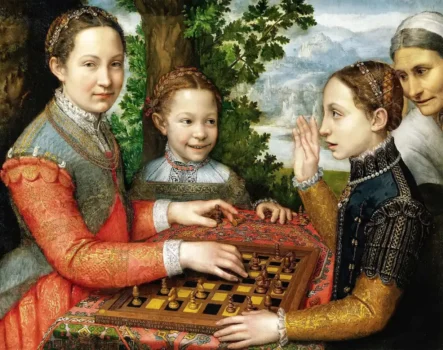
Few paintings from the Italian Renaissance radiate warmth, intelligence, and human authenticity as brilliantly as The Chess Game (1555) by Sofonisba Anguissola. Created when Anguissola was still a young prodigy, this iconic artwork captures not kings, nobles, or mythological scenes, but something far more intimate: three sisters, united around a chessboard, locked in a lively moment of strategy and sisterhood. Painted at a time when women were rarely depicted as intellectual equals, let alone creators of fine art themselves, The Chess Game stands as a groundbreaking celebration of female intellect, refinement, and artistic brilliance.
In this story-driven, deeply researched, SEO-optimized article, we explore the story behind The Chess Game, the symbolism woven into the composition, its meaning, its groundbreaking style, how the painting was created, and why it remains one of the most admired masterpieces of sixteenth-century art. We also examine public opinion, artistic interpretations, and the painting’s location today.
The Story Behind The Chess Game: A Renaissance Family Portrait Unlike Any Other
Sofonisba Anguissola was born into a cultured noble family in Cremona around 1532. Unlike many women of her time, she received an exceptional education: art, literature, music, languages, and the courtly arts. Her father, Amilcare Anguissola, recognized her talent early and supported her artistic training, something nearly unheard of for Renaissance women.
In 1555, Sofonisba painted The Chess Game, featuring three of her younger sisters:
Lucia Anguissola (left), the poised and thoughtful player
Europa Anguissola (center), who proudly turns toward the viewer
Minerva Anguissola (right), smiling with a lively sense of victory
Their governess, Crostina di Lorenzo, standing behind them as a gentle observer
This gathering was not a formal portrait session but a captured moment of lively interaction. The sisters are dressed in elegant Renaissance clothing, reflecting their noble upbringing. The outdoor landscape, adorned with soft greens and gentle hills, adds a fresh, natural quality.
What makes this painting especially compelling is its narrative: it is among the first known artworks to depict women engaged in an intellectual game. This was not an accident. It was a deliberate statement by Sofonisba, and likely her father, that women were capable of learning, reasoning, and excelling in activities traditionally reserved for men.
In Renaissance Italy, art often reflected power, devotion, or myth. Yet Sofonisba chose to celebrate family, intellect, and individuality. The Chess Game is a tribute to education, refinement, closeness, and most of all, the artistic genius of a young woman who dared to break conventions.
What Is Happening in The Chess Game? A Moment of Strategy and Sisterhood
At first glance, The Chess Game appears simple: three girls playing chess. But every detail contains meaning:
1. Lucia makes a strategic move.
Lucia, the eldest sister in the painting, reaches for a chess piece. Her calm expression reveals maturity and concentration. Her posture demonstrates composure, she is the strategist, strong and intentional.
2. Europa reacts with delight.
Europa turns toward the viewer with a joyous smile, as if sharing her sister’s victory. This eye contact makes the viewer part of the moment, an intimate guest in their family scene.
3. Minerva shows amusement and charm.
Minerva grins with a sense of playful rivalry. Her expression captures youthful animation, Sofonisba’s ability to express emotion was groundbreaking.
4. The governess oversees with gentle warmth.
Crostina di Lorenzo stands behind them, radiating stability and care. Her presence reinforces values of guardianship and education.
5. The chessboard carries symbolic weight.
Chess symbolizes strategy, intelligence, hierarchy, and critical thinking. By depicting young girls at the chessboard, Sofonisba subtly challenges gender limitations.
Thus, the painting is not only about a chess match; it is about education, empowerment, family unity, and the cultivation of intellect among women.
How The Chess Game Was Painted: Sofonisba Anguissola’s Revolutionary Technique
Sofonisba Anguissola created this work in 1555, using:
Oil on canvas
A balanced triangular composition
Natural lighting that highlights the girls’ faces
Delicate brushwork that captures fabric texture, jewelry, and skin tones
A horizontal plane that focuses on interaction rather than dominance
Anguissola’s Innovations Include:
1. Emotional realism
Her painting captures genuine expressions. The personalities feel alive, not stiff or idealized.
2. Interaction between figures
Renaissance portraits typically depicted sitters alone or without emotional interplay. Anguissola broke tradition by portraying lively human relationships.
3. Depicting women as intellectuals
This was a radical departure from the norm. Women in Renaissance paintings were often passive figures; here they are active thinkers.
4. A subtle, warm palette
Soft greens, gentle earth tones, and warm skin tones create harmony and intimacy.
5. Naturalistic detail
The lace, pearls, embroidered sleeves, the polished chess pieces, all show meticulous observation and technical mastery.
This fresh approach earned her widespread admiration and led to her eventual invitation to the Spanish court as a painter and lady-in-waiting to Queen Elisabeth of Valois.
Analysis and Meaning of The Chess Game: A Celebration of Female Intellect and Virtue
1. Education and Refinement
Chess was a symbol of aristocratic education. By showing her sisters engaged in such a noble game, Anguissola communicates that they were trained in the intellectual, moral, and strategic disciplines valued in Renaissance society.
2. Family Affection and Human Warmth
The smiles, eye contact, and playful expressions reveal emotional bonds. Anguissola’s work stands out in Renaissance art for its psychological depth.
3. The Role of Women in Society
By portraying girls involved in strategy and learning, the painting defies gender expectations. It subtly argues that women deserve education and respect.
4. Virtue and Harmony
The harmonious composition and gentle colors symbolize the virtues of a well-educated noble family. The governess represents guidance and stability.
5. Youth, Growth, and Transition
The chessboard becomes a metaphor for life’s challenges. Each move represents decisions, maturity, and growth.
Symbolism in The Chess Game: What the Painting Represents
1. The Chessboard
Symbolizes intellect, discipline, and the hierarchy of Renaissance society. It also evokes strategy and decision-making, skills the sisters are learning.
2. Clothing and Jewelry
Their rich clothing signifies noble status, refinement, and dignity. Pearls were associated with purity and feminine virtue.
3. The Landscape
The gentle outdoors behind them symbolizes tranquility, freedom, and natural harmony. It contrasts with the structured rules of the chessboard.
4. The Governess
She represents wisdom, protection, and moral guidance. Her presence reinforces the theme of proper upbringing.
5. Expressions and Gestures
Anguissola’s subtle gestures communicate personality traits:
Lucia’s calm concentration = wisdom
Europa’s joyful openness = sociability
Minerva’s playful smile = youthful energy
What Type of Art Is The Chess Game?
The Chess Game is classified as:
Renaissance portraiture
Genre painting (depicting everyday life)
Family portrait
Humanist art (focused on intellect and individuality)
Mannerist-influenced realism (refined detail with expressive emotion)
It is celebrated for its blend of realism, human warmth, and psychological depth, a hallmark of Anguissola’s style.
Public and Art-Historical Opinions About The Chess Game
Since the 16th century, artists, historians, and critics have praised The Chess Game for its innovation and beauty. Here are the prevailing opinions:
Praised for emotional realism
Many consider it one of the first Renaissance paintings to show children in truly natural, expressive poses.
Recognized as a feminist milestone (though centuries early)
Contemporary scholars praise the work for its early depiction of women as intelligent individuals.
Celebrated for its technical mastery
Experts admire the delicate textures, fabric detail, and accuracy of expression.
Viewed as a window into Renaissance life
The painting offers rare insight into upper-class childhood and education in 16th-century Italy.
A testament to Anguissola’s genius
It is often cited as proof of why Sofonisba Anguissola became one of the most respected female artists of the Renaissance.
Adored by museum visitors
Visitors are drawn to its charm, family intimacy, and friendly atmosphere. It feels relatable, even modern.
What The Chess Game Represents: A Deeper Interpretation
At its core, The Chess Game represents:
1. A family’s love for learning
The Anguissola household valued education, culture, and refinement.
2. The empowerment of women
The painting becomes a visual argument for women’s capability and intellectual strength.
3. The beauty of everyday life
Rather than myth or spectacle, Sofonisba chose a simple moment, but rendered it extraordinary.
4. The importance of unity and harmony
The sisters’ joyful expressions reflect closeness and mutual respect.
5. The evolution of portraiture
Anguissola helped transform the way families and relationships were portrayed in art.
Where Is The Chess Game Located Today?
Today, The Chess Game (1555) is housed at the:
Muzeum Narodowe w Poznaniu (National Museum in Poznań), Poland
It remains one of the most treasured paintings in the museum’s collection, drawing visitors from around the world who come to admire its charm, humanity, and historical significance.
The Lasting Legacy of The Chess Game by Sofonisba Anguissola
The Chess Game is more than a portrait, it is a landmark in art history. Sofonisba Anguissola captured a moment of joy, intellect, and familial connection that defied Renaissance conventions. Through her masterful technique, she presented young girls not as decorative objects, but as intelligent beings engaged in strategic thought.
This masterpiece symbolizes:
female empowerment
education and virtue
the richness of family life
the humanist values of the Renaissance
the technical brilliance of one of Italy’s first great female painters
More than 450 years later, the painting continues to inspire scholars, artists, feminists, and museum visitors. Its emotional warmth, vibrant storytelling, and historical importance secure its place as one of the most influential works of the Italian Renaissance.